
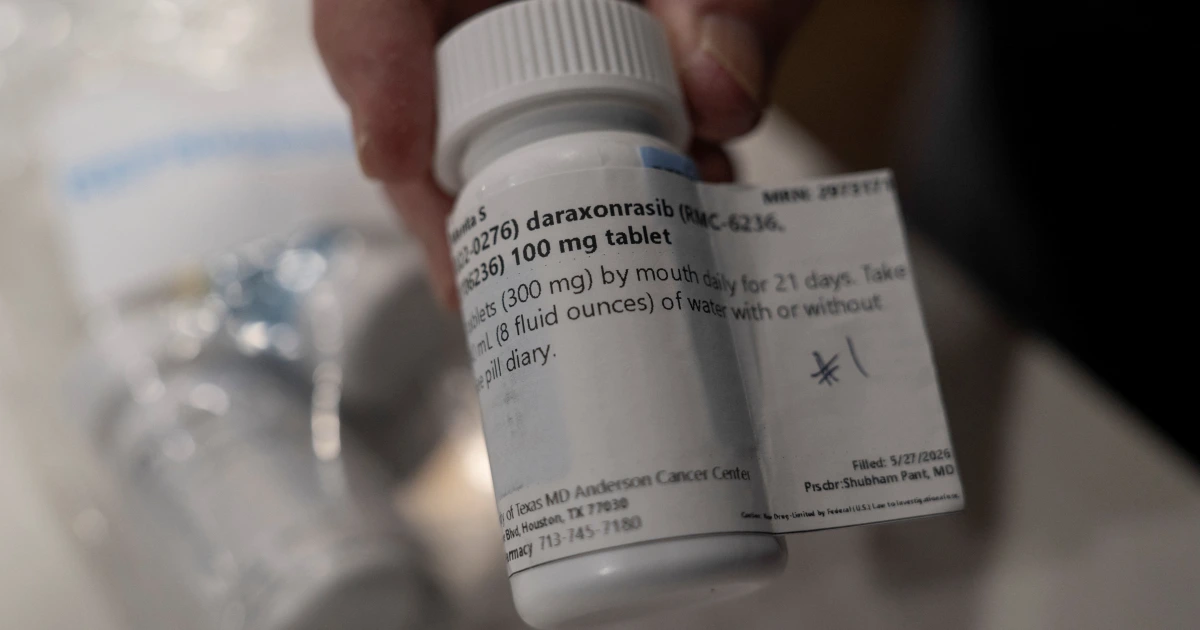
A new pill helped people with advanced pancreatic cancer live longer, researchers reported Sunday, raising hopes for long-needed better treatments for one of the deadliest types of cancer.
“While it doesn’t cure cancer, it’s a big step,” said Dr. Zev Wainberg of the University of California, Los Angeles, who helped lead the study.
The medicine is called daraxonrasib and blocks a mutated protein that fuels tumor growth in more than 90% of pancreatic cancer cases, a target that had eluded other treatments for decades.
(Mother recounts her experience after the diagnosis of a “mysterious” symptom and then weight loss and colorectal cancer)
Daily pills nearly doubled survival time, with fewer serious side effects, in a study that randomly assigned the experimental drug or more chemotherapy to 500 patients whose metastatic, or spreading, cancer had stopped responding to previous treatment.
The findings were published in the New England Journal of Medicine and were presented Sunday at the American Society of Clinical Oncology meeting in Chicago.
Those who took daraxonrasib they lived an average of 13.2 months, compared to 6.7 months of those who received chemotherapy. While that may seem like a small improvement, Wainberg noted that it was the first drug to show a substantial advantage over chemotherapy.
“After treating pancreatic cancer for 16 years, I started crying” when I first saw the study results, said Dr. Rachna Shroff of the University of Arizona Cancer Center, who was not involved in the research but was at the ASCO meeting. He was struck by how “patients continued with this treatment because it provided them with a lasting and significant benefit.”
The effects of the pills eventually wear off, but patients used them much longer than the control group, who continued chemotherapy, and reported less pain and a better quality of life as their tumors shrank. Many continued to use it after the data was analyzed, which Wainberg said means the difference in life expectancy could increase as researchers continue to monitor them.
Dr. Brian Wolpin of the Dana-Farber Cancer Institute presented the findings Sunday. He said the drug should become “a new standard of care” for previously treated metastatic pancreatic cancer, adding that researchers will also explore its use in earlier stages of the disease, to see if shrinking the tumor could allow more patients to be candidates for surgery.
The side effects most likely to affect use of the pills are a skin rash that can be severe and mouth sores, he said.
(GLP-1 weight loss medications may also reduce the risk of cancer progression.)
The manufacturer Revolution Medicines funded the study and the Food and Drug Administration (FDA) plans to expedite its review. Meanwhile, the agency is allowing what is called “expanded access” to the experimental drug for patients who meet certain criteria.
The drug attracted public attention when former US senator Ben Sasse described how he had felt less pain while taking it on the show 60 Minutes. Oncologists are receiving a flood of applications as the special access program rolls out.
Pancreatic cancer is one of the deadliest cancers, mainly because it is difficult to detect before it begins to spread to other organs. The American Cancer Society estimates that about 67,000 new cases will be diagnosed in the United States this year and that more than 52,000 people will die from the disease. The overall five-year survival rate is 13%.
Unlike other types of cancer for which there are various chemotherapy alternatives, pancreatic cancer has been more difficult to treat.
Specialists who were not involved in the new research were optimistic and noted that this could mark a turning point in the search for new options, with dozens of experimental drugs in the development phase.
The new drug acts on mutations in the RAS gene family, which normally regulates cell growth. So-called KRAS mutations are especially critical in fueling pancreatic cancer. But a structure that made it difficult for drugs to attach to the mutated proteins meant this cancer driver was long considered “undruggable.”
Revolution Medicines’ drug uses what is essentially molecular glue to bind to multiple KRAS subtypes. Wainberg explained that the researchers will now analyze whether it worked better in some of those subtypes.
The pill will change the treatment of pancreatic cancer, said Dr. Andrew Coveler of the Fred Hutchinson Cancer Center, who was not involved in the research.
“This works radically differently,” he said.
Wainberg noted that other drugs in development target specific KRAS subtypes. Other approaches in early stages of testing include vaccines designed to prevent recurrence after pancreatic cancer surgery by teaching the immune system to recognize the mutated protein.
