
That context is not abstract. It has faces, names and concrete consequences. In Miami, a family has been living it for seven months.
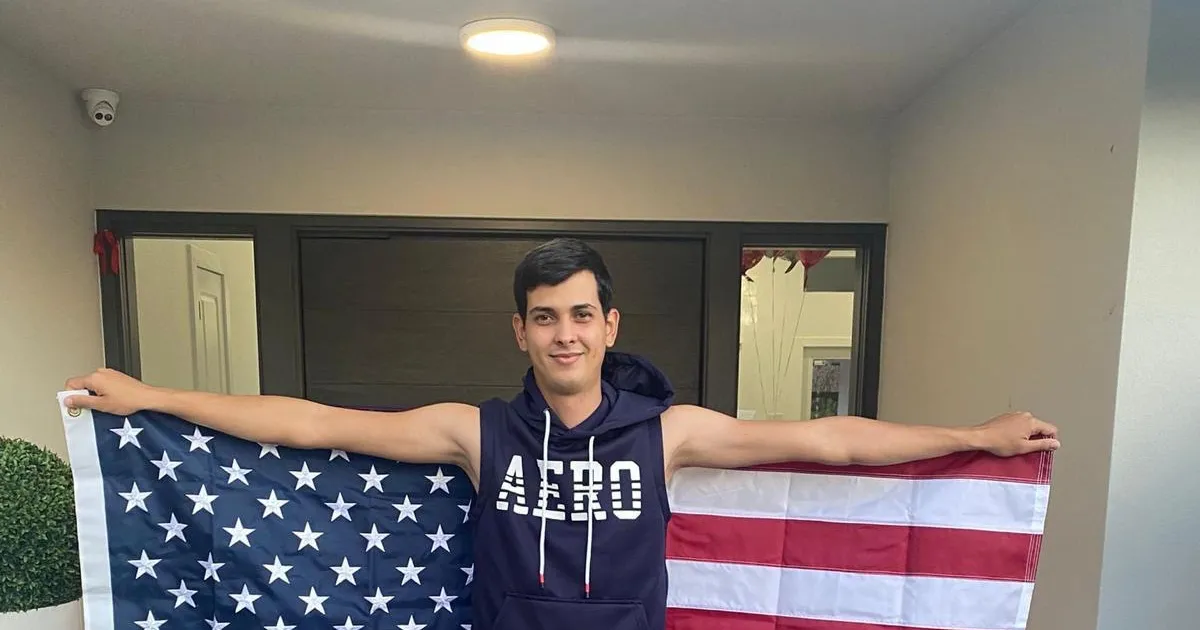
Dariel Marino Borges Betancourt He left Cuba fleeing a system with which he never agreed. He came to South Florida with the intention of rebuilding his life, working and staying within the law. Today, after being arrested after leaving a hearing at the Miami Immigration Courttheir immigration status remains without a clear definition.
He September 17, 2025 marked a breaking point. That day he went to his court date without imagining what would happen at the end. According to the interviews that support this report, granted exclusively to DIARIO LAS AMÉRICAS in its studios in Miami, the family spoke from direct experience, marked by frustration, wear and tear and the persistent feeling of not being heard.
Your sister, Loraine Borgesreconstruct that moment:
“My brother went to court on September 17th. He had his court. The judge dismissed his case. Then, when he left the court, there was the Immigration and Customs Enforcement (ICE) waiting for him They arrest him. From there he called us, told us and this odyssey began.”
Since then he was transferred several times until he was placed in the Krome Detention Center.
“They transferred him to the Miramar ICE center, then they transferred him to Alligator. He was there for about a month, more or less, and then they transferred him to Krome. He has already been in Krome for seven months. Seven months we are dealing with lawyers, with this whole issue.”
Like many others in his situation, Dariel entered the country with an I-220A form and, according to his family, he passed the credible fear interview, a step they interpreted as decisive in his process.
“For us that was a great opportunity, because you are seeing that the boy is afraid to return to his country with conclusive evidence.”
Among this evidence, those around him assure that Betancourt’s file includes elements of a political nature that, in their opinion, have not been evaluated in their full dimension and expose the fear they feel about a possible return.
“Whether to go to Cuba, where he participated in the protests on July 11, 2021 and presented evidence of persecution, or to go to Ecuador,” explains his partner, Marileidys Lugo. “He showed that he cannot turn because he could be imprisoned or perhaps killed.”
However, the scenario took a turn when he received a notification that proposed his transfer to a destination he had never been to.
“The motion, literally, is to send him to Ecuador. A place where he has never been, where Cubans have no way to legalize themselves, they are discriminated against.”
Despite presenting documentation and testimonies, the decision did not change.
“The judge did not accept the response to the motion. We gave her a very strong motion, with evidence from relatives who were in Ecuador, who could not legalize themselves, who were discriminated against. Still, she did not approve it.”
The habeas corpus was also unsuccessful.
“They denied it because the federal court says it doesn’t have jurisdiction. They didn’t even review the case. They’re not taking the evidence into account.”
Marileidys, remembers what happened inside the court on the day of the arrest:
“I ask above all that justice be done with Dariel’s case. I went to his court. They took me out, I was the only one they took out. They left him last. A woman told me: those people who are outside are from ICE.”
Minutes later, he received the call:
“He calls me crying, that he had been handcuffed like a criminal, hands and feet, by seven people from ICE.”
Since then, he describes a constant emotional state:
“He has lived for seven months in fear, going through a lot of work in there, in conditions that are not the best and with treatment that often is not the best either. We are desperate from here.”
The possibility of being sent to a third country deepens the uncertainty.
“If he goes to Ecuador, where is he going to go? He has no family, he has no papers, he has no asylum. He is going to have to live on the streets.”
The impact also reaches Irene BetancourtDariel’s mother, who spoke through tears during the conversation. He claims that he is facing a terminal illness and that his son’s absence has been devastating.
“This has been difficult for everyone, especially for me, because he has always supported me in my health problems. I would like him by my side.”
During a visit, he confessed what he had experienced:
“He is very hurt by what they did to him, that they tied his hand and foot. He told me: ‘Mommy, I am not a criminal.'”
His hope in the midst of the pain he is going through is concrete:
“Let’s hope that justice prevails and they take him away from me, that he is by my side.”
While a new hearing approaches, scheduled for April 29, which could define his fate, since if he does not obtain a favorable decision he will have to choose between returning to the island or going to Ecuador, the family insists on something specific: that the case be carefully evaluated and not as part of an automatic procedure.
And while that day arrives, in the midst of judicial files and decisions, Dariel’s name is still on hold. Outside, Loraine, Marisleydi and Irene too.
They don’t ask for privileges. They ask that their story be heard in full and have a fair ending.
DIARIO LAS AMÉRICAS will closely follow the outcome.
