
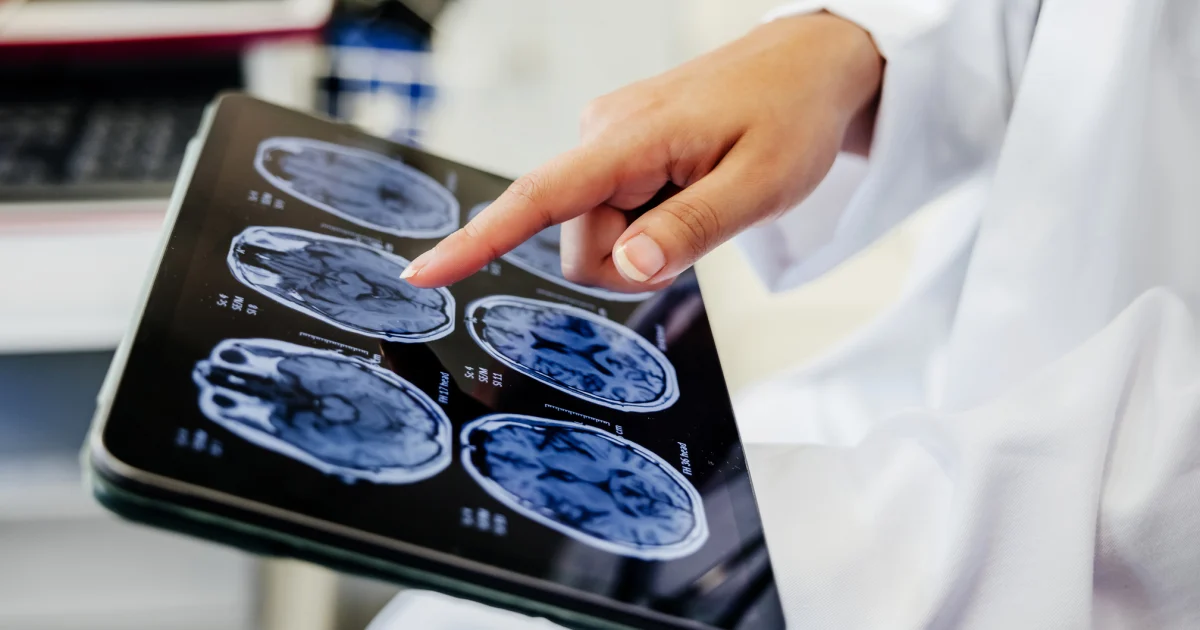
Brain health is critically important to nearly all Americans, but few are aware of the latest science on how to care for it.
The Alzheimer’s Association released its annual report on Tuesday, which included a survey of more than 3,800 adults ages 40 and older, of whom 99% indicated that brain health is at least as important as physical health.
About 88% of respondents said maintaining brain health is “very important,” but only 9% said they knew “a lot” about how to do it.
Christopher Weber, a clinical psychologist and senior director of global scientific initiatives at the Alzheimer’s Association, said people generally understand how lifestyle habits, such as getting enough sleep, staying physically active, eating a balanced diet, and staying socially and mentally active, can protect the brain. “But the data also shows how difficult it can be to maintain these habits,” he said.
The Alzheimer’s Association partnered with the University of Michigan’s National Survey on Healthy Aging to conduct the study. Among the results:
- 50% slept at least seven hours most nights.
- 39% consistently followed a healthy diet.
- 34% were physically active most days.
- 42% declared having adequate mental stimulation.
“What science tells us, with more and more evidence, is that it is the combination of healthy behaviors – sleep, activity, nutrition and mental stimulation – working together that most promotes brain health over time,” said Weber.
Ten ways to maintain brain health
The risk of dementia is determined in part by genetics. For example, research has linked variants of a gene called APOE with a higher chance of developing Alzheimer’s disease.
But, as Dr. Kellyann Niotis, a preventive neurologist and associate clinical professor of Neurology at Weill Cornell Medicine, likes to remind her patients, much of a person’s risk is modifiable.
“Genes are not your destiny,” Niotis said in an email.
(A doctor clarifies whether honey really helps against allergies and colds)
The report highlighted results from a randomized controlled trial called the POINTER study from the United States, which explored the effects of lifestyle changes on the brain health of more than 2,100 people at high risk of cognitive decline. Compared with the self-guided group, people who received structured interventions, including prescribed diet and exercise regimens, had cognitive scores similar to those of people up to two years younger. However, both groups showed improvement in cognitive function after two years.
The 2026 report “makes clear that Alzheimer’s develops as a result of multiple factors that interact with each other, not genetics in isolation,” Niotis said.
The Alzheimer’s Association lists 10 healthy habits that can reduce the risk of cognitive decline:
- Stimulate your mind.
- Keep studying.
- Stay active.
- Protect your head.
- Don’t smoke.
- Monitor your blood pressure.
- Control diabetes.
- Eat well.
- Maintain a healthy weight.
- Sleep well.
Despite growing awareness of how these factors influence brain health, Niotis noted, “It is often underestimated how early and how consistently these factors need to be addressed for them to have a significant impact.”
Midlife is a critical time to prevent dementia
In the survey, 38% of respondents correctly identified midlife, defined here as the period between 35 and 64 years old, as the ideal time to take steps to preserve brain health. Research has shown that the first brain changes associated with Alzheimer’s can begin decades before symptoms appear.
“Middle age is crucial because that is when many of the factors that drive neurodegeneration are accelerating or are still modifiable,” Niotis said. “It is also important because the brain still has a great capacity for neuroplasticity.”
Jennifer Pauldurai, medical director of the Inova Brain Health and Memory Disorders Program in Northern Virginia, said it helps to think of the brain as the engine of a car.
When the check engine light comes on, “it doesn’t mean that the engine has broken down at that very moment,” Pauldurai explained. “It means that probably over several thousand kilometers of driving something has accumulated that is not working well.”
(A variant of COVID-19 nicknamed ‘cicada’ is detected in California)
Just as routine maintenance keeps cars, both old and new, running smoothly, our brains need TLC, especially in middle age, he said.
“We have to get our brain health checked, because that’s when things start to go wrong,” Pauldurai said. “If we can do more monitoring and maintenance on those things early, then we won’t have to wait for the (engine) malfunction light to come on.”
That said, brain health is difficult to define, Pauldurai noted.
In the survey, 82% of respondents associated “good brain health” with the ability to think clearly and make good decisions. Experts say a healthy brain often starts with managing physical and mental health problems.
For example, if you are 50 years old and in generally good healthbut you have sleep apnea, treating it now may be your best option for better brain health 20 years from now.
Niotis encouraged people to address hearing and vision loss, two issues she said are often overlooked but are linked to brain health. He stressed that avoiding excessive alcohol consumption is also essential.
“Don’t wait. The biggest mistake I see is that people think this is something to worry about later,” Niotis said. “The sooner you start, the better.”
It’s never too late to prioritize cognitive health
Tamar Gefen, director of the SuperAging Program at Northwestern University, works with people 80 and older who have similar memory capacity to people at least two to three decades younger.
“It’s not a lost cause,” Gefen said. “There are modifiable risk factors in old age, and any of them can be harmful.”
Social isolation, for example, is a major risk factor for dementia among older adults. According to a 2024 report by the Lancet Commission on dementia, this factor accounts for 5% of dementia cases worldwide. The other two aging factors, air pollution and vision loss, account for 3% and 2% of cases, respectively.
“It’s never too late, not at all,” Gefen said. “We simply have to start much earlier than we think when we want to take greater control.”
(They warn that AI chatbots can give dangerous advice to treat cancer)
About 7.4 million Americans live with Alzheimer’s, the most common form of dementia, the Alzheimer’s Association report estimated. This year, health costs for people living with any type of dementia are expected to reach $409 billion, not counting the more than $446 billion in unpaid care provided by nearly 13 million Americans.
“The bottom line is that Alzheimer’s and other dementias remain one of the most urgent and pressing public health challenges facing the United States right now,” Weber stressed, “one that affects nearly every family in one way or another.”
