
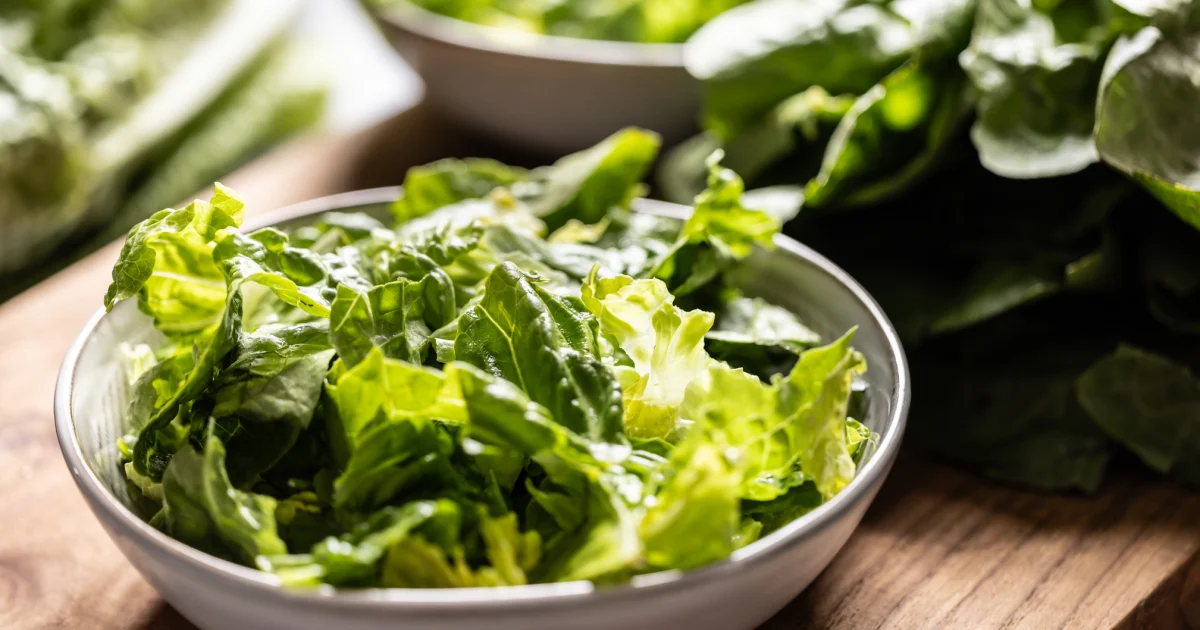
E. coli in romaine lettuce. Salmonella in salad vegetables. The current outbreak of cyclosporiasis linked to iceberg lettuce is by no means the first time leafy greens have been implicated in the spread of a foodborne illness. But what makes lettuce so susceptible to acting as a carrier of pathogens that cause intestinal discomfort?
Food safety experts agree that there are a number of factors that make produce, particularly lettuce, prone to causing foodborne illness.
It all starts right at the beginning, in the place where the leafy green vegetables are grown.
“Since agricultural products are generally grown outdoors,” contamination can come from many different sources, including soil, water or even air, explained Chip Simmons, a food safety officer at North Carolina State University.
E. coli and salmonella, two common foodborne pathogens, grow in the intestines of animals, including cows and pigs.
The Cyclospora parasite develops in the human intestine. In both cases, these germs reach waste, which can leach into soil or irrigation water and contaminate agricultural products.
(The FDA says it is still investigating Taylor Farms over a multi-state cyclosporiasis outbreak.)
In 2006, for example, a large outbreak of E. coli in spinach baby packaging was attributed to feral pigs, which could have contaminated the soil and water, Simmons said.
It’s also possible for produce to become contaminated through the air, Simmons said. A large five-year study in Yuma, Arizona – a major lettuce-growing region that was linked to an outbreak in 2018 – revealed that a particularly dangerous strain of E. coli could be transmitted through the air from large livestock farms to nearby agricultural fields.
Beyond environmental factors, the shape of certain types of lettuce can also play a role, making them a perfect receptacle for pathogens.
Romaine lettuce is “considered the most susceptible” to E. coli, said Sandra Eskin, a former Department of Agriculture food safety official and current executive director of Stop Foodborne Illness, an organization that advocates for food safety.
(FDA retracts and says cyclosporiasis test for packaged lettuce brand was “false positive”)
The long, thin leaves of romaine lettuce can easily break or become damaged, allowing bacteria to penetrate and remain in its deep pores, he explained.
Simmons added: “Think about the head of a romaine lettuce, which is almost cup-shaped. Anything that goes in through the top is trapped there, and it is very difficult to remove once it has been contaminated.”
Contamination can also occur after harvest.
“Leafy greens are ones that are cut and washed upon arrival, and any contamination that may be on them, if rinsed with water, would contaminate a large batch, so it can spread,” Simmons explained.
Cross contamination can spread not only to the batch, but also to the machinery.
Listeria, a particularly tough type of bacteria, can be difficult to remove from processing machinery.
Thomas Gremillion, director of food policy at the Consumer Federation of America, said this is why listeria outbreaks are common in the United States. kits of bagged salads, as they are usually the result of a contaminated processing plant.
(Iceberg lettuce supplier investigated as possible source of cyclosporiasis outbreak)
Since lettuce is a perishable product, it has a very short shelf life.
“From the harvest until it reaches the consumer’s shelf It usually takes between 48 and 72 hours“Simmons commented. “That short period does not leave much room, in the event that there is a problem, for it to be detected, traced, the origin identified and then (the product) removed from the market.”
Plus, when it’s finally time to eat leafy greens, they bypass one of the best ways to kill germs: cooking.
Many pathogens, including Cyclospora, cannot be eliminated simply by washing produce; They can only be eradicated by cooking them at high temperatures. Since leafy greens are often consumed raw in salads or smoothies, that necessary “elimination step” is missing.
Still, experts say people should not eliminate leafy green vegetables from their diet. The benefits of eating fresh products outweigh potential risksespecially for people who do not have weakened immune systems, they noted.
“For me, the benefits of eating fresh produce certainly outweigh the risks of getting sick,” Gremillion said.
Instead, be careful what you buy. During an outbreak, do not consume any products that have been recalled.
More generally, Gremillion noted, “If a salad looks a little withered and has been in a bagthat means that some microorganisms (or) pathogens may have had time to multiply.”
