
The United States is one of the countries that this Thursday is monitoring the health status of dozens of passengers who were aboard the cruise ship at the center of a deadly hantavirus outbreak.
What happened on the cruise ship has unleashed a large infectious monitoring response at the international level given that three people on board died and up to five more are suspected of being infected, as announced by the World Health Organization (WHO) this Thursday.
In addition, a possible case of infection in a woman who had not been a passenger on the ship was reported in the Netherlands.
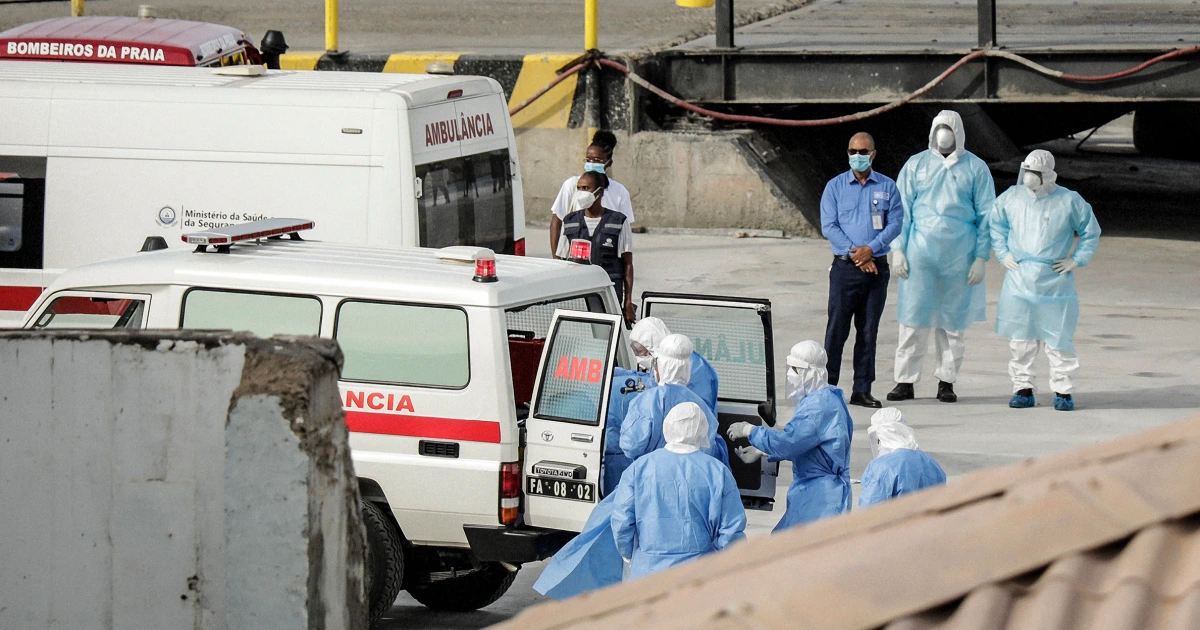
There are still about 150 people on board the MV Hondius, following isolation protocols, as the ship moves from Cape Verde, where three passengers were evacuated, to the Canary Islands. There the Spanish Government has agreed to receive people who disembark, according to the WHO.
In April, after the first death on board, About 30 people were allowed to disembark on the Atlantic island of Saint Helena when, according to what the cruise operator, Oceanwide Expeditions, said this Thursday, it was still not confirmed that the death was due to hantavirus.
(They confirm a new case of the deadly hantavirus in Switzerland linked to the cruise ship that set sail from Argentina)
Therefore, the company said in a statement that those people who disembarked had not initially been tracked; That is, it was not seen if they had contact with the infected people or what contacts they had afterwards. Oceanwide Expeditions assured on Thursday that it is “working to establish” the location of all those who disembarked since April 24.
Among those 30 passengers were six Americans; one would already be at home in Arizona, two more in Georgia and others in California, according to authorities in those states. So far they have not shown symptoms of the massive virus.
Possible additional case in the Netherlands
The three people who died were a Dutch couple and a person of German origin, while a British man is receiving treatment in South Africa and another man who had disembarked is being monitored in Zurich, Switzerland, on suspicion of contagion.
It was also reported on Thursday that a woman who works as a cabin crew member was being checked for a possible hantavirus infection.
“I can confirm that this flight attendant is in the hospital for testing,” a spokesperson for the Netherlands’ health ministry told NBC News. The ministry did not clarify whether the woman was sick or had symptoms.
(These are the ports that the cruise ship that has the deadly hantavirus outbreak has passed through)
Dutch airline KLM had said Wednesday that a woman died after contracting hantavirus and had been “for some time” on board a flight from Johannesburg, South Africa, to Amsterdam, but was removed from the plane before it took off.
It is not clear if that woman was on the same flight as the person who was being tested this Thursday. KLM said it does not comment on individual cases to respect privacy issues.
What should you know about hantavirus?
The World Health Organization (WHO) and health officials in several countries have emphasized that the risk to the general public from this outbreak is low, because human-to-human transmission of hantavirus is only possible through very close direct contact.
Hantavirus is normally transmitted through contact with rodents; That is, it does not spread as easily as airborne diseases like influenza or COVID-19.
Although the WHO said that this strain that occurred on the cruise ship that was traveling through the Andean regions does seem to have been passed from person to person, unlike typical infections of the virus. It would have happened between couples or people who provided medical care to the patients, the WHO said on Thursday, noting that they would have been very close contact infections.
“We do not anticipate that there will be a large epidemic or widespread transmission,” Abdirahman Mahamud, a WHO doctor who heads the organization’s potential health emergencies department, said Thursday.
Hantavirus in humans is very rare, and had not been recorded before on board a cruise ship. Data from the Centers for Disease Control and Prevention (CDC) indicate that between 1993 and 2023 there were only 890 confirmed cases in the world.
Symptoms of this rare virus include fatigue, fever and muscle aches, according to the CDC. Some people who have the infection, called hantavirus pulmonary syndrome (HPS), may have headaches, dizziness, chills, and stomach problems.
This is what a cruise passenger tells us
A blogger who was aboard the cruise ship, the MV Hondius, spoke to NBC News Wednesday night and alleged that passengers “were not properly informed” about the situation on board. He recorded videos of the captain announcing the first death, in which the manager can be heard saying that the ship “was not infectious” and that “although it is tragic, we believe (the death) was due to natural causes.”
Ruhi Cenet told NBC News that she boarded the cruise ship in Ushuaia, Argentina, on April 1 to make a vlog about one of the stops, an archipelago in the southern Atlantic. He commented that the trip soon became “strange” because the captain came to the passengers to give a warning, when he had not been present at other briefings.
He recorded what the captain said about that first death, and said that everything continued as if it were normal on the ship.
“Knowing that we were not isolated and that precautions were not taken for 12 days seems very sad to me,” said Cenet, of Turkish origin. It turned out “that we were not properly informed” of the situation, he denounced.

He said that he is now back home and that he has been tested although he has not shown symptoms. Cenet believed that he would have avoided contagion because since the first death was reported, he began to eat almost isolated within his cabin without interacting with the other passengers.
“I wish everyone had been equally cautious,” he said.
