
HAVANA. – After walking through the old area of Havana, on the lookout for tourists who wanted to pay them a couple of beers or forty dollars for a night of sex, the three girls sat at an outdoor table at Jaquelín Fumero’s cafeteria, right in front of the Angel Church.
They wear tight-fitting clothes, high heels and excessive makeup. They traveled from the south of the city on an electric tricycle converted into a collective taxi. They flee the violence in their neighborhoods, thirty-hour blackouts, and the consumption of drugs or homemade alcohol. They are girls between 16 and 18 years old who become prostitutes to earn a little money and support their families. But they don’t find clients.
“I feel ashamed,” says Alex, a security guard at the business. “I’m a father and I have a daughter. It’s really sad to see girls who are almost little girls bitching. Since there are hardly any tourists, they beat up anyone who pays them a drink. Cuba is getting worse and worse. Every day, an army of crooks prowl bars, cafes and hotels and try to sell drugs, tobacco or a girl to foreigners or Cubans with a long bill. Business owners hire security guards to ensure peace.”
Crisis and degradation
Serguey, a bartender, points out that “the worst thing is not the scourge, it is that hardly any users come. And when someone appears from Easter to San Juan, they only order a coffee and a bottle of mineral water. Sales have fallen precipitously. Most of the gastronomic and lodging businesses are making losses. The owners have had to cut employees,” he says and gives an example:
“Ten years ago, during the Obama era, on a bad day I earned 150 dollars between tips and my ‘inventions’ preparing drinks. Now I have had shifts where I have left with only two or three dollars. The bill is no longer enough. Sometimes I spend more on the round trip to the pincha (work) than what I earn.”
The owner of the Euforia bar, on L, between 19 and 21, in the Vedado neighborhood, says that he has thought about closing the business. “I have spoken with several entrepreneurs and they all agree that, if the outlook does not change, we will have to close. The money that comes in does not cover expenses. And I am working with a minimum of staff.”
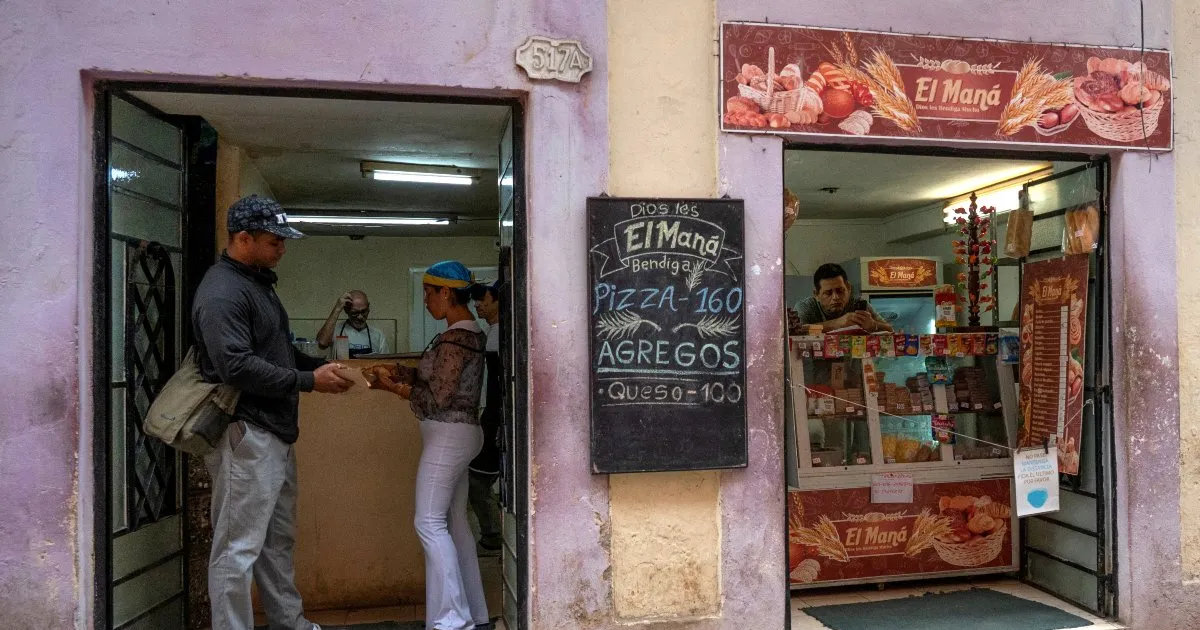
Isbel, owner of a paladar in Centro Habana, expresses that “those businesses focused on international tourism have either closed or had to reinvent themselves. I had to change the menu and offer a cheaper menu, within reach of people who usually travel through the area, and I included home delivery. But the list does not play with the ticket. I do a thousand tricks to avoid raising the prices. Every time you raise it, you lose a good part of the clientele. As the dollar increases every day (it has increased by more than a hundred pesos in the last month), the supplier who sells me food has also increased it.
Currency on the rise
“The rise in currencies is due to the drop in remittances, to the fact that there are almost no tourists or foreign visitors coming, to the blackouts lasting for hours and to the fuel deficit that discourages people from eating on the street. A liter of gasoline rose from 200 pesos to four or five thousand pesos in the informal market. This affects entrepreneurs and consumers. If within two months the scenario does not change, many private businesses will close.”
Half machine
Adriana, owner of a hair salon, clarifies that numerous businesses are already working at half speed. “In times of crisis, and in Cuba the crisis is permanent, families usually spend money only on the basics. Zero outings to eat on the street and zero unnecessary expenses. It is noticeable in businesses that were previously full and now have two or three customers. Four or five night bars located in Vedado and Miramar have escaped the crisis.”
“The rest of us individuals are making losses. If this continues, we will have to close. And it hurts, because when you own a business you are independent. You do not depend on the government to improve your quality of life and face the future. The current stage is worse than during the pandemic,” Adriana asserts.
Michel, who runs a construction business, says he has had to make drastic staff cuts. “I once had 400 workers, at the moment, 70. And I’m bordering on red numbers. In the private sector, new investments have slowed down. And in the state sector, not to mention. I survive by giving small constructive maintenance. I don’t know how long I can last.”
The couple, Juan Carlos and Yailín, are owners of a winery southeast of Havana. They explain why businesses far from the most central neighborhoods, in the current context, suffer greater losses.
“Our clientele has less purchasing power. Therefore, when you raise the price of products, sales fall. Then there is the problem of banking. A nonsense of the government that has not worked and causes us not to be able to accept large amounts of money by transfer. The thing is that later it costs God and it helps to collect that money in the banks, since they do not have funds. Blackouts are another big problem. Products like dairy products and sausages thaw and decompose very quickly. And it is money that we lose.”
“The government wants us private individuals to buy power plants or photovoltaic systems, as if we were rich. To keep the six refrigerators that I have and the air conditioners working, I need an investment of fourteen or fifteen thousand dollars, an amount that we do not have. To that we must add the fuel deficit. After January 3, bringing a container of chicken from Mariel to Havana costs you more than 120 thousand pesos. We pay it among several business owners to withstand the inflationary blow. Another The problem is the revaluation of the dollar, which makes a pound of chicken, the most consumed meat, more expensive. A month ago, a ten-pound package of chicken thighs cost 4 thousand pesos. Now it does not go below 5,500 pesos.
Lisván, a private taxi driver, states that “the price of an eight or nine kilometer ride has tripled: from 200 to 600 pesos. And the way we are going, if Trump doesn’t crack down on this (the dictatorship), at the end of the year it will cost a thousand pesos.”
Private sector in nosedive
From 2024, the private sector leads sales in the food retail market. And currently also in transportation, gastronomy and other services. If the fierce economic crisis continues to escalate, endless blackouts continue and fuel shortages continue, situations that contribute to the rise of the dollar, a good part of entrepreneurs will be forced to close their businesses throughout the country.
Juan Carlos and Yailín consider that, if “the government does not find solutions to the crisis, in Cuba there will be a famine similar to that in Ethiopia in 1984, when hundreds of thousands of people died.”
