
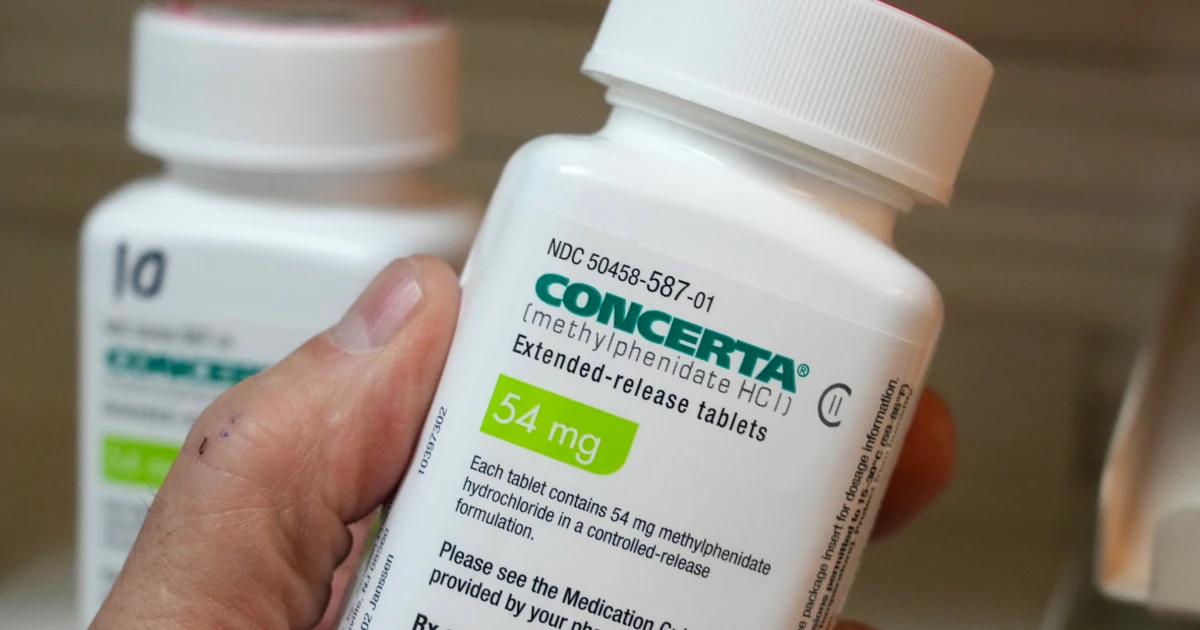
A new large-scale study has revealed that the stimulant methylphenidate, found in medications such as Ritalin and Concerta, could reduce the risk of psychosis when prescribed to young children with ADHD.
It has been found that children with Attention Deficit Hyperactivity Disorder (ADHD) are at greater risk of developing psychotic disorders, such as bipolar disorder or schizophrenia, compared to neurotypical children. Some studies have suggested a relationship with stimulants prescribed for ADHD.
The results, published this Wednesday in JAMA Psychiatry, found no differences in the risk of psychosis between children treated with methylphenidate – considered the most prescribed medication for ADHD – and those who were not. In fact, long-term treatment with methylphenidate, when prescribed to children under 13 for three or four years, appeared to reduce the risk.
Approximately 3.5 million children ages 3 to 17 in the United States receive medication for ADHD.
Researchers from the University of Edinburgh and University College Dublin analyzed the medical records of nearly 4,000 Finnish children and adolescents diagnosed with ADHD.
“Overall, we found that although we know this group is at increased risk of psychosis, this had nothing to do with medication,” said Dr Ian Kelleher, chair of child and adolescent psychiatry at the University of Edinburgh and lead author of the study. “That risk seems to be due to other factors“.
(Robert F. Kennedy Jr. promotes food as a miracle drug. Researchers believe he often exaggerates)
Kelleher suggested that the relationship between ADHD and psychosis could be due to genetic risk factors common to both disorders and could be completely independent of medication.
Dr. Christian Kohler, a professor of psychiatry at the Hospital of the University of Pennsylvania, described the results as “exciting and unexpected.”
However, he noted that this does not completely rule out a possible relationship in older age groups, especially in people in late adolescence or early adulthood who have just been diagnosed with ADHD.
Kohler said one concern about stimulants is that they increase the availability of a key brain chemical called dopamine in a part of the brain involved in emotional regulation known as the limbic system. This can lead some vulnerable people to develop erratic thinking and hallucinations.
(A doctor explains why physical activity helps prevent dementia or Alzheimer’s)
As a result, Kohler suspects that there may continue to be a tipping point, perhaps beginning in late adolescence, when the risk of psychosis does increase after treatment with stimulants.
“What happens if you are diagnosed with ADHD at age 16 or 17 and are prescribed a stimulant?” Kohler asked. “As doctors, we quite frequently see people who experience some cognitive dysfunction in late adolescence, who are diagnosed with ADHD, prescribed a stimulant, and then suffer psychosis within a couple of months.”
Kohler, who was not involved in the new research, said he would also be interested in seeing a similar analysis conducted on amphetamines.
These are a different class of stimulants than are commonly used in other ADHD medications, such as Adderall, which are most commonly prescribed to adults with ADHD and patients with private insurance. Research has shown that patients prescribed amphetamines are more likely to develop psychosis than those given methylphenidate.
(Fat around the abdomen can increase your heart risk and this is explained by a doctor)
Dr. Jeffrey Newcorn, director of the division of ADHD and learning disorders at the Icahn School of Medicine at Mount Sinai, said the risk of psychosis is thought to be higher in patients prescribed amphetamines.
“This study does not say that you cannot suffer psychosis from amphetamines,” he said. “It is very rare with the doses we administer“If people take them correctly, but it happens very, very occasionally.” Newcorn was not involved in the new study.
A 2024 study found that people taking high doses of amphetamines, including Vyvanse and its generic versions, to treat ADHD had a more than five times increased risk of developing psychosis or mania.
Because amphetamines are less commonly prescribed in Europe, the data set had too few children to draw accurate conclusions about drugs like Adderall and psychotic disorders, Kelleher said.
(They recommend not consulting ChatGPT on emotional topics due to their lack of empathy)
However, he agreed that it was worth investigating, since scientists do not know whether people treated with amphetamines are more likely to suffer psychosis due to the drugs or because they have more severe ADHD.
“It’s still a bit of an open question,” he said. “It could be the case that more severe and difficult-to-treat ADHD has greater overlap, in terms of genetic risk, with psychotic disorders.”
Overall, Kohler said he suspects that the dose of the medication, the timing of the treatment and the stability of the patient’s condition may combine to play a key role in determining whether stimulants have a protective effect or whether they may cause more problems.
Kohler said he was intrigued by the new study’s finding that methylphenidate may play a preventative role in younger children. This finding is consistent with previous research, carried out in laboratory mice and rats, which has found that long-term treatment with methylphenidate in young animals normalizes some abnormalities in dopamine-rich brain regions.
“I think that was really interesting.”Kohler said. “Maybe it balances or repairs an early deficit (in the brain), so that it doesn’t become a risk for developing psychosis later?”
Although there are still many questions to be answered, the researchers said this new research should hopefully provide some relief to parents of children with ADHD.
“It is reassuring to know that (this) medication does not increase the risk of a lifelong severe psychotic disorder,” Newcorn said.
