
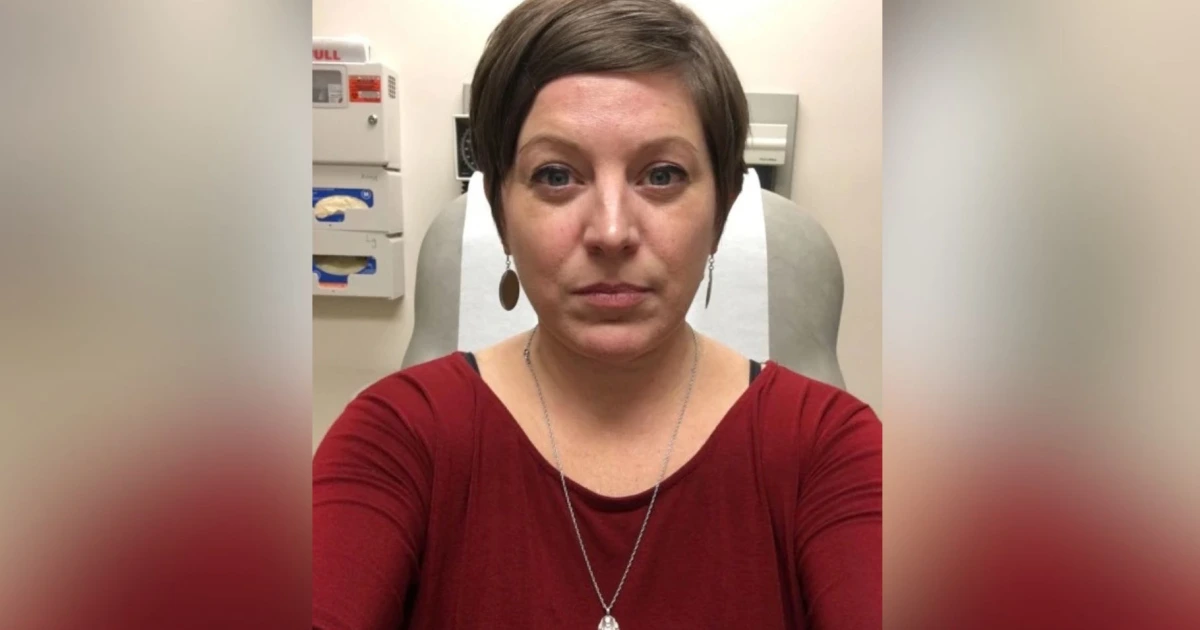
Shannon Ivey was 42 years old and a single mother of a first grader when she was diagnosed with stage 3 rectal cancer.
Like many patients, he had had symptoms for months, but never suspected they could be due to a tumor in his digestive system.
There was the “mystery blood” that looked like stains on her underwear, but since the women in her family go into perimenopause early, she assumed it was the start of an irregular cycle.
“This whole time, I thought it was something weird related to menopause,” Ivey, who lives in Columbia, South Carolina, told .com. ““I never related it to bowel movements.”.
Then came the pencil-thin stools and the need to go to the bathroom without anything coming out. But Ivey thought the problems were related to his lifelong intestinal problems, which also run in his family.
(A 34-year-old mother who started suffering from migraines after giving birth later received a terrifying diagnosis.)
Shannon Ivey is part of a growing trend of more people under 50 being diagnosed with colorectal cancer.
He bought a bathroom stool thinking he might need to position his body differently to make bowel movements easier, and he ate more fiber.
But the red flag that finally caught “their full attention” was a dramatic, unexplained weight loss.
Ivey lost 25 pounds (12 kilograms) from his 5.4-foot (1.63-meter) frame in about six months. Since she doesn’t have a scale and wears stretchy pants, she didn’t realize until her son’s school bus driver made a comment that led her to weigh herself at the gym.
“I knew I was very sick when I saw that number,” she recalled.
Divorced with a 7-year-old son, she was her own caregiver and navigating the health care system as a single mother, and she was terrified, Ivey wrote in her new book, Welcome to the Sh*t Show: A Memoir of Colorectal Cancer and the Power of Self-Advocacy (Welcome to the s*** show: A memoir of colorectal cancer and the power of self-defense).
Rectal cancer rates are increasing
Rectal cancer is on the rise and now accounts for nearly a third, or 32%, of all colorectal cancer cases, the American Cancer Society reported March 2. That’s up from 27% in the mid-2000s.
Mortality from rectal cancer is rising up to three times faster than that from colon cancer across all demographic groups, but it is accelerating especially among older millennials, people ages 35 to 44, according to a study to be presented at Digestive Disease Week in May 2026.
“Rectal cancer, in particular, is becoming a growing problem among younger people, and we must act soon to reverse this trend,” said lead author Mythili Menon Pathiyil, a gastroenterology fellow at SUNY Upstate Medical University.
Younger people and primary care doctors should pay more attention to the symptoms and not dismiss them as hemorrhoids, he added.
Rectal cancer originates in the rectum, the last 15 centimeters of the digestive system where feces are stored until they are expelled.
(Spain confirms a new case of hantavirus linked to the outbreak on the MV Hondius cruise ship)
“While we don’t know the factors driving” the rise in rectal cancer, Dr. Arif Kamal, director of patient care for the American Cancer Society, told NBC News, “this does highlight the importance of knowing your body and report symptoms to your doctor in time”.
Symptoms include rectal bleeding, bright red or very dark blood in the stool, a change in bowel habits – either constipation or diarrhea – thin stools and the feeling that the intestine is not emptying completely, according to the National Cancer Institute.
Colorectal cancer, which encompasses colon and rectal cancer, is now the leading cause of cancer-related mortality in people under age 50 and the second leading cause of cancer-related deaths in people of all ages, the American Cancer Society said.
“The untimely death of James Van Der Beek and also of our beloved Catherine O’Hara (…) Suddenly, it’s as if the universe is saying that everyone needs to pay attention to this,” Ivey said.
Ivey had several telltale symptoms of rectal cancer, including bleeding, weight loss and thin stools.
“Go to the doctor”
Ivey underwent 28 sessions of radiation therapy to the tumor and oral chemotherapy. He then underwent surgery to remove the tumor and a second round of chemotherapy treatments.
Trying to stay alive became a full-time job on top of his real job, he wrote in his book. He couldn’t stop worrying about his little son.
“I was very afraid of leaving him without a mother,” Ivey said. “He really handled it as well as any 7-year-old could. I would say, above all, it was really, really scary. And it made me really, really sad to think about leaving him.”
They discussed the boy staying with his father full time if his health deteriorated.
She lost even more weight during treatment because she had trouble eating, going from a size 10-12 to a 2-4. She made a will and asked an artist friend to turn her ashes into marbles if she died and was cremated.
(Pharmacist Eli Lilly launches new experimental weight loss drug)
There were also some unintentionally light moments, like when her curious son cautiously asked her after surgery, “Do you have an anus?” Yes, she told him, he still had it.
As a single woman, Ivey wishes the healthcare system wouldn’t assume that everyone has a partner or a mom who will fly in to help them. Ivey relied on her friends to accompany her to procedures, but she was often alone at other medical appointments.
An initial hurdle was the requirement that a friend or family member drive her home after a colonoscopy, since the sedative can take a while to wear off.
“If I had all the money in the world, I would take people to their colonoscopies and back,” he said.
Ivey had to undergo chemotherapy to treat his stage 3 rectal cancer.
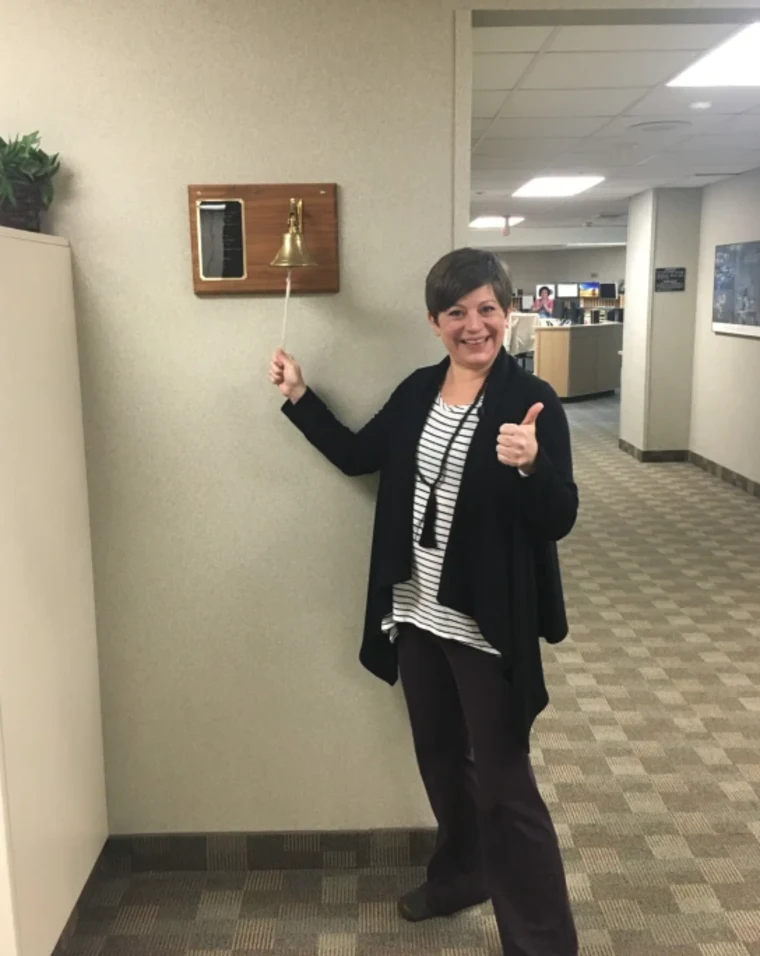
Nearly 10 years after her diagnosis and treatment, Ivey is now 51 years old and says she is doing very well. The controls still show no signs of the disease.
He urged people to pay attention to symptoms and changes in their body, and to keep pushing for answers.
“You know your body best, but you are also the only person who can take you to the doctor. Your partner can’t make you go, your friend can’t, your mom can’t either; only you,” she said.
“In the end, you have to believe that it’s worth being alivewhich is worth enough to feel uncomfortable advocating for what you need from the medical system.”
