
For this reason, the Miami River Commission (MRC) dedicates this April 11, from 1 to 6 pm, to celebrate the existence of the Miami River around Lummus Park, witness of ancient settlements, commercial and urban development, where the only preserved limestone structure of Fort Dallas, which dates back to 1836, still remains.
“We celebrate the enormous success that has been achieved in improving the Miami River, in creating this very special district,” the president of MRC, Horacio Stuart Aguirre, told DIARIO LAS AMÉRICAS.
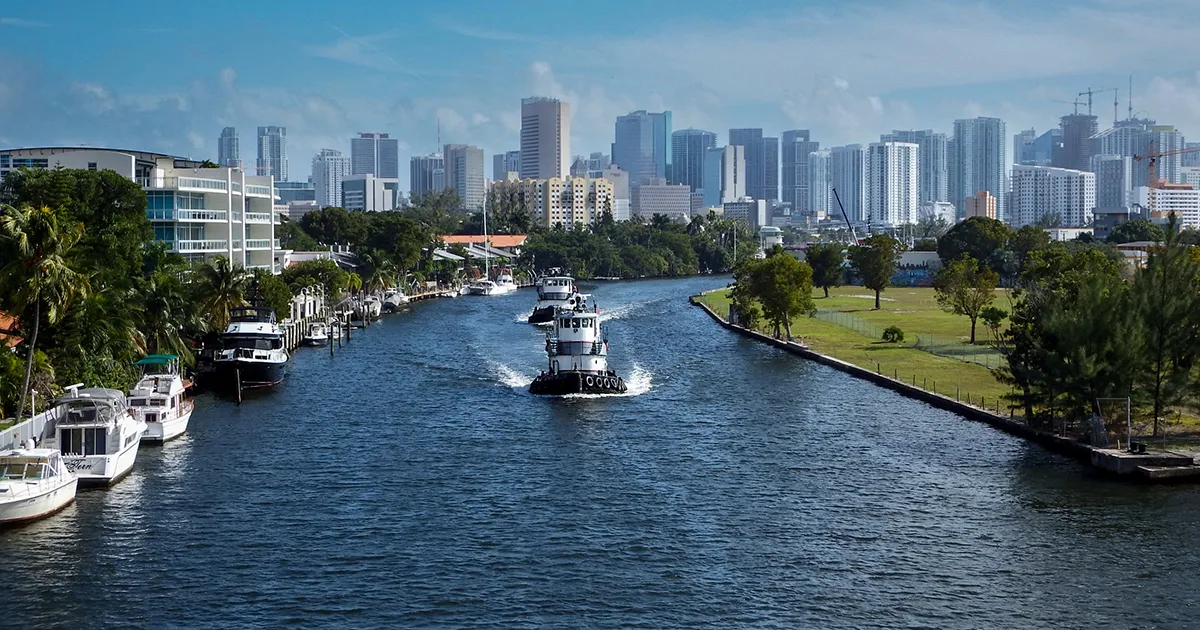
And he added: “This is one of the most desired, most appreciated areas of Miami-Dade. Here we have good restaurants, from small to large. Very happy bars, the best parks in all of Miami, from where you can see the river, neighborhoods with private homes and, of course, tall and super tall buildings, which share the river with cargo, fishing, and recreational boats.”
Aguirre emphasized the unique opportunity that the fair offers to walk along the river without having to pay a cent: “Free boat rides, so that they can get to know the river and enjoy the presence of parks, wonderful neighborhoods and natural spaces with lots of vegetation.”
Then he added: “It is a great opportunity for those who do not know the river. They can bring friends, couples, family, children. Everyone is welcome.”
The afternoon features the music of Melany Kap, bearer of hits such as Move your hips and heart with padlockas well as jazz, Latin rhythms and food.
The MRC is the official coordinating entity for public policies and projects related to the Miami River in Florida, established by the Florida State Congress in 1998. It serves as an 18-member intergovernmental board that is designed to unite local governments, businesses and residents to improve the environmental, economic and cultural vitality of the river.
After a series of misguided uses and several recovery projects that did not materialize, the Miami River once again sees the light at the end of the tunnel.
In fact, MRC is working to further improve access to the river and turn it into a public artery for everyone to enjoy.
“We already have 70% of the walk built, which goes from Brickell to almost Le Jeune Road, which is 42nd Avenue, where we can all cross to continue the path to the other side of the river and return to Brickell,” he commented.
“Today you can cross the river on the 27th Avenue bridge, but eventually we will be able to cross approximately on 40th Avenue,” he anticipated.
Indeed, the Miami River has the potential to become a recreational destination, both for families, tourists and athletes.
“We have made many improvements in the seven parks that face the river bank. Now we try to make the restaurant offering more affordable, and we are working on that,” he said.
History
The Miami River is a historically significant 5.5-mile waterway that has served as the axis of settlement in South Florida for thousands of years.
“The history of the area has revolved around this waterway, as the region’s first inhabitants found shelter, food and safety along its banks,” said historian Casey Piket, a fourth-generation South Florida resident who researches, writes, podcasts and produces online videos for Miami-History.com.
Near the mouth of the river, where skyscrapers today swarm, the so-called Miami Circle was discovered in 1998. It is a circumference-shaped structure, 38 feet (11.5 m) in diameter, made up of 600 post molds containing 24 holes or cavities carved in limestone rock. It is believed that it was the site of a construction erected by the Tequesta Indians about 2,000 years ago.
“Juan Ponce de León called the indigenous peoples he found next to the river during a trip through Biscayne Bay in 1513 tequestas,” the historian stressed.
It was here, at the mouth of the river, “that several Spanish missions, a military fort, a naval blockade during the Civil War, and a trading post run by the Brickell family were established.”
The river was originally a freshwater stream that flowed from the Everglades to Biscayne Bay, and was transformed in the 1920s into a waterway of maritime commercial transportation, largely defined by dredging, canal construction, and industrial growth.
Key aspects
Indigenous roots: The Tequestas, the first inhabitants, established an important town at the mouth of the river, leaving historical evidence such as the Miami Circle.
First settlers: Spanish missions were established in the 16th and 18th centuries. Later in the 19th century, settlers such as Julia Tuttle and William and Mary Brickell They created trading posts and housing, paving the way for the founding of the city in 1896.
Transformation: In the early 20th century, the freshwater creek was expanded as part of a massive Everglades drainage project.
Commercial use: The river became an important, although shallow, industrial waterway, hosting cargo ships that primarily encouraged trade with the Caribbean.
Current Events: Today, the river is a mix of industrial use, luxury residential towers, restaurants and residential areas, with an important inventory of natural spaces.
