
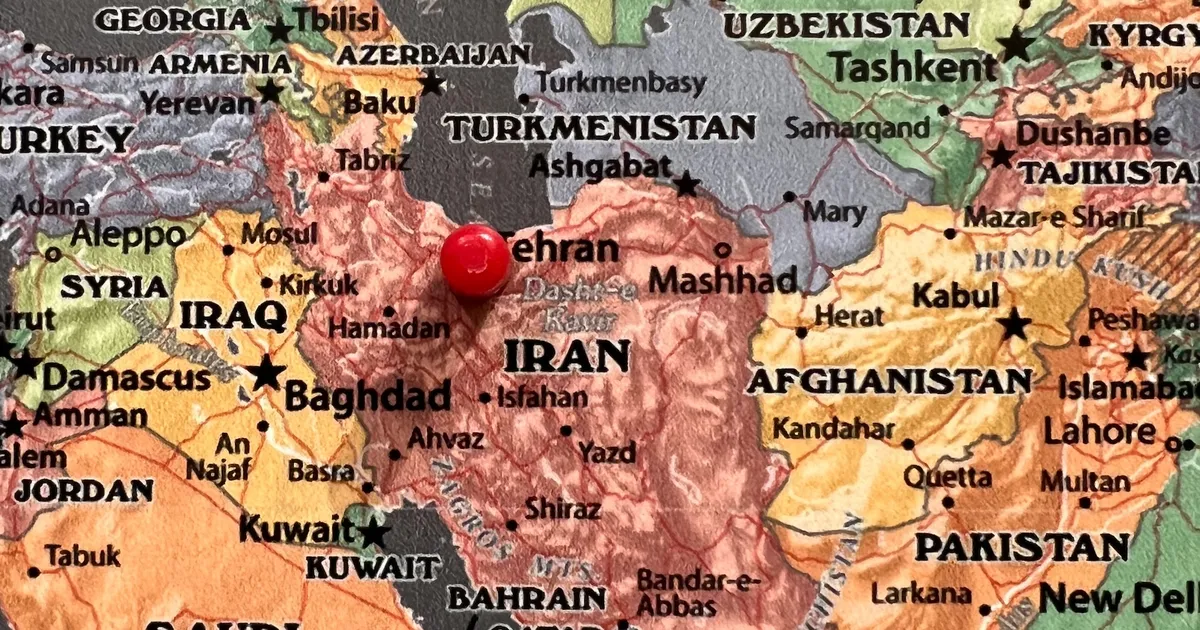
Executive summary: The article argues that militarily weakened Iran has resorted to asymmetric strategies focused on narrative control to prolong its survival. He proposes that the United States break this media dominance and open a second strategic front in Cuba through decisive action against the Castro regime. According to the author, this would weaken Tehran’s position, restore Washington’s geopolitical initiative and demonstrate the American ability to act simultaneously in multiple scenarios.
The Islamic Republic of Iran is reeling. Its leadership has been decapitated, its missile factories and air defenses lie in ruins, and its conventional military capacity has been destroyed. However, the regime refuses to fall. Instead, it has pivoted toward classic asymmetric warfare: proxy provocations, hostage diplomacy, and relentless media manipulation. Tehran understands that its survival now depends less on victories on the battlefield than on control of discourse. He needs the world’s cameras to focus on Iran, Beirut and the Persian Gulf so he can play the victim, drag out negotiations and present the United States as the desperate party begging for a deal.
This is not speculation. It is Vietnam’s handbook updated for the 21st century. The communists in Hanoi never defeated American forces in open combat, but they won the war in American homes. Iran is betting that the same strategy will work again. Every day that the Middle East dominates the news cycle is one more day that the ayatollahs gain to regroup, rearm through smuggling networks, and wait out American political fatigue. The result is already visible. Washington seems eager for any face-saving deal, while Tehran smells weakness. Only a complete regime change can guarantee the West an end to the possibility of a nuclear jihadist state.
That is why the media monopoly must be broken. The surest way to break it is to open a second front closer to home. The United States should act decisively now to end the Castro communist regime in Cuba. A rapid and unequivocal demonstration of American determination ninety miles from Florida would instantly divide the focus of the world’s news attention. It would deny Iran its exclusive theater and return the strategic initiative to the United States and Israel in the Middle East.
Cuba is not a sideshow. Like Venezuela and Iran, the Castro regime has proven to be immune to diplomacy, unenforced sanctions or half-measures. Only credible military pressure, or the real threat thereof, has ever forced real concessions from such entrenched totalitarian systems. The current “talks” between Havana and the Trump Administration have already stalled exactly where critics predicted they would. From the perspective of the communist island, it is a mutation maneuver. This journey, as expected, would consist of a slightly modified Castroism, probably with Putinist overtones, with the same secret police, the same monopoly of political power and the same anti-American hatred.
Rumors that the dictatorship is trying to establish a direct secret channel with President Trump, bypassing Secretary of State Marco Rubio, widely considered the architect of a hardline policy towards Cuba, are now practically confirmed. Havana knows that Rubio will not settle for cosmetic changes. Therefore, you are looking for a softer interlocutor. This is another manifestation of a delay-of-game tactic to stretch out the calendar beyond the midterm elections.
Time is of the essence. Every week that the Cuban communist regime survives is another week in which the possibility of its survival grows. Every week in which the American people only see headlines about Iran is another week in which the mullahs believe they can hold out longer. An action in Cuba would report three immediate strategic dividends. First, it would shatter Iran’s information dominance. American voters and the world’s media would suddenly be watching regime change operations in real time just off the coast of Florida. The ayatollahs’ narrative of victimhood would lose its monopoly. Its representatives in Lebanon and Yemen would seem less important.
Another significant benefit is that it would send a signal to Tehran that Washington can fight and win on two fronts simultaneously: an unmistakable message that the era of managed decline and endless negotiations is over. Third, success in Cuba would demonstrate that the United States can replace a sclerotic communist dictatorship with a functioning democratic government. A free Cuba that exercises democracy, supported by early and solid mechanisms of transitional justice to avoid settling scores or the return of a dictatorial regime, is not only possible, but historically plausible. The Cuban people have demonstrated their bravery repeatedly. What it has lacked is decisive external pressure to prevent the old totalitarian nomenklatura from regrouping.
Critics will warn that a regime change in Cuba would be chaotic. That’s not true. However, the alternatives – a communist narco-state entrenched ninety miles from our shores or a face-saving deal in Iran that leaves theocracy intact – are much more chaotic. Syria, Egypt and Saudi Arabia offer imperfect but instructive models for a nascent free Iran. Cuba has historical roots anchored in the exercise of democratic practice and Western values. The Cuban exile nation has proven to be a formidable citizenry according to comparative international social, economic and political parameters.
The United States does not have to choose between the Caribbean and the Middle East. It must act on both fronts, simultaneously and decisively. Overthrowing the communist Castro regime now would not only fulfill a long-standing American commitment to Cuban freedom, but it is also in the national security interests of the United States. It would give Washington the breathing space, media influence and demonstrated will necessary to carry out the dangerous but essential task in Tehran.
The window of opportunity is narrow. The Cuban dictatorship is looking for weak points. Iran is counting on us to be distracted. Both President Trump and Secretary Rubio have recognized these regimes for what they are. Now is the time to demonstrate that American power, applied boldly and on multiple fronts at once, continues to generate dividends of freedom. History will judge if we take advantage of it.
Three key points
- Iran seeks to compensate for its military weakness through media warfare and political attrition, replicating strategies such as those of Vietnam.
- A regime change in Cuba would divert global attention, weakening the Iranian narrative and strengthening the US strategic position.
- Acting simultaneously in Cuba and the Middle East would demonstrate deterrent power, accelerate geopolitical outcomes, and reinforce American credibility.
Julio M. Shiling, Guest Senior Analyst
Originally published at the Miami Strategic Intelligence Institute, a nonpartisan think tank specializing in policy research, strategic intelligence, and consulting. The opinions are those of the author and do not necessarily reflect the position of the Institute. More information from the Miami Strategic Intelligence Institute at www.miastrategicintel.com
