
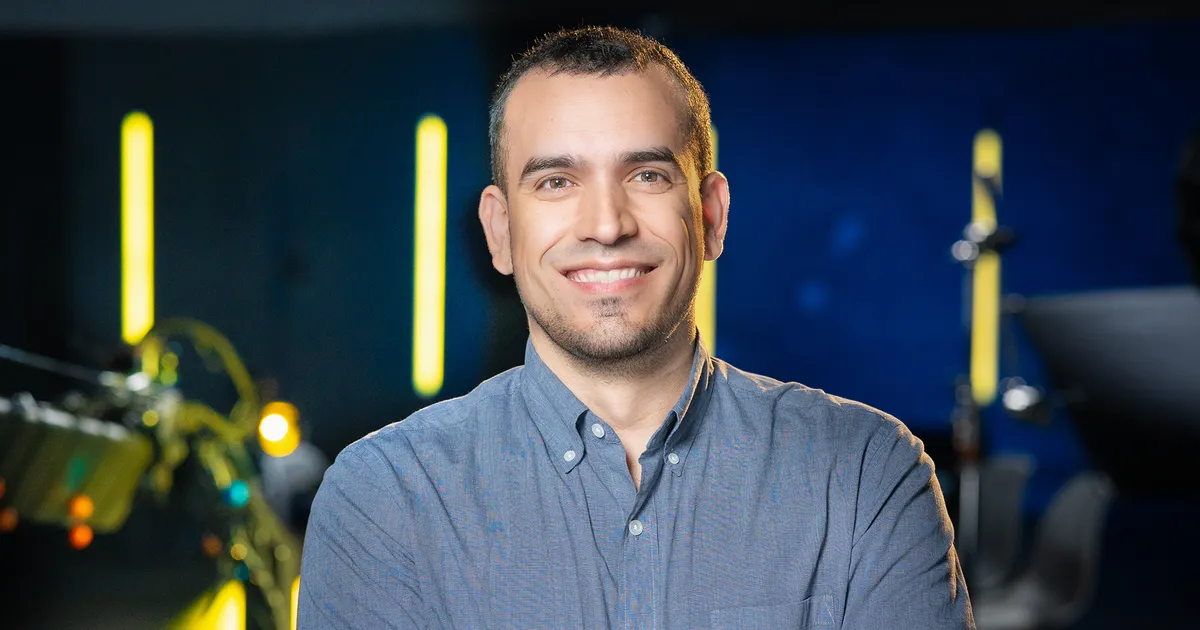
After recalibrating his initial strategy of seeking a seat in the Senate, Mújica is now betting on capitalizing on the “discontent of the community,” in his opinion, presenting himself as a “consensus builder” who seeks to dethrone Republican Carlos Giménez in the November elections.
The core of his electoral proposal moves away from the usual culture wars to focus on what he defines as “dining table” problems. For Mújica, the affordability crisis is the biggest threat facing residents of the south of the county and the Florida Keys, which are also part of the disputed demarcation.
Their statements are based on the premise that the long-awaited dream that prompted their parents to emigrate has become unattainable for the working class, suffocated by the high costs of housing and economic uncertainty.
In order to achieve victory, Mújica offers his experience in the private sector, where he says he has managed multimillion-dollar investments for the expansion of the digital economy in the Americas. He argues that Washington requires that same corporate culture: demand concrete results or face dismissal at the polls.
In a district where foreign policy is the daily talk, the candidate does not evade the complex Latin American panorama and marks a stance that is both firm and analytical on his native Venezuela.
Although he celebrates the recent departure from power of Nicolás Maduro as a historic victory for the region, he warns that remaining figures in the regime do not represent a legitimate transition. In Mújica’s opinion, success is not measured by a change of face in Caracas, but by the execution of a verifiable schedule towards truly free and institutional elections.
—Why are you taking this step in search of the 28th district seat? What motivates you?
My family came to this country from Venezuela with very little, but with big dreams, a lot of faith, and a very strong work ethic. I was raised in a home focused on faith and service to others; My dad is a Christian pastor here in South Florida and our house was always open. There were always people coming and going, looking for help, advice, and that’s where I learned what it means to love your neighbor. Much more than words, it is a responsibility, and that has guided all the professional decisions I have made until today. I spent more than a decade at Google, where I had the privilege of leading economic impact initiatives for the Americas, mobilizing nearly a billion dollars in investment to create real opportunities for employment, training, and access to the digital economy. In the end, it all comes back to the same thing: how we create a country and a society where families can move forward with dignity. I ran for this position for the 28th Congressional District because I feel that right now the ‘American dream’—the dream that my family lived, the dream that gave me the opportunity to come as an immigrant from Venezuela, to work in one of the largest and most important companies in this country in such a relevant position—is today out of reach for too many people. People aren’t asking for ideology, they’re asking for common sense: for the cost of living to come down, for real economic opportunity, and for the system to work again for those who are working hard, doing things right, and taking the right steps, but who still fall behind year after year. I am not a career politician; I come from the private sector, from solving problems and generating results, and I think we need more of that in Washington: less noise, fewer broken promises, and more solutions. That’s what this campaign is about, rebuilding the path so that, if you do things right, you can build a better life for your family.
—What will be the number one priority if the electorate places its trust in you? What do district residents ask for most?
My campaign is focused on three very clear priorities. First and foremost, the economy: lower the cost of living and create jobs that really pay well. In the end, if people don’t have access to basic needs, if they wake up every day worried about whether they will be able to pay their rent, put food on the table, or maintain their health insurance, that is the heaviest burden that District 28 families face today, and it is what we should be most focused on. The second thing is to prepare for the future. I come from the technology sector and I always talk about artificial intelligence, but we must prepare for that reality, ensuring that technology does not displace workers, but rather empowers them. And third, restore trust in the government. Today people feel that the system does not listen to them, and without trust, nothing works. This is not complicated: strong families, strong communities and a government that does its job with common sense. Of course, this includes regional, foreign policy, tax, immigration and environmental elements, but all of those conversations are intertwined in these three fundamental priorities.
—A person like you, with no experience in traditional politics, but with experience in a multinational like Google and linked to the private sector, how do you present yourself to voters?
I don’t come from traditional politics, and for me that is not a weakness, it is a strength. In the private sector, if you don’t deliver results, there are no excuses; Either you solve it or they fire you. There you have to listen, adapt and solve real problems. I think that is precisely what is missing in Washington today: less ideology and more execution, more tangible results. That is what I seek to contribute through my experience.
—Leaving the 28th district and putting the magnifying glass on Venezuela, the country of your ancestors, what future do you see for the transition process undertaken from the White House?
The issue of Venezuela is fundamental, and not only that of Venezuela, but also that of Cuba and other countries in the region. I believe that we must be able to hold two truths at the same time. First, it is very clear that the departure of Nicolás Maduro opens a historic opportunity. The country, the region of the Americas and the world itself is a better place without Maduro ruling Venezuela. He was the leader of an authoritarian regime that did a lot of damage to the country, and celebrating his departure from power is necessary. But the second truth, just as important, is that we cannot confuse a change of figure with a real transition to democracy. Today there remains a deeply corrupt power structure within Venezuela. Delcy Rodríguez is not a neutral figure; has been a centerpiece of this corrupt and criminal system, and there are very serious accusations that we cannot ignore. We cannot measure progress simply by saying ‘we are better than before’. The measuring stick has to be whether we are moving towards real democracy. What Venezuela needs now is clarity: a concrete timeline toward free, fair and verifiable elections. Without that, the risk is simply recycling power rather than transforming it. As a Venezuelan, I know that our people have not struggled for so many years to settle for superficial change. They deserve full freedom, strong institutions and a truly democratic future with dignity, which implies a transition beyond the government that is in place at this moment, where both Delcy Rodríguez, Diosdado Cabello, Vladimir Padrino López and the rest continue to oppress people and treat them without the dignity they deserve.
—Congressman Carlos Giménez is a candidate with broad support. How are Héctor Mújica’s numbers? How do you perceive the community’s support for your proposals?
The numbers are very good. My endorsement comes from my history in the private sector and as a Florida resident. I have worked for a long time in the technology sector, but also in different spaces where I have built a very strong network of people who believe that we need a change in leadership, a new generation in Washington. We have received a lot of grassroots support from everywhere: the Venezuelan community, the Latino community, the technology sector, the Florida community and various grassroots organizations in the state. I feel quite proud of that support. I think we are very close to achieving this victory. Our campaign polls from a month ago indicate that we are within the margin of error against Carlos Giménez. We’re five or six points behind him, in a district that Republicans and Donald Trump won decisively by more than 10 points in the last election. Being on such a close margin tells us everything you need to know about the frustration in the district28. I am not a career politician. Here we see families struggling to pay for health insurance and this was taken away from them. I believe the government should make life more affordable, not more difficult. In a community where 75% are Hispanic and 51% are new citizens who arrived seeking stability and dignity, we need a system that combines order with humanity, because one thing does not exclude the other.
