
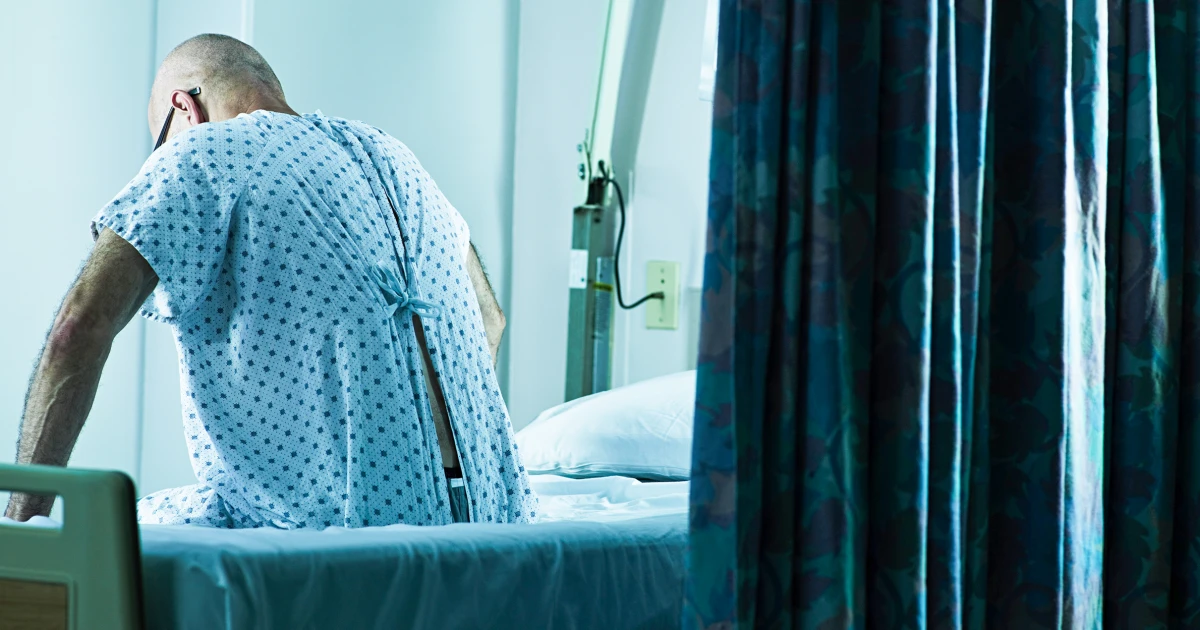
More than 400 hospitals across the United States are at high risk of closing or decreasing services due to cuts to Medicaid included in President Donald Trump’s “big, beautiful law,” according to an analysis by the progressive group Public Citizen.
The consequences could hinder access to health care for millions of people and jeopardize the jobs of thousands of health care workers, as hospitals would lose a key source of federal funding.
Medicaid covers approximately one-fifth of all hospital spending in the United States.
Cuts to Medicaid will be implemented in phases. There will be bigger changes (including new work requirements) in 2027, leading to limits on how states raise funds. Overall, the law is expected to reduce federal Medicaid funding by about $1 trillion over the next decade.
“We’re seeing hospitals that are already under severe financial strain having to make decisions to stay solvent,” said Eileen O’Grady, a researcher with Public Citizen’s Congress Watch division and author of the report. “That has pretty clear implications for the people who live in that community. It also has a ripple effect on other hospitals in those communities.”
The analysis is based on hospital financial data collected by the Centers for Medicare and Medicaid Services from 2022 to 2024, covering about 95% of the nation’s hospitals. The group defined at-risk hospitals as those in which Medicaid and other government programs for low-income people accounted for at least 20% and that have been operating at a loss in recent years.
The report did not estimate when hospitals might close or cut the services they offer.
“The closure is a worst-case scenario, but it also doesn’t rule out that hospitals will have to make really difficult decisions about reducing services that could be essential to those communities, but are simply no longer financially viable,” O’Grady said.
Across the country, hospitals have already issued statements warning that they could be forced to lay off staff or reduce care, including maternity and mental health, because of cuts to Medicaid.
For many patients, hospitals are the last place to go when there are few or no other options for care.
“When hospitals close, patients have less access to the care they need,” said Gideon Lukens, director of research and data analysis for the health policy team at the Center on Budget and Policy Priorities, a nonpartisan research group. “They have to travel further or wait longer at other hospitals that become overwhelmed. That extra time can make the difference between success and failure for urgent treatments that could save lives.”
The closures also add pressure on hospitals taking on the additional patients. O’Grady added that doctors end up having “less patience, less time, and less ability to provide the highest quality care.”
“It can be very dangerous for hospitals to be under this type of pressure,” he said.
The analysis identified a total of 446 hospitals at risk, with at least one in 44 states and Washington, D.C.
About 60% of the hospitals at risk — 267 clinics — are in urban areas, even though much of the debate over Medicaid cuts has focused on rural hospitals. Black and Latino people will be hardest hit by the cuts.
The hospitals are located in both Democratic- and Republican-governed states, although the states with the highest number of hospitals at risk are California, New York, Illinois and Washington.
Republicans also represent several congressional districts with the highest number of hospitals at risk. House Republicans who voted in favor of the Medicaid cuts have 196 at-risk hospitals in their districts, while Senate Republicans — all of whom support the cuts — represent 146 at-risk health centers in their states, according to the analysis.
The cuts could lead to a worsening crisis, especially for rural hospitals, said Zachary Levinson, director of the KFF Project on Hospital Costs.
Levinson said his estimates are that Trump’s law allocates $50 billion to support rural communities, but could reduce federal Medicaid spending in rural areas by a much larger amount: about $137 billion over a decade.
James Jackson, CEO of Alameda Health System in Oakland, California, said cuts to Medicaid represent an “existential threat.”
Alameda Health System, which gets 60% of its revenue from Medicaid payments, announced in December that it would lay off nearly 300 employees and lose more than $100 million a year by 2030. (The health network was not on Public Citizen’s list of at-risk entities, although the report noted its financial problems.)
The layoffs, which were due to take effect in March, have since been postponed.
The proposed cuts included mental health services, care for patients with chronic illnesses and an outpatient plastic surgery program. Jackson added that hospital closures are not on the table, but that the system has continued to consider reducing services.
“I don’t think the impact is going to be positive,” he said. “We are often the provider of last resort, so if we can’t provide a service, there will be a delay in care in one of the other systems in the area or they may not provide it at all.”
Trinity Health, a hospital system based in Michigan with facilities in other states, said it expects to lose $1.5 billion due to “recent and future changes in government policies.”
In January, it announced it would lay off 10.5% of its billing staff. One of its hospitals, St. Mary’s Sacred Heart Hospital, located in rural northeast Georgia, announced last October that it would close its maternity unit.
In a statement, a Trinity Health spokesperson pointed to an earlier statement that said, among other things, that the federal government is considering “further cuts” and that “such a significant financial impact cannot simply be absorbed without thoughtful, forward-thinking changes.”
