
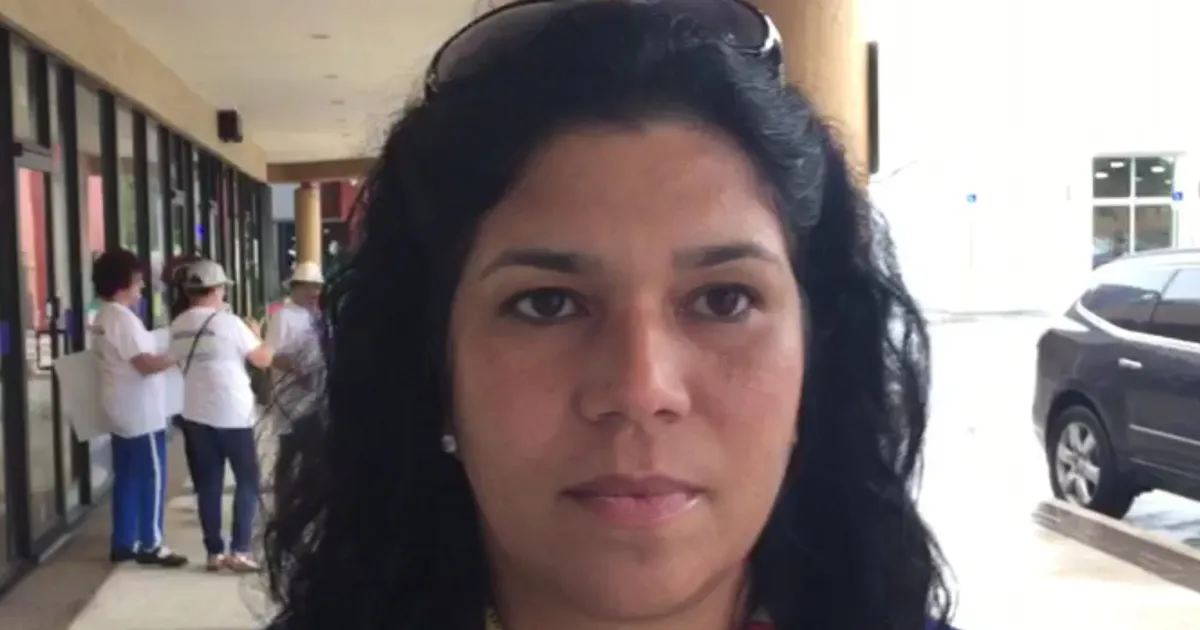
MIAMI.– Lubby Navarro, former vice president of the Miami-Dade School Board, resolved her criminal case on Tuesday by pleading guilty to a charge of third-degree theft (grand theft).
During the hearing held in a Miami court, Navarro accepted responsibility for the improper use of school district credit cards to pay for personal luxuries during the year 2022.
As part of the agreement with the Prosecutor’s Office, the former official immediately entered prison to serve a 14-month sentence, followed by a period of conditional release.
Details of the court agreement
The agreement reached allowed the additional charges of organized fraud and grand theft that were originally against the defendant to be dismissed.
In addition to the custodial sentence, the court ordered Navarro to repay more than $100,000, a sum that corresponds to taxpayer money that he illicitly diverted, according to the investigations.
The investigation revealed that Navarro used public funds to make purchases at luxury establishments and e-commerce platforms such as Apple, Amazon and Gucci, in addition to paying for personal vacation trips.
Declarations and repentance
During his appearance before the judge, Navarro showed an attitude of contrition and offered a public apology addressed to the educational institution and the community.
“I accept full responsibility for my actions. I apologize to the School Board, my former colleagues and all employees of Miami-Dade County Public Schools. I wish to put this matter behind me and serve my sentence to repair the damage caused,” Navarro said.
Reaction of the state prosecutor
Miami-Dade State Attorney Katherine Fernandez Rundle validated the resolution of the case through an official statement in which she emphasized the importance of integrity in public service and the punishment of administrative corruption.
“Public money should not be used for the personal benefit of officials. Our Public Corruption Unit remains firmly committed to protecting community resources and ensuring that those who betray the citizen’s trust face legal consequences,” he stressed.
This case closes a chapter that generated great controversy in the Miami-Dade school system, one of the largest districts in the United States, and reinforces the oversight protocols on the discretionary spending of its directors.
