
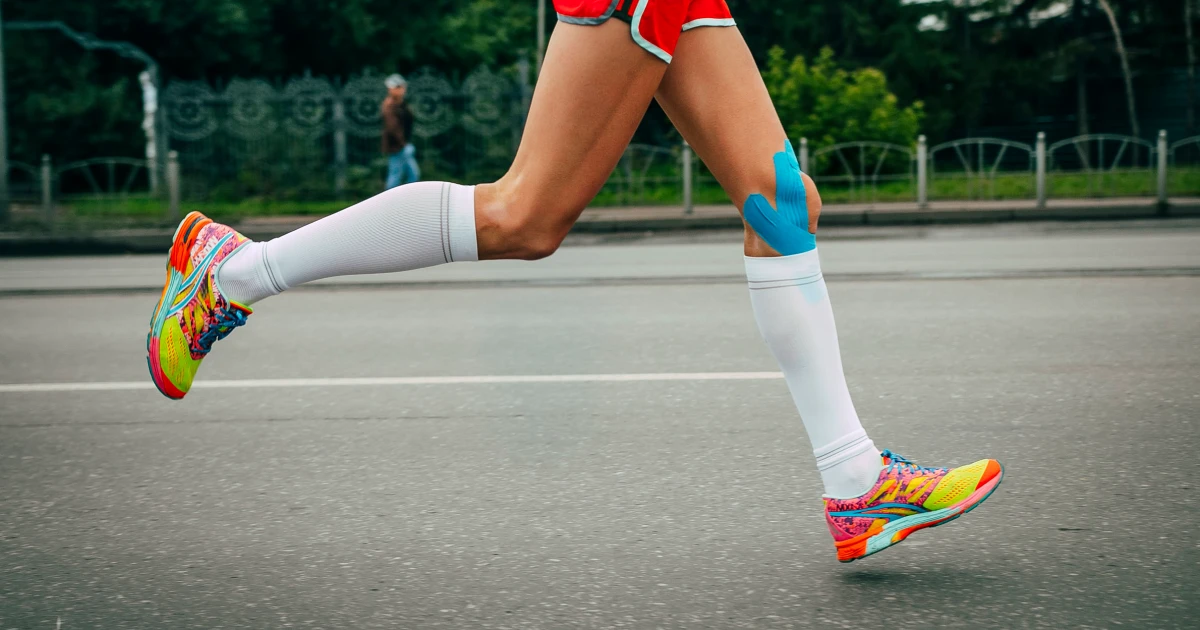
The benefits of kinesiology tape—that colorful adhesive tape that seems to cover the limbs of virtually every athlete these days—might lie more in the mind than the muscles.
In an extensive new analysis, published Tuesday in the journal BMJ Evidence-Based Medicine, Chinese researchers reviewed more than 100 studies involving 15,812 people who used kinesiology tape therapy to treat musculoskeletal disorders, such as arthritis, osteoporosis, and back and neck pain.
Kinesiology tape—also known as KT tape—is a flexible, adhesive cotton band often seen attached to the joints, extremities, or major muscle areas of athletes.
It is promoted as a treatment and protective measure against sports injuries, as well as a resource for stabilizing joints and controlling pain. Tennis champion Serena Williams has worn it on her cheek, while Olympic athletes—especially women’s volleyball players—use it all over their bodies.
The new study concluded that the tape could provide immediate, short-term pain relief, and could improve limb functionality; However, the evidence in this regard is “very uncertain” and the overall effects of kinesiology tape are inconsistent.
The researchers — who did not respond to a request for comment — noted, however, that KT tape could “improve subjective outcomes,” which could positively impact patient performance. This finding “should not be overlooked,” the researchers wrote.
In other words, what is probably actually happening is a positive placebo effect, the scientists suggested.
It’s not entirely clear how exactly kinesiology tape works, but previous research suggests that it promotes healing by lifting the skin around the injured ligament, which increases blood circulation. It may also relieve pain by reducing swelling and inflammation in the area around pain receptors and blood vessels.
According to the Cleveland Clinic, physical therapists often recommend that their patients apply the tape to the Achilles tendon, back, knee, or soles of their feet.
(Does your brain age correspond to your actual age? Exercising and having more muscle can slow your cognitive decline.)
KT tape may offer some short-term relief, but there is “a lot of imprecise data” surrounding its benefits, said Rachel Frank, a professor of orthopedic surgery at the University of Colorado School of Medicine.
“This study does not show that there is a huge clinical benefit,” said Frank, who was not involved in the new research.
“Therefore, when a healthcare professional recommends the use of KT tape, it is usually not a stand-alone treatment; and it is certainly not a substitute for a structured rehabilitation program or other treatment protocols.”
Using KT Tape for an Extra “Edge”
In a 2021 online survey among members of the National Association of Athletic Trainers, the Academy of Orthopedic Physical Therapy, and the American Academy of Sports Physical Therapy, 40% of respondents reported using the tape as a placebo for their patients.
The placebo effect may help people “feel better,” even though the tape has no real impact on their physical condition, Frank said.
And that might not be a bad thing, said Joshua Gellert, a physical therapist and board-certified clinical specialist in sports medicine at the University of Washington School of Medicine.
The tape can increase the amount of “sensory feedback” in the body, which can give people a feeling of physical support, explained Gellert, who was also not involved in the new research.
(Risk of dementia nearly doubles as Americans live longer, study finds)
“It can foster a sense of security,” he said. “If, after sustaining an injury, one does not feel safe within one’s own body, this can lead to a variety of involuntary compensation patterns or a tendency to avoid movement.”
According to Gellert, this additional “advantage” that the bandage can provide is the reason why professional athletes often use it on the field of play.
Should you use KT tape?
Although KT tape may cause skin irritation—especially in older adults, whose skin is thinner—if you find it beneficial, you can continue using it.
However, in case of injury, taping should be considered a secondary therapy, experts cautioned.
In this same sense, the new study recognizes that the benefits derived from taping are insignificant compared to other interventions, such as physical exercise.
For people who have suffered an injury, Gellert recommends following the “pillars of recovery,” which include adequate rest, good hydration and proper nutrition. Strength training and a high-protein diet are also helpful.
“In the field of medicine, there are many practices that – as long as they do not cause any harm and the patient perceives that they provide a benefit – we do not recommend abandoning,” Frank concluded.
