
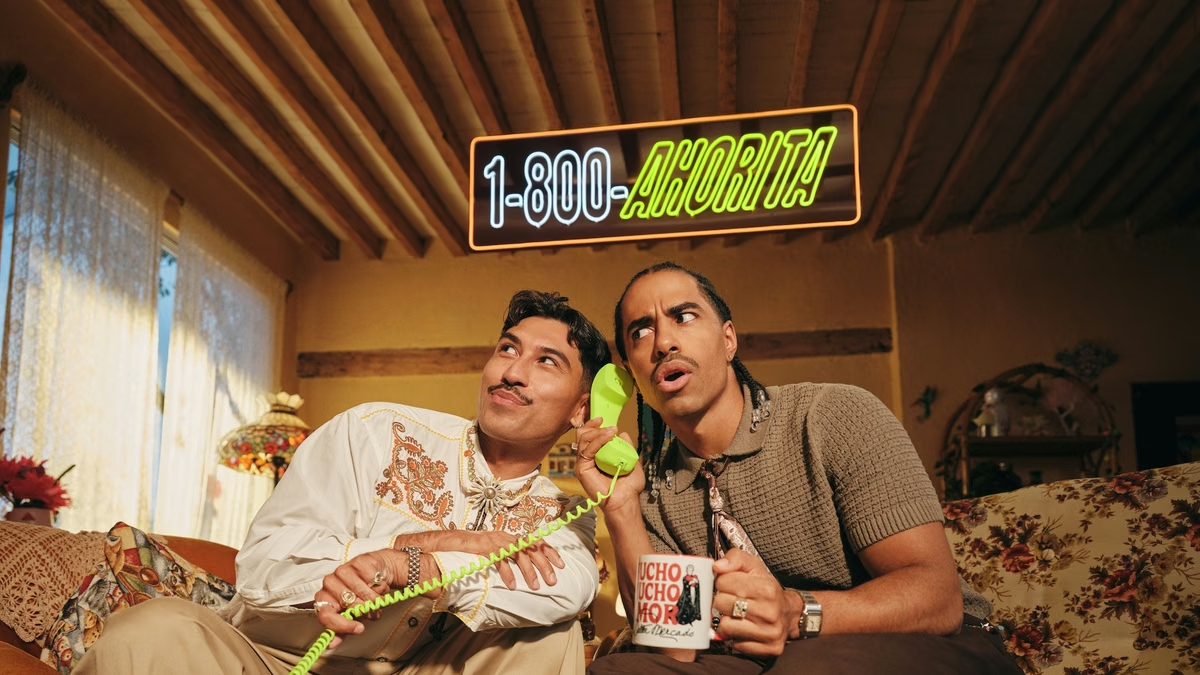
Faced with this reality, the biopharmaceutical company Gilead Sciences launched this October 15, National Latino AIDS Awareness Day, the “Ahorita Mismo” campaign, an initiative that seeks to bring conversations about HIV closer to the daily lives of Latinos through humor, cultural representation and the participation of recognized figures on digital platforms.
The proposal is part of Care for the Culture, a Gilead platform aimed at promoting conversations about health and prevention from a perspective that is culturally close to the communities it seeks to reach.
Unlike traditional health education campaigns, “Ahorita Mismo” focuses on stories and situations related to dating, intimacy and personal relationships, with the purpose of facilitating conversations that can still be difficult due to stigma and misinformation.
The initiative is aimed especially at Latino men who have sexual relations with other men, one of the groups most affected by HIV, although its messages also seek to reach the Hispanic community in general.
Figures that reveal an inequality
Available data show that the impact of HIV among Latinos continues to be considerably greater than their demographic weight in the United States.
According to AIDSVu, an epidemiological information platform on HIV, in 2024 Hispanics represented 34% of new diagnoses of the infection in the country, despite constituting approximately 19% of the US population.
The disparity is also seen among adult men. According to the Centers for Disease Control and Prevention (CDC), among men aged 24 and older whose HIV diagnoses were attributed to sexual contact between men, Hispanics accounted for 40% of the cases.
Another worrying indicator is the prevalence of the virus. In 2024, the rate among Latinos reached 582 cases per 100,000 inhabitants, a figure that was more than three times higher than that recorded among the white population, according to AIDSVu.
These differences cannot be explained solely by individual decisions or behaviors. Research on health inequalities also identifies structural barriers, such as difficulties in accessing medical services, economic barriers, lack of culturally appropriate care, and stigma associated with HIV.
In this context, specialists consider it essential to expand access to reliable information, screening tests and preventive methods, especially among populations that face greater difficulties in receiving care.
Prevention and its barriers
One of the indicators that reflect inequalities in access to preventive tools is the use of pre-exposure prophylaxis, known as PrEP, a treatment that can significantly reduce the risk of acquiring HIV when used according to medical indications.
According to AIDSVu data cited by the campaign, the Latino community has a ratio between PrEP users and new HIV diagnoses of 8.6. This is equivalent to approximately nine people using PrEP for every new diagnosis of the virus.
Among the white population, this ratio reaches 45.1, that is, around 45 PrEP users for every new diagnosis.
The difference highlights a significant gap between prevention needs and the use of this tool in both communities.
Although PrEP is one of the strategies available to prevent infection, its access may be limited by factors such as lack of awareness, costs associated with medical care, difficulties in finding health providers, and privacy concerns.
The campaign seeks to contribute to reducing these informational and social barriers, encouraging Latinos to consult with health professionals, learn about their alternatives and make informed decisions about their sexual health.
Break the silence
To connect with the audience, “Ahorita Mismo” incorporates content creators Eric Sedeño and Boman Martinez-Reid, who contribute their comedy styles and experience in the digital environment.
The participation of both responds to a strategy that seeks to move away from exclusively clinical messages to introduce HIV prevention in more natural conversations, close to the experiences and cultural expressions of Latinos.
The name of the campaign itself takes advantage of an expression widely used in Spanish-speaking communities: right now, an everyday phrase that, in this case, becomes a call not to postpone decisions related to health.
Through recognizable situations and content that uses humor, the initiative aims to reduce the discomfort that can arise when talking about HIV testing, prevention and sexual relations.
The strategy also recognizes the role of digital creators as interlocutors capable of connecting with audiences that do not always feel represented in traditional public health messages.
“Real Papi Live”
As part of the initiative, Gilead Sciences is incorporating “Real Papi Live,” an in-person experience with a podcast-like format, designed to foster open conversations about HIV and its prevention alternatives.
The meeting brings together Latin talent, content creators and community collaborators to address issues related to sexual health from a close and participatory perspective.
The activity transfers the messages of “Ahorita Mismo” to a space of direct interaction with the community, where personal experiences and the exchange of information seek to contribute to eliminating prejudices and promoting responsible decisions.
Beyond promoting screening, the initiative aims to strengthen participants’ confidence to ask questions, identify available resources, and explore prevention options that best fit their circumstances.
Cultural representation, individual autonomy and equitable access to health information constitute some of the main axes of the proposal.
A call to act
Early detection of HIV allows diagnosed people to have timely access to care and treatment. Current antiretroviral treatments can control the virus and, when a person maintains an undetectable viral load, they do not transmit HIV sexually.
On the other hand, people who do not have the virus can talk to their health care providers about preventive methods, including PrEP, and determine which ones are appropriate for them.
In this scenario, “Ahorita Mismo” invites you to start conversations about prevention with people you trust, seek professional guidance and undergo screening tests.
The campaign also promotes access to reliable resources and community participation in the dissemination of information that allows making decisions about sexual health without fear of social judgment.
Launching during National Latino AIDS Awareness Day, Gilead Sciences seeks to place HIV prevention at the center of a conversation that combines information, cultural identity and community participation.
The central message of the initiative is that prevention should not be postponed and that each person can advance at their own pace, with adequate information and support.
Those interested in learning more about the campaign and available resources can visit CareForTheCulture.com.
