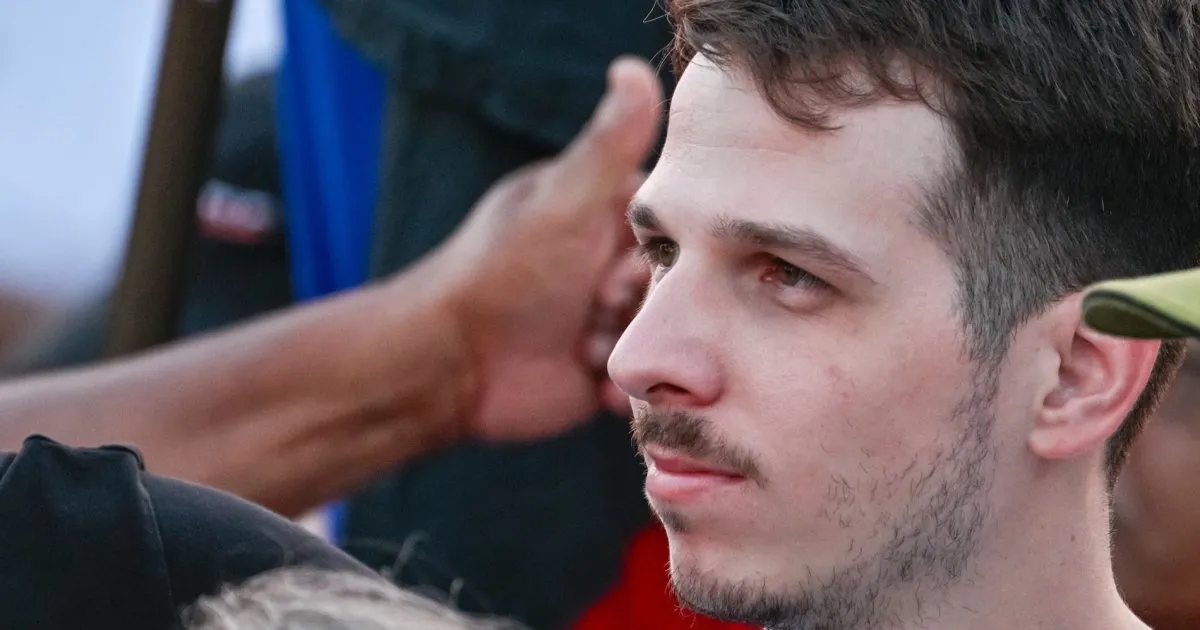
MIAMI.- The Donald Trump Administration imposed new sanctions this Thursday against Fidel Ernesto Castro Calis, grandson of Raúl Castro, and five state institutions linked to strategic sectors of the Cuban economy.
The Department of State (DOS) adopted the measures under Executive Order 14404, which authorizes restrictions against people and organizations related to repression on the island or with activities considered a threat to the national security and foreign policy of the United States.
Castro Calis, born on May 16, 1995, is the son of Alejandro Castro Espín, a former member of the intelligence apparatus, and son of Raúl Castro. His incorporation to the list is based on his status as an adult relative of a person previously designated under that presidential provision.
The Office of Foreign Assets Control (OFAC), attached to the Department of the Treasury, also added the Banco Exterior de Cuba, an institution that operates within the financial system controlled by the Havana regime.
In the energy field, Comercial CUPET SA, representative of the Cuba-Petroleum Union in negotiations and joint ventures with foreign partners, and the Oil Supply Importing Company (ABAPET) were included.
The latter functions as a subsidiary of CUPET and participates in the acquisition of technological equipment, spare parts, specialized tools and other supplies necessary to sustain the oil industry.
The actions also reached the Comandante René Ramos Latour Services Company, known as NICAROTEC, based in Mayarí, Holguín, for its support to geological and extractive operations.
Added to this is the Nickel Importer and Supply Company (CEXNI), located in Moa. The company manages foreign trade and the supply of raw materials, machinery and equipment for the production of nickel and cobalt.
The Secretary of State, Marco Rubio, stated that the decision seeks to limit the mechanisms used by the Cuban authorities to obtain resources through banking, mining and energy.
Rubio accused the Castro family and their allies within the Ministry of the Interior (MININT) of controlling the economy to favor a small circle close to power, while the population faces the deterioration of their living conditions.
As a result of these provisions, all assets and interests belonging to those affected that are located in American territory, or under the control of American citizens, are blocked and must be reported to OFAC.
The prohibition extends to any company that belongs, directly or indirectly, 50% or more to one or more of those mentioned. Unless there is a license or exemption, operations involving funds, products or services may not be carried out for your benefit.
The DOS warned that foreign citizens and international financial institutions could also expose themselves to punitive measures if they carry out transactions with those added to the list or participate in certain activities within the Cuban energy, defense, mining, financial services and security sectors.
In parallel, OFAC issued the General License for Cuba 4A. This authorization allows certain procedures necessary for the operation of diplomatic and consular missions of third countries in Cuban territory.
The new round increases Washington’s economic pressure on the family structure of Cuban dictator Raúl Castro, who, as our media exclusively reported, is seriously ill, presumably due to a cardiovascular accident and the sources of income administered by the State in times of fuel shortages, prolonged blackouts and productive contraction on the island.
