
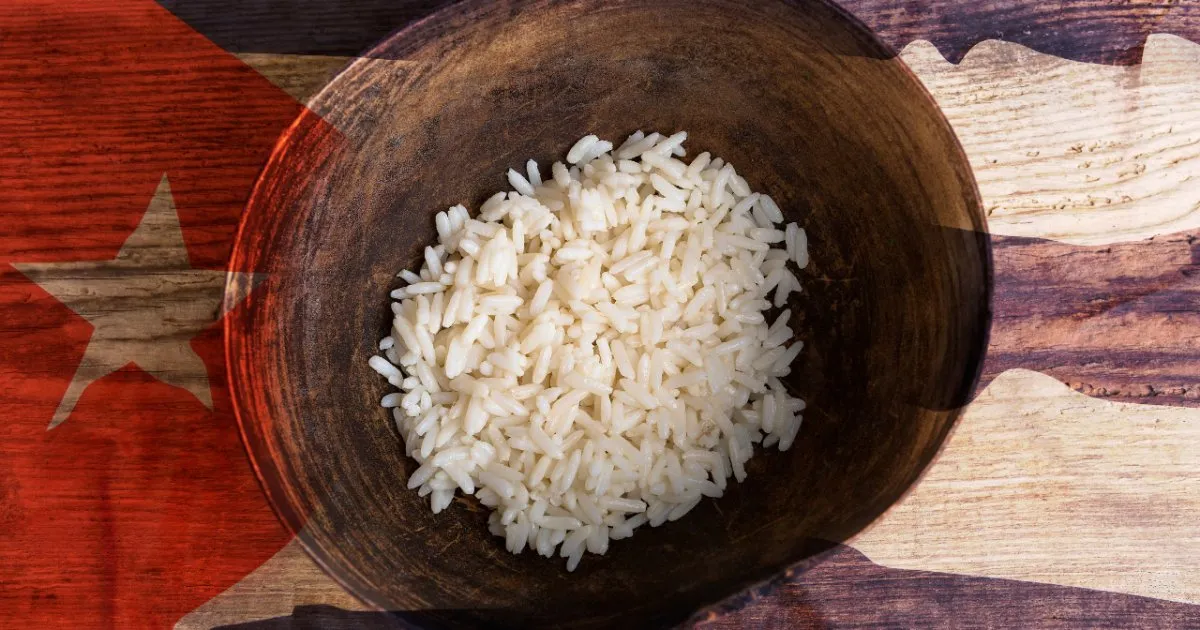
A week ago, Roiniel, 36 years old, owner of a small market located in the garage of his house, was sent a WhatsApp chat by his supplier notifying him of the new list of wholesale food prices starting August 1. He says that when he saw the list, he put his hands on his head.
“Due to inflation, it is now common for the prices of basic foods such as eggs, chicken, oil, rice and powdered milk to frequently rise in price. But they used to remain on a scale between 200 or 300 pesos upwards. And if later the price of the dollar in the informal market stabilized, the product even lowered its price a little. Now those prices in some cases have doubled and tripled.”
According to Roiniel, “since 90 percent of the food sold by the private sector in Cuba is imported, if at the time of importing a product such as eggs or chicken, there is avian flu or the war in Iran raises the price of gasoline, which makes transportation and commerce more expensive, these unforeseen events used to cause a rise in prices at the local level. This is how international trade works. In general, they are not usually large price increases. And when it happens, importers look for more options. cheap in Panama or Brazil, although the United States is the best market, due to quality and competitive prices.
“The ideal would be for small merchants to be able to import directly and choose a supplier. They say they are going to approve it, but they have not just approved it. That is where the trap is, because the State is the one that controls imports with its intermediary companies and the majority of the wholesale markets in Cuba are in the hands of people connected to the regime. Since there is no transparency, conspiracy theories arise.”
“But I can assure you that both the import of food and fuel are controlled by people close to power or by their front men. Also manichean (control) the purchase of automobiles in the United States. And they are direct and indirect partners of Cuban Americans who have a license from the Treasury Department to import to the Island.”
According to Roiniel, the power elites in Cuba have designed an opaque business network. “The private sector is divided into four classes. In the first are the MSMEs of relatives, front men or those close to them who have many privileges and can import directly. In the second, government and military officials who, when they retire, open businesses by enjoying the total trust of the authorities.”
“The third class belongs to those who started with their own capital and have been successful in their ventures. They are not relatives of heavyweights nor did they have privileges. Their businesses have grown because they know the game board. They know who the inspectors and officials are whom they should bribe. And when times of crisis come, for convenience they associate with power establishments. Almost all of that group have visas from the United States or European countries, they open accounts in foreign banks and buy properties, in case the government decides to criminalize the private sector, then they emigrate.”
“In the fourth class are the ‘body messers’, those who have a university degree or prefer to own a business rather than work for the State for a ridiculous salary. This group includes owners of small eateries in peripheral neighborhoods of Havana and regions in the interior of the country where sales and profits are lower. The money gives you enough money to have breakfast, lunch and lunch. Buy an electric motorcycle, repair your house and drink beer on the weekends.”
“But, from the second to the fourth class we are not autonomous. We are under the yoke of the State and its capricious rules of the game. They use us like prostitutes who must give their pimps a large part of the money they earn. The private sector in Cuba sells in pesos to the client, but you have to go out and buy dollars on the street at informal market prices to be able to replenish your supplies. A part of those dollars goes to the state pockets: suppliers only want foreign currency to be able to buy abroad. And when they want to optimize their profits, they simply raise the price of the products,” explains Roiniel.
Due to the scandalous rise in products such as chicken, oil and eggs, among others, the Havana entrepreneur considers that “this time the cause was not that the dollar revalued in the informal market. No. The maneuver has been smarter. With the approval of the package of 176 new economic measures, some apparently very liberal in nature, and the prohibition of price capping, it is very suspicious that two weeks later the prices of the most consumed foods will skyrocket.”
“I have no concrete evidence, but I am convinced that it is a way of shaking the bush to loosen the ballast. Who is in the way? The thousands of resellers, many without licenses, and small neighborhood merchants who are free electrons and are not connected to the authorities. The government has always been concerned about the emergence of a class outside of its control. Now due to this increase in prices, we are losing customers and we are victims of popular discontent and the official press, which blames us for this induced inflation.”
“Then the government appears in a Robin Hood style ‘to defend the people from the abuses of these hucksters’. Then, as a result of a domino effect, the governments of Guantánamo, Villa Clara, and soon the rest of the provinces, will apply measures to cap prices. With this movement they put the private sector on the public picket. Those who, out of ambition or stupidity, bought oil, eggs or chicken from their supplier at high prices, now with the prices capped they will have considerable losses and some will be forced to close their businesses. This price increase is not justified either by the cost of gasoline (fuel has dropped in price), or by the rise in the currency, which remains stable: it is a political move,” says Roiniel.
An official from the Ministry of Domestic Trade reveals to DLA that “behind this price increase, a scenario has been designed for the emergence of a new economic actor. The government has justified the price increase by accusing the United States of withholding the shipment of just over 7,000 containers of food products to Cuba. Something that is strange. Perhaps the State Department has discovered that these imports, supposedly from the private sector, belong to military companies such as GAESA or others that are on the black list.”
“I don’t know if this information is true or not. But what is real is that there are many containers of food in the port of Mariel held because companies linked to the government are exerting pressure to buy them from the private sector at a cheaper price,” the official clarifies.
Why? I ask him. “Because the so-called neighborhood markets were approved. With them the authorities try to replace those of private wineries that have emerged like flowers in neighborhoods throughout the island and the majority evade the treasury. These three resolutions approved by the Official Gazette on August 4 seek to rescue the thousands of undersupplied state wineries.”
“The government wants to establish an alliance with the private sector by granting it tax benefits. Through a tender, the merchant rents the premises, exempts it from taxes for two years and if they repair the establishment, they give discounts on their taxes. Of course, they have to accept unemployed state workers into their workforce. They must also have a closed list of basic products. The objective, they say, is to sell food at lower prices. I suppose that for those neighborhood markets, they will approve a part of the private sector similar to the government,” summarizes the Internal Trade official.
The owner of a restaurant south of Havana is clear about it. “It means putting the private entrepreneurs who go it alone under the trap. These neighborhood markets will be able to sell at lower prices because the State controls the entire mercantile and wholesale structure of internal trade. If you want to maintain a profitable business, we will have to accept the new scenario. We have no other option.” It is not legitimate competition, it is imposition.
