
“We are talking about a minimum duration of the eclipse. It should not have any impact on electricity production,” explained European Space Agency (ESA) astronomer Pedro García Lario, in an informative meeting with the media.
However, the ESA expert specified that, for example, automatic lighting systems, which are activated when it gets dark, “it is possible that they are activated during the minutes of the eclipse.” “It’s something simply anecdotal and curious, simply,” he commented.
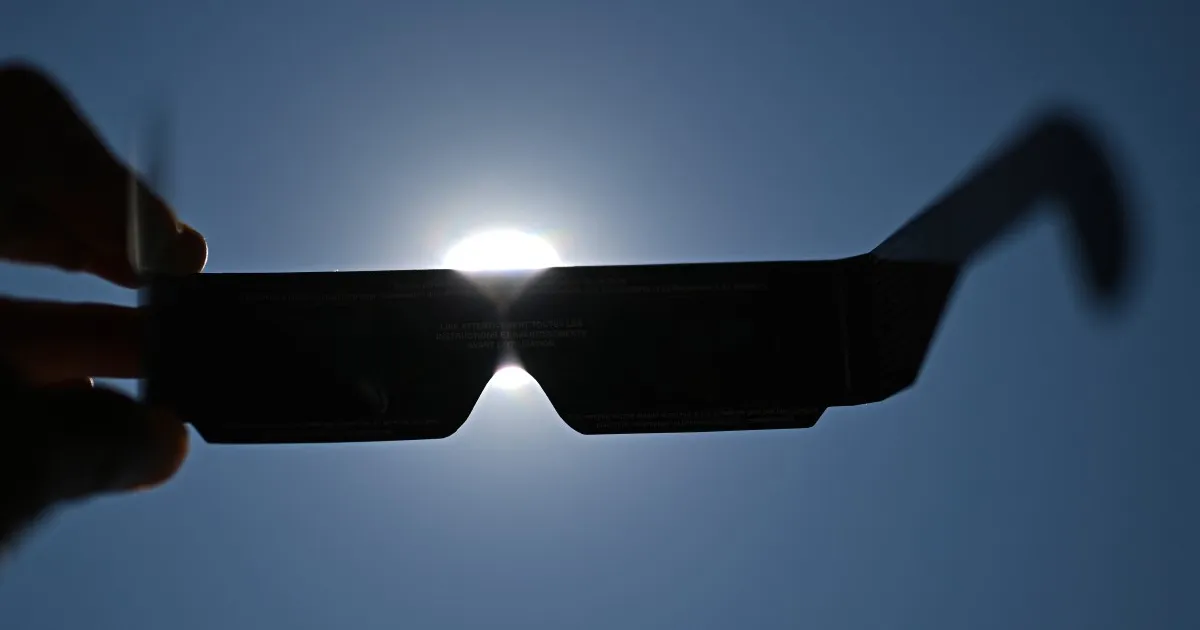
On August 12, a total solar eclipse will take place in Spain that will cross the peninsula from Galicia to the Balearic Islands. This type of astronomical phenomenon has not occurred completely in the country since 1912.
Faced with such an unusual event, some people may wonder if it will pose a problem for the Spanish energy system, “but nothing could be further from the truth,” Endesa points out.
That day, the power supply should not experience significant variations due to the eclipse. Although it is expected that photovoltaic production will temporarily decrease during the setting of the Sun, Red Eléctrica already considers this type of scenarios in its planning.. In fact, the closest reference, the 2015 eclipse in Europe, was managed without any major incident being recorded.
A total solar eclipse is the astronomical phenomenon that occurs when the Moon completely obscures the Sun as seen from Earth. The solar eclipse in Spain will occur on August 12 during sunset, between approximately 7:30 p.m. and 9:30 p.m., although the zenith of the event will last only a few seconds.
Due to its geographical location and its high solar irradiation, Spain is one of the European countries with the highest photovoltaic production.
According to Red Eléctrica data, August 2025 was the best month of the year for solar energy production, only behind June and July, with a total of 5,822 GWh, which represents a contribution of 24.8% to the electricity mix.
On a typical August evening, when the Sun is already low, photovoltaic generation can still be significant, but it drops rapidly to zero in a matter of a short time, especially after sunset.
In this context, the total solar eclipse on August 12 will have a limited effect on the electrical system; since it will occur when photovoltaic production is already in a descending phase. Therefore, its impact will be less than that of an eclipse in the middle of the day.
It is not the first time that an astronomical phenomenon of these characteristics puts the Spanish electricity network to the test. On March 20, 2015, a partial eclipse affected much of Europe, including the Iberian Peninsula, between 9:00 a.m. and 12:00 p.m.
During that interval, the continent’s photovoltaic generation was reduced by around 35,000 MW, a volume equivalent to dozens of conventional power plants. “This behavior required an immediate coordinated response to maintain the balance between supply and demand in a highly interconnected electrical system,” says Endesa.
European Transport System Operators (TSOs), coordinated through ENTSO-E, managed to successfully manage the event thanks to prior planning and cross-border cooperation.
Therefore, this episode is considered a clear example of the capacity of the European electricity system to absorb sudden variations in renewable generation.
Red Eléctrica acts as the “control tower” that guarantees the constant balance between generation and consumption. You can anticipate a potential drop in production thanks to a series of mathematical algorithms to predict demand based on meteorological, economic and work variables.
International interconnections are also important. Thanks to being linked to networks such as the French or Portuguese, if a generator fails unexpectedly, these countries can provide energy to make up for the loss, preventing the user from noticing any alteration.
In addition, the Electrical Control Center (Cecoel) monitors the system 24 hours a day and in real time. For its part, Red Eléctrica can ask large industries to reduce their consumption to quickly stabilize the network in critical situations. Thanks to all these processes, electricity reaches homes safely and continuously, whether there are eclipses or not.
In this way, Endesa concludes that the solar eclipse “does not have to affect the electricity supply” of homes. Whether in the zone of totality or outside it, no change in the current should be noticed.
For those who have solar panels at home, during the eclipse, production can drop to zero in the zone of totality for one or two minutes. “If you have a battery and charge it in the morning, you will not notice any impact. If you do not have a battery, the consumption will be taken from the network during that hour like any night,” the company notes.
