
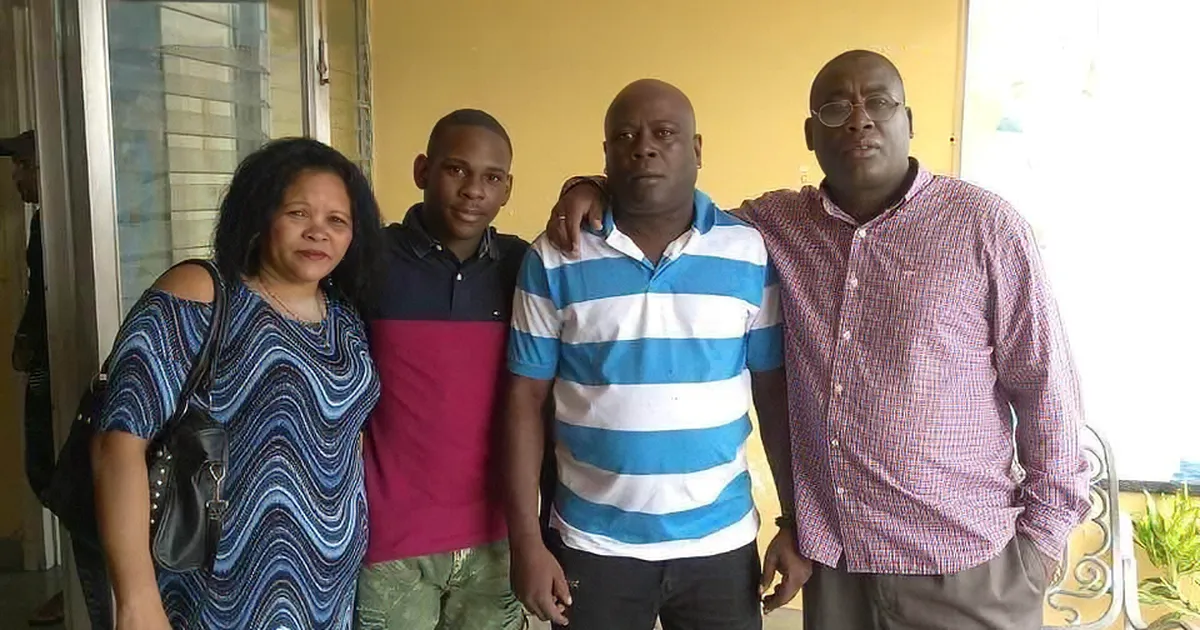
The former political prisoner, exiled in Miami, demanded the release of the Yoruba priest, sentenced to seven years in prison for his participation in the demonstrations, and warned about the deterioration of his health in the Guamajal prison, Villa Clara.
Face of 11J
In the text, Antúnez described the date as a day marked by the name of his brother and that of his wife, Donaida Pérez Paseiro, also imprisoned.
“For me, July 11 has the face of my brother,” wrote the opponent, who recalled the five years that had passed without contact with Hernández García. “Five years without hearing your voice. Five years without a phone call. Five years without being able to give you a hug,” he said in the letter.
The activist also recalled his brother’s appearance before the Provincial Court of Villa Clara, where, according to his story, the priest did not retract his conduct.
Hernández García stated that he did not regret having taken to the streets on July 11 and that he would repeat his decision on another similar day, according to the letter. “You and Donaida showed that dignity cannot be imprisoned,” said the opponent.
Sentences of seven and eight years
Hernández García, vice president of the Free Yoruba Association of Cuba, was arrested on July 15, 2021, three days after the protests in the municipality of Placetas.
A court sentenced him to seven years in prison for the crimes of contempt and public disorder, in a process that Amnesty International described as unfair and lacking evidence. The organization declared him a prisoner of conscience.
Pérez Paseiro, a Yoruba priestess and leader of the same association, received an eight-year sentence for the same reason. She was released from prison in January 2025 under a home-prison regime, but in June of that year the Provincial Court of Villa Clara revoked the measure and returned her to Guamajal.
Health alarm
The health of the political prisoner is the main concern of his relatives. Hernández García, 55, suffers from uncontrolled diabetes, hypertension, ischemic heart disease, respiratory problems and pancreatitis.
Doctors have recommended his release for health reasons, without the prison authorities agreeing, according to his relatives.
On June 30, Amnesty International called for his “immediate and unconditional” release after receiving information about a cardiovascular and diabetic relapse. The organization’s researcher for the Caribbean, Johanna Cilano, warned of new episodes of high blood pressure and heart conditions without adequate treatment.
‘Antúnez’, who served 17 years and 38 days as a political prisoner between 1990 and 2007, alluded to that experience in his letter to assess his brother’s situation.
“I know hunger. I know beatings. I know torture,” he wrote. The opponent, who has lived in the United States since 2019, closed the message with a promise: “I don’t know when I will hug you again. But I do know one thing. That day will come.”
Full letter:
To my brother, Loreto Hernández García:
This July 11 marks five years since those historic days in which the Cuban people lost their fear and took to the streets demanding freedom. For many it will be just another date. For me, no. For me, July 11 has the face of my brother.
It has the name of Loreto Hernández García. He also has the name of his wife, Donaida Pérez Paseiro, who was sentenced to seven and eight years in prison for peacefully exercising a right that should never have been punished: the right to express one’s ideas.
Five years have passed. Five years without hearing your voice. Five years without a phone call. Five years without being able to give you a hug. Five years wondering how you wake up every day behind those walls, how you resist the pain, how you keep hope alive.
And yet, my brother, when I think of you I do not only feel sadness. I feel immense pride. Because your dignity has been stronger than the bars. Because when you appeared before the Provincial Court of Villa Clara and they asked you about your actions, you did not ask for forgiveness, you did not lower your head, you did not negotiate your principles. You said, with the serenity of free men, that you did not regret having gone out on July 11 and that, if Cuba experienced another day like that, you would take to the streets again.
Those words shook that room. And they also shook the hearts of those of us who believe that freedom deserves any sacrifice. You and Donaida showed that dignity cannot be imprisoned.
Today you remain imprisoned. Not because you have committed a crime. Not because you have hurt anyone. You remain in prison for thinking differently. For not giving up your convictions. For your religious vocation. For your commitment to freedom. And also, I am convinced, because the prejudice and discrimination that has so often accompanied political repression in Cuba has fallen on you.
It hurts me deeply to know that your health is deteriorating. It pains me to know that doctors have warned on more than one occasion that your condition is incompatible with the prison regime and that, even so, you remain imprisoned.
Every day that passes my worry increases. But it also increases my admiration. Because neither illness, nor confinement, nor injustice have managed to defeat your spirit.
Dear brother: I know the prisons of Cuba. I know their cells. I know hunger. I know the beatings. I know the tortures. I know the denial of medical care. I spent seventeen years and thirty-eight days as a political prisoner touring some of the toughest prisons in the country. I know perfectly well the price you are paying. And precisely for that reason, because I know that pain, there is not a single day when I stop thinking about you. Today I live the pain of exile.
But there is even greater pain. The pain of knowing that my brother remains a prisoner while I can do nothing but raise my voice so that the world does not forget them. I would like these words to pass through the bars. Let them overcome the distance. That they will reach where you are. And that, for a moment, you felt the hug that I couldn’t give you five years ago. I want you to know that you will never be alone. May your name live in our prayers. May your example strengthen us. May your resistance inspire us. And that your sacrifice will not have been in vain.
Tomorrow, when the world remembers the fifth anniversary of July 11, I will not just remember one date. I will remember my brother. To the man who preferred prison over resignation. To the man who chose dignity over silence. To the man who, even behind bars, remains freer than those who imprisoned him.
Dear brother: I don’t know when I will hug you again. I don’t know when I will hear your voice again. But I do know one thing. That day will come. And when it arrives, that hug will contain the five years of silence, tears, hope and love that separate us today.
May God protect you. May God also protect Donaida. And that very soon they can return to the freedom that they should never have lost.
Until then, receive this immense hug, born from your brother’s soul, that neither exile, nor distance, nor bars will be able to prevent it from reaching you.
I love you. I admire you. And I will never stop fighting for your freedom.
