
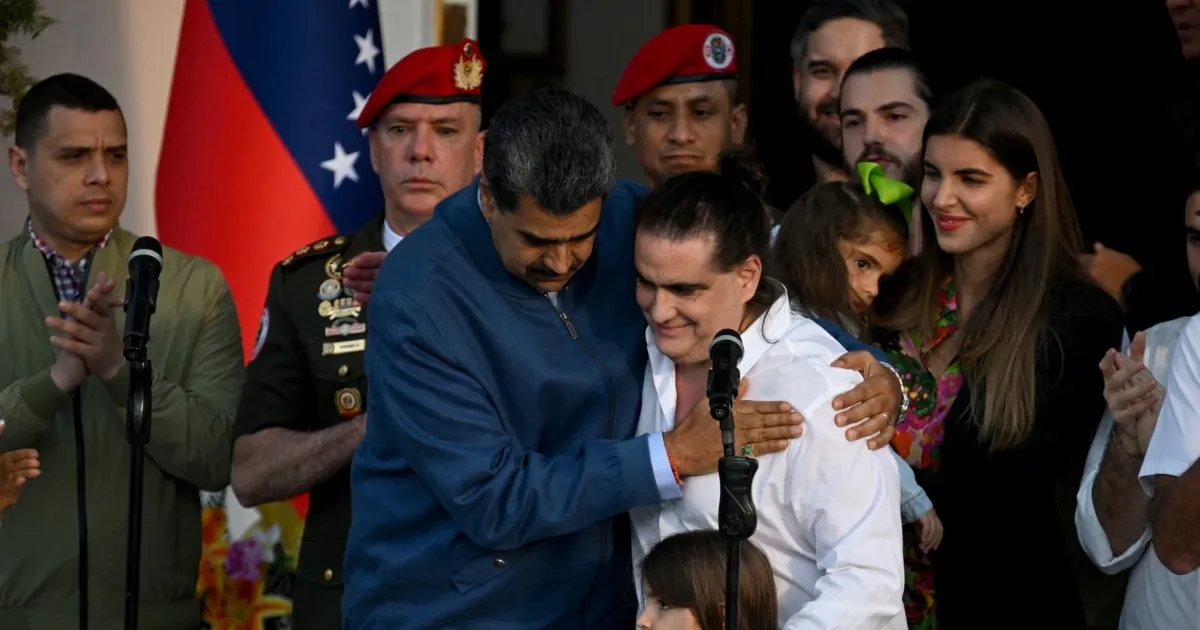
VEThe case of Alex Saab generates political interpretations inside and outside Venezuela. After the Colombian businessman, identified by the United States as a key piece of Chavismo’s financial structure, was handed over to the US authorities this Saturday, May 16, the Venezuelan regime avoided using the word “extradition” and preferred to refer to the process as a “deportation.”
For the Venezuelan magistrate in exile Miguel Ángel Martín, the decision is not accidental and responds to political and constitutional reasons.
“The main reason is that the Venezuelan Constitution prohibits the extradition of Venezuelan citizens,” Martín explained in statements offered to DIARIO LAS AMÉRICAS.
For years, Chavismo maintained that Saab had been nationalized as a Venezuelan and also presented him as a diplomat and state official. That narrative was used even when Saab was detained in Cape Verde and later transferred to the United States, where he was imprisoned until 2023 when he was exchanged by the Joe Biden administration for 10 Americans held in Venezuela.
Therefore, according to Martín, admitting an extradition now would represent an uncomfortable contradiction for the regime.
“The regime maintained for years that Saab had been nationalized as a Venezuelan and also presented him as a diplomat and state official. Therefore, speaking of ‘deportation’ allows it to avoid formally recognizing that it handed over one of the men closest to Chavismo’s financial apparatus to American justice,” he stated.
The analysis also points to a deeper political dimension. For the magistrate, the language used by the ruling party seeks to reduce the internal impact and preserve the discourse of historical confrontation against Washington.
“It is a political and legal formula to reduce the internal cost and protect the official narrative,” he said.
However, Martín considers that the international message is difficult to hide.
READ ALSO: Alex Saab, former minister and front man of Maduro, is “deported” to the US after years of scandals
“It demonstrates a level of cooperation – or even political subordination – with the US that would have been unthinkable a few years ago,” he said.
Saab was for years one of the figures most protected by Chavismo. Nicolás Maduro even described him as a “Venezuelan diplomat” and demanded his release when he was arrested in Africa.
Now, the change in the handling of the case raises questions about possible political negotiations between Caracas and Washington, especially at a time when the Venezuelan regime seeks to ease sanctions and reduce international pressures.
Although legally Chavismo tries to distance itself between a “deportation” and an “extradition”, Martín considers that the political effect is practically the same.
“In practical terms, although legally they call it ‘deportation’, politically the effect is similar to that of a negotiated delivery,” he concluded.
