
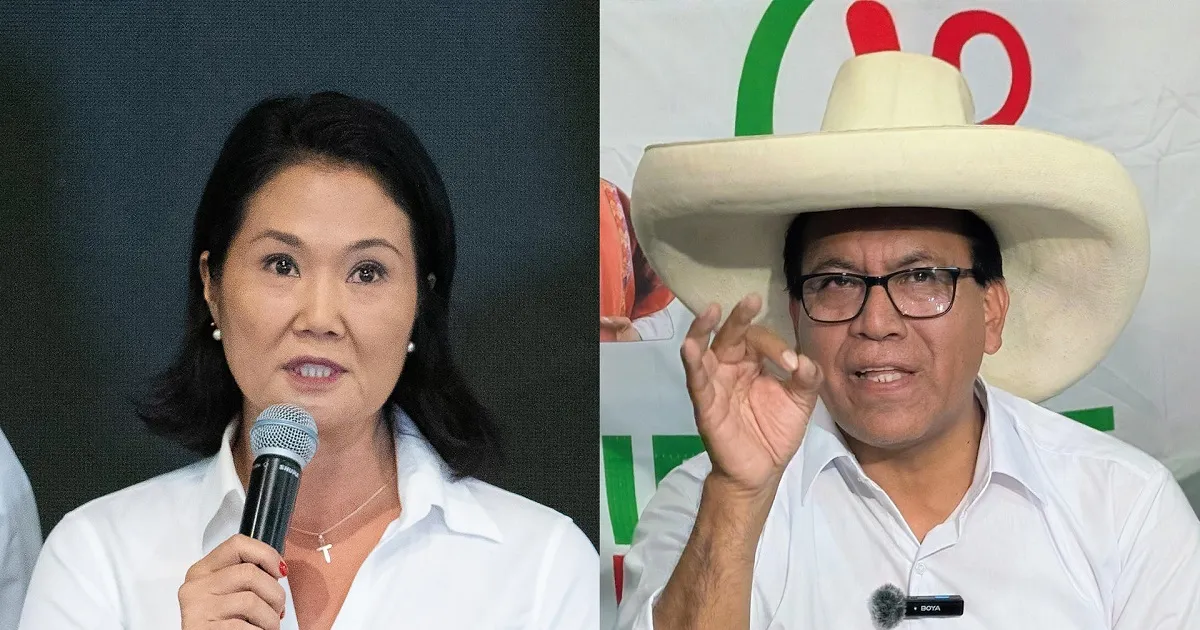
LIMA.- Right-winger Keiko Fujimori and leftist Roberto Sánchez will face each other in the second round of Peru’s presidential elections on June 7, according to the official proclamation of votes on Sunday.
The daughter of the late former president Alberto Fujimori won the first round on April 12 with 17.1% of the votes, followed by Sánchez, with 12%, reported the National Elections Jury (JNE).
The ultra-conservative Rafael López Aliaga finished in third place with 11.9%, with about 21,200 votes less than Sánchez.
The first electoral round was marked by delays in the delivery of electoral material in Lima, which forced the authorities to reopen some voting centers the next day.
Despite pointing out “serious deficiencies”, the European Union’s electoral observation mission gave the election a full go-ahead.
“Today economic stability, democracy, freedom to undertake and to work are at risk (…) I call on you to transform fear and disappointment into action and hope,” Keiko Fujimori told the press on Sunday after the JNE announcement.
López Aliaga, for his part, refused to recognize the results.
“We will immediately challenge this serious crime of treason. We will not accept results resulting from fraud and corruption,” said the former mayor of Lima in his account on X.
The runoff campaign is expected to be as polarized as that of 2021. Then Fujimori faced the leftist Pedro Castillo, who became president but tried to dissolve Congress and was dismissed in December 2022.
It is the fourth time that Keiko Fujimori, 50, has competed for the presidency.
For Sánchez, 57 years old and former Minister of Commerce of the imprisoned Castillo, this is his first application.
The two will compete for the presidency amid severe political instability in which Peru has had eight presidents since 2016.
Most were dismissed or resigned to avoid a similar fate due to accusations of rebellion or corruption.
Sánchez begins his campaign for the runoff wrapped in judicial problems.
The Prosecutor’s Office requested a sentence of five years and four months in prison against him for allegedly having provided false information to the electoral authority about contributions to his campaign between 2018 and 2020.
Peru is also plagued by a severe security crisis due to the rise of organized crime.
