
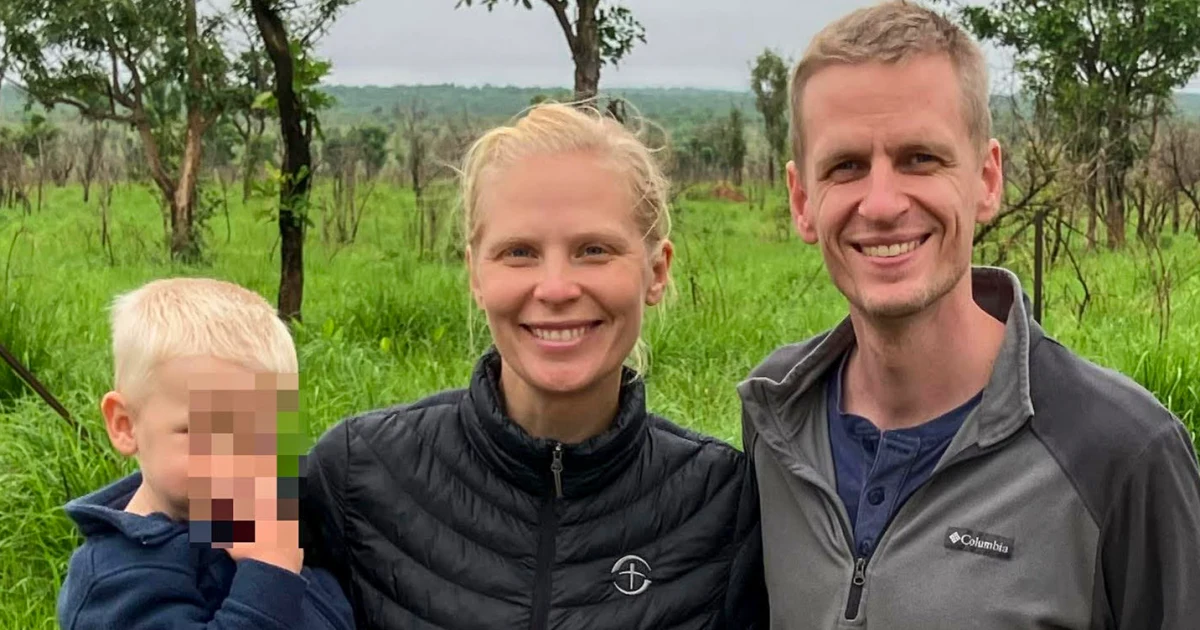
When the American surgeon who contracted Ebola in the Congo was flown to Germany for treatment on Tuesday, he could barely stand on his own, according to two leaders of the Christian missionary group where he worked.
Dr. Scott Myhre, director of the group’s East and Central Africa zone, called Serge, described the scene at the time of Dr. Peter Stafford’s departure.
“There were people in full gear – we call it PPE – personal protective equipment, and they were completely covered, and he was clinging to them with barely any strength to walk,” Myhre said. “He looked very tired and very sick.”
Stafford worked at Nyankunde Hospital, located in the Ituri province of Congo, where the Ebola outbreak is concentrated. Days before the Africa Centers for Disease Control and Prevention confirmed the outbreak, Stafford operated on a 33-year-old patient with severe abdominal pain, Myhre said. At the time, doctors thought the patient had a gallbladder infection.
Stafford “performed an abdominal procedure and found that the gallbladder was normal, so he closed the incision, but the patient died the next day,” Myhre said.
(USA applies Title 42 and restricts flights due to the Ebola outbreak, a few days before the World Cup)
Days later, they realized that the patient, who was buried before tests could be performed, likely died of Ebola. Stafford developed symptoms over the weekend and tested positive for Ebola on Sunday, according to the U.S. Centers for Disease Control and Prevention. (CDC).
“He is a very meticulous professional, and for each surgical case he performs, he dresses completely in sterile clothing, gloves, caps and glasses,” Myhre said. “But that is not enough to prevent exposure to Ebola.”
Stafford’s wife, Rebekah Stafford, is also a doctor and treated the same patient. She and the couple’s four young children remain for now in the Congo, where they are under observation, Myhre said. Another doctor, Patrick LaRochelle, is believed to have been exposed through a second patient and is also under observation. None have shown signs of illness.
(They recommend vaccinating children against HPV due to the increase in cases of head and neck cancer)
“We don’t see many pediatric cases of Ebola, and we really hope that (the opposite) is not the case here,” Myhre said.
Stafford quarantined himself as soon as he developed symptoms, Myhre said, which included chills, fever, muscle aches, fatigue and nausea.
For the flight to Germany, Myhre said, Stafford was placed in a tube-shaped plastic bed, “about the size of a coffin,” to protect the plane crew from possible infections.
(They warn of an increase in visits to emergency rooms due to tick bites)
The incubation period of the virus is up to 21 daysaccording to the World Health Organization (WHO), whose leaders have expressed deep concern about the “magnitude and speed of the epidemic.”
The virus had likely been spreading for weeks before the outbreak was identified. The death toll has risen rapidly: at least 131 people are believed to have died in Central Africa, and 531 are suspected of being infected.
The type of Ebola that is fueling the outbreak is a form less common known as Bundibugyofor which there is no approved vaccine or treatment. During previous Bundibugyo outbreaks, the mortality rate ranged between 30% and 50%, according to the WHO.
