
The wave of mushroom poisoning that has continued for months in California, in which four people have died and another 43 have been hospitalized, has become the largest outbreak of its kind known in the history of the United States, according to experts.
Three cases were reported earlier this week, well after the usual growing season for the fungi responsible for the poisonings, leaving public health authorities and mycologists baffled as to why the poisonings have been so widespread and what is causing the trend.
The three most recent cases were in a family that had picked mushrooms in Napa County last Saturday, whose members fell ill on Sunday and were hospitalized at Stanford Medical Center, according to Dr. Christine Wu, Napa County public health officer.
Since the outbreak began in November, affected patients have ranged in age from 19 months to 84 years, according to the California Department of Public Health. The cases have come in clusters, with at least six involving families who are likely They shared the same batch of harvested mushrooms. Four people have received liver transplants, according to the state poison control system.
Cases of poisoning have been reported in more than 10 counties in the San Francisco Bay area and along the central coast of California. After cases began to skyrocket in late fall, California health officials warned people not to consume foraged mushrooms.
(The phenomenon of late motherhood is becoming more common every day, but it involves medical interventions)
“This is certainly a much larger outbreak than usual. It’s lasting longer and spreading much further into the year than we would have anticipated,” said Heather Hallen-Adams, chair of toxicology at the North American Mycological Association. “I don’t think we can really determine why.”
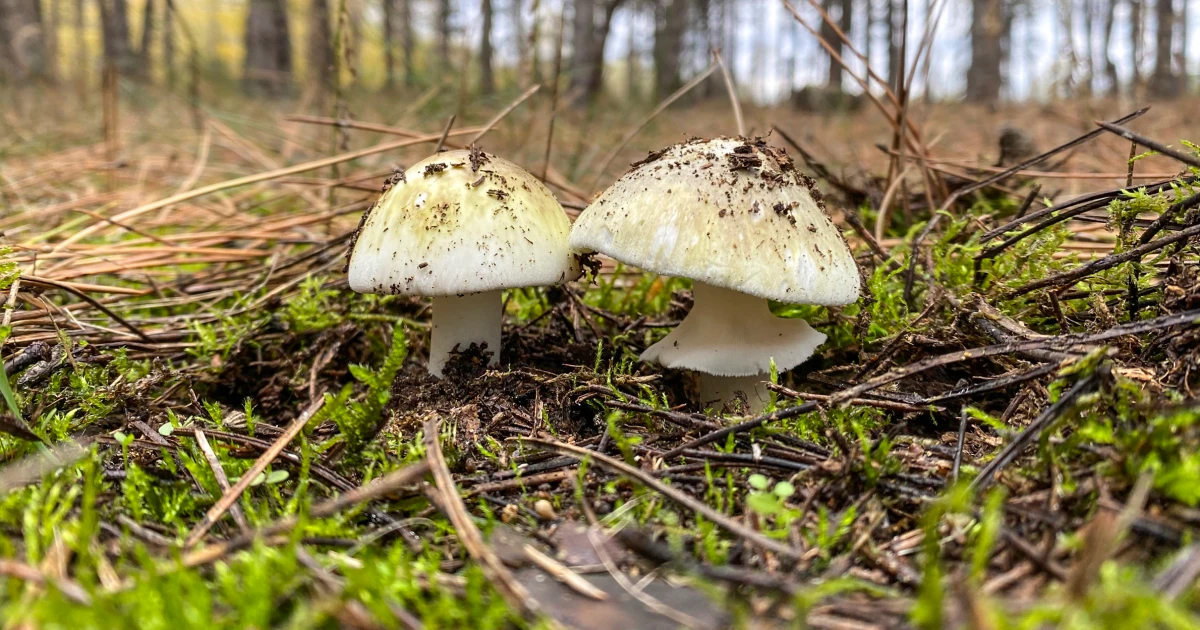
The main culprit of poisoning is death mushroomalso called Amanita phalloides. A second mushroom, called the western destroying angel or Amanita ocreata, is responsible for some cases. In a normal year, around 50 cases of Amanita mushroom poisoning are reported nationwide – a figure that California has almost reached on its own. Five new cases have been reported this month.
“What’s unusual about this is that fly agaric season is usually in December and January,” said Anne Pringle, a professor of mycology at the University of Wisconsin-Madison. “Why is this happening?”
(One in 10 adults has high cholesterol in the US. Here’s how you can reverse it)
The outbreak is exposing the shortcomings of California’s public health system, as well as the lack of solid scientific data about these toxin-producing mushrooms.
Under state regulations, health care professionals are not required to report cases of amatoxin poisoning to public health authorities, which means the California Department of Public Health (CDPH) is tracking cases through a more cumbersome and less structured process than is used for many other conditions, such as E. coliWest Nile virus or shellfish poisoning.
“Right now, the way we find out about these cases is, in fact, through the California Poison Control System,” Wu said. “They are trying to track them and then report them to the CDPH.”
Wu added that the state health department is working to add amatoxin poisoning to its list of notifiable diseases. The department did not immediately respond to a request for comment.
(The CDC confirms that there are no cases of hantavirus in the country, although they monitor 41 people)
The three family members who fell ill over the weekend were not Napa residents, Wu said, but had reportedly collected the mushrooms in a rural area of the county.
“I was informed of these cases only because (…) They found the mushrooms in Napa County“he explained, adding that there was no requirement that he be notified. “That is information that I can act on to protect other members of the community in Napa.”
Most people who have been sickened by poisonous mushrooms in California since the outbreak began speak Spanish, although others speak Mandarin, Ukrainian, Russian, Mam and Mixtec (indigenous languages of Central America).
So public health experts believe some people may be relying on collection practices developed outside the United States.
“We know that the death mushroom and the western destroying angel, when grown, look very similar to some of the native mushrooms that are edible in their countries of origin,” Wu noted.
He added that the Napa County Public Health Department has purchased radio ads to air in English, Spanish and Mixteco to warn about toadstools. California Department of Health has produced brochures in nine languages.
“I am very surprised that we have not been able to reach the Spanish-speaking community better, and that is a public health responsibility,” Wu said. “So we are going to work harder to achieve it.”
The death mushrooms are an invasive species native to Europe that arrived in California in the 1930s, most likely with imported nursery trees. Destroying angels are native to the state. In California, the death mushrooms They usually grow near oaks and, occasionally, pines. The mushroom is usually a few centimeters tall, but can grow larger, and has white blades, a pale yellow or green cap, and a ring around the stem.
The amatoxins produced by these mushrooms can damage the kidneys, liver and gastrointestinal tract. Symptoms of amatoxin poisoning can take up to 24 hours to appear and include nausea, vomiting, diarrhea, and stomach pain. More serious reactions, such as fatal liver damage, can develop within two to three days. Amatoxin is responsible for most fatal mushroom poisonings. Ingesting an amount as small as the volume of a sugar cube can be fatal.
Mike McCurdy, president of the San Francisco Mycological Society, said so-called death hats were plentiful over the weekend.
“This is a significant proliferation. It’s not just a fluke, and it extends from Monterey to Napa,” McCurdy said. “Nobody remembers a spring bloom like this.”
McCurdy said he spent about 20 minutes Saturday searching death cap mushrooms and found more than 20 “fruiting bodies” – the visible part of the mushroom that sticks out of the ground – around five coastal oak trees.
Pringle, who has closely studied the death cap mushroomsstated that it is a mystery why they are so common this year and why they last so long in the season.
“It’s interesting and terrifying,” he stressed.
Compared to plants or animals, Pringle added, mushrooms are understudied and receive far less research funding. Scientists still do not understand all of the toxins they produce.
“Science needs funds to solve this problem,” he said. “If I could find a way to stop its invasion, that would allow me to stop the poisoning.”
