
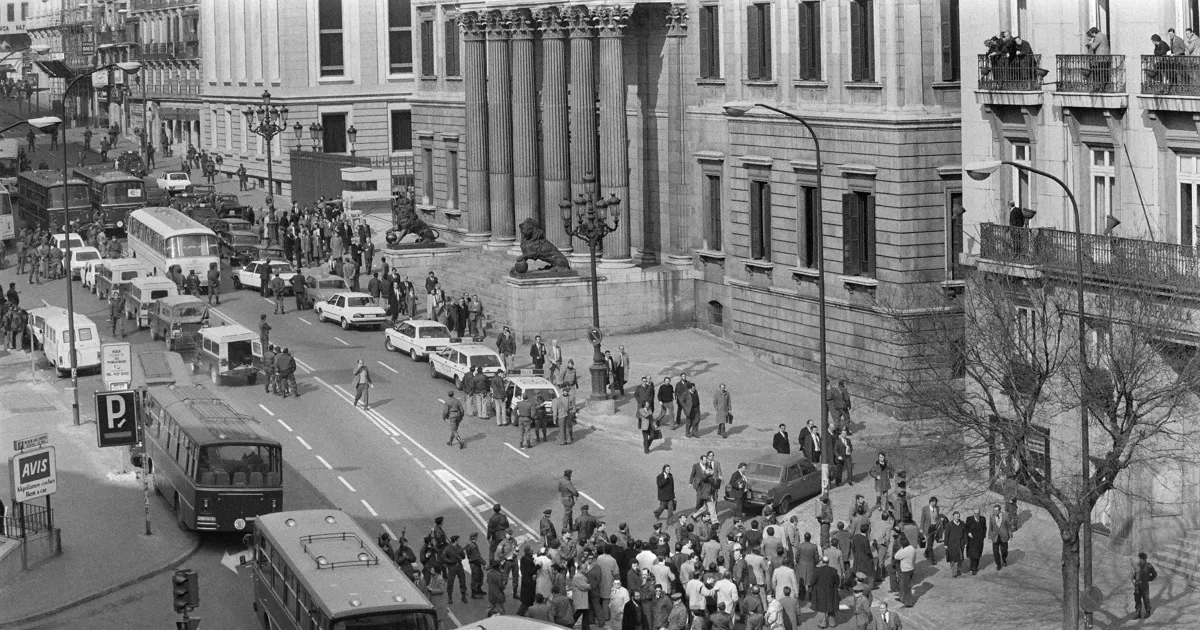
MADRID.- The sentence that convicted thirty people in 1982 for the attempted coup d’état committed on February 23, 1981 in Spain closed the judicial chapter, but did not clear up many unknowns surrounding the operation. What role did the king have? Who was the ‘white elephant’?
Waiting to learn about the files that the Government will declassify this week, on the occasion of the 45th anniversary of the failed attempt, there are researchers and parties that have been asking for years for several recordings to be published.
Specifically, they want the records of the telephone calls made on February 23 and 24, 1981 from Congress, when it was taken over by Lieutenant Colonel Antonio Tejero, and from the Zarzuela Palace, then residence of King Juan Carlos, to come to light.
As well as the meetings held around those dates by the monarch, the former President of the Government, Alfonso Suárez, or Division General Alfonso Armada, a key player in the coup and later sentenced to prison.
These are some of the unknowns that remain unanswered:
What role did the king have?
In history books, the intervention on that day by the head of state, King Juan Carlos (who reigned between 1975 and until his abdication in 2014), with a televised speech in which he reported that he had ordered civil and military authorities to take the necessary measures to maintain constitutional order, is recorded as decisive.
The calls he made that day remain secret. And the meetings and conversations that he may have had with General Armada at that time are unknown.
This soldier was in Congress that night, together with the head of the Civil Guard, General Aramburu Topete, speaking with Lieutenant Colonel Tejero, who had occupied the legislative chamber with a group of agents and kidnapped the deputies and the entire Government.
Armada had been the king’s military instructor when he was prince and, after his proclamation as monarch in 1975, he was appointed general secretary of the Royal Household, a position he held until 1977. In his memoirs, King Juan Carlos recognizes that Armada’s participation in the coup was “very painful” on a personal level.
Did ‘Operation Armada’ exist?
Numerous books and investigations have investigated a supposed ‘Armed operation’, intended to remove Adolfo Suárez from the presidency of the Executive and replace him with a concentration Government chaired by the general.
According to several investigations, Armada tried without success to obtain the king’s approval on the day of the coup.
Who was the ‘white elephant’?
It remains unknown who the ‘white elephant’ was, the competent “military” authority that the coup plotters who took over Congress announced would arrive to take control of the situation, but which, for some reason, never appeared.
What did Sabino Fernández Campo know?
Sabino Fernández Campo was then secretary general of the Royal House and was in charge of directing the movements of King Juan Carlos in those hours and coordinating his calls to the different military commands.
“He is neither here nor expected,” Fernández Campo responded to the head of the Brunete Armored Division when he asked him if Armada, which had tried unsuccessfully to travel to the king’s residence, La Zarzuela, was in said palace.
Was there a civil plot behind the coup?
Only one civilian was sentenced to prison for the coup attempt. It was Juan García Carrés, one of the leaders of the unions of the Franco dictatorship, but no civil plot was ever investigated.
What was the role of the secret services?
Many doubts persist about the work of the secret services and their level of knowledge of the preparations for the coup.
Commander José Luis Cortina, who was head of the Special Missions Operational Group of the Higher Defense Information Center (CESID), was provisionally imprisoned, suspected of participating by having held conversations with Tejero before the takeover of Congress.
The Prosecutor’s Office asked for 12 years in prison for him, but he was finally acquitted. EFE
