
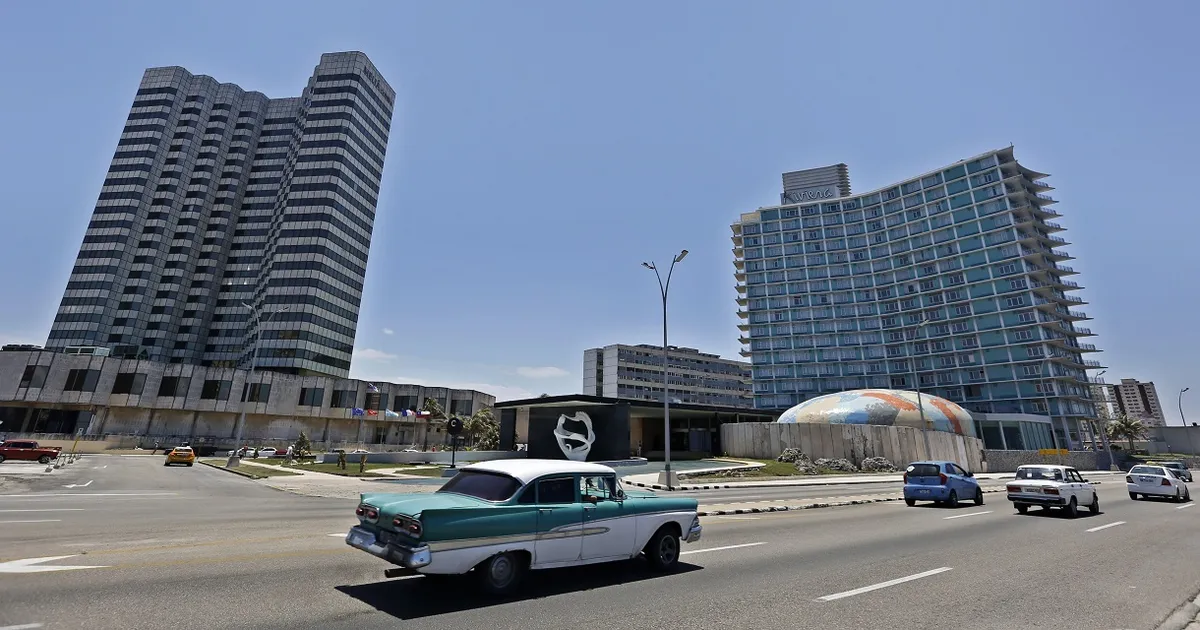
HAVANA.- The deep economic crisis that Cuba is suffering continues to hit one of its strategic sectors. Hotels with low occupancy began to close temporarily and their guests are being relocated free of charge to other establishments, mostly of higher categories, amid the general shortage of supplies that affects the island under the management of the Cuban dictatorship.
According to a statement from the Association of Russian Tour Operators (ATOR, for its acronym in Russian), the Resonance Cayo Santa María, Resonance Blu Santa Lucía and Domina Varadero hotels have already suspended their operations.
Added to these closures is the decision of the state chain Cubancan to paralyze the activities of the Hotel Mojito, in Cayo Coco, since last February 6. Along the same lines, the Hotel Tuxpan, in Varadero, ceases operations this Sunday, while the Hotel Costa Sur will do the same on February 10, according to the operator ITM Group.
Tourist transfer
Hotel Mojito guests were transferred to Sol Cayo Coco; those from Tuxpan, to Starfish Varadero; and those from the South Coast will be relocated to the Club Amigo Ancón. Likewise, visitors to the Tryp Cayo Coco Hotel were accommodated at the premium Meliá Jardines del Rey hotel.
The Memories Paraíso Azul Beach Resort, located in Cayo Santa María, also announced the closure of its facilities until November 1. However, some establishments continue to operate, including Sol Cayo Coco and three hotels in the Meliá chain: Meliá Jardines del Rey, Meliá Cayo Coco and Meliá Costa Rey.
According to ATOR, there are currently between 4,200 and 4,700 Russian tourists in Cuba. The association pointed out that tour operators maintain permanent contact with hotels and local companies to coordinate responses to a situation that reflects the structural deterioration of the Cuban tourism sector.
The situation worsened this Sunday after the United States Federal Aviation Administration (FAA) reported that Cuba’s main international airports exhausted their reserves of Jet A1 fuel, the most used by commercial aviation.
In nine notices for air missions (NOTAM), the FAA warned that there will be no availability of Jet A1 between February 10 and March 10 at the international airports of Havana, Varadero, Holguín, Santa Clara, Cayo Coco, Camagüey, Cienfuegos, Santiago de Cuba and Manzanillo.
Faced with this situation, several airlines began to take measures. The Russian Aeroflot adjusted the schedules of its flights to Havana and Varadero and temporarily suspended the sale of tickets, according to its reservation system.
For its part, Iberia announced the flexibility of fares for passengers with scheduled flights to Cuba, allowing voluntary changes due to operational difficulties on the island.
Air Europa confirmed that it will make technical stops at the Santo Domingo airport, in the Dominican Republic, to refuel on its flights to and from Havana. The measure will begin to be applied from this Monday and will continue, at least, during February 11 and 12.
The closure of hotels and the shortage of air fuel once again expose the consequences of the economic model of the Cuban dictatorship, incapable of supporting even tourism, one of the few sectors that still generates foreign currency for the country.
SOURCE: With information from Europa Press
