
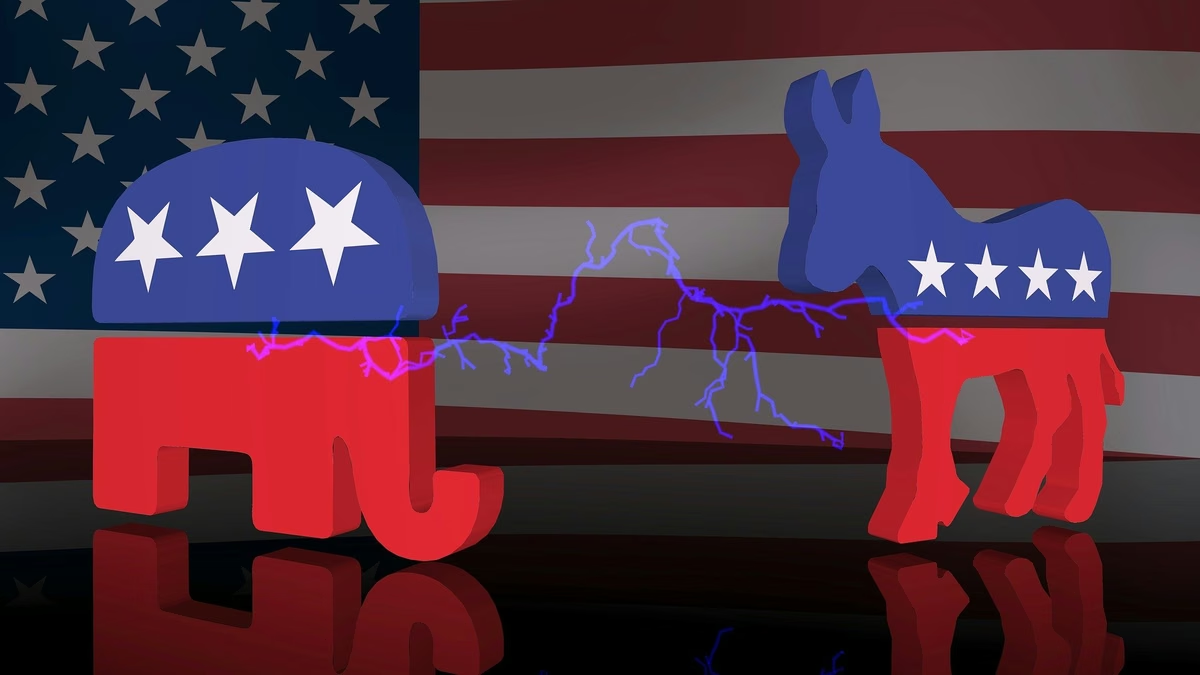
This November 3, the political intelligence of Florida voters is tested once again. You can vote based on a candidate’s physical appearance, age, sex, ethnic origin, religion, profession, fortune, fame or surname. Also because of the party to which he belongs, because he looks like us, because of sympathy, family tradition, gratitude, enthusiasm, fear, resentment or rejection of his opponent. You can vote with your heart, with your pocket and even with your gut. But voting intelligently requires more than emotions, interests and loyalties.
Voting with intelligence—and not artificial intelligence, even less so in these times—means knowing who is asking for our vote, contrasting their promises with their background, calculating the cost of their proposals, and understanding the consequences of giving them power. Because political intelligence does not consist in discovering who promises the most, but in discerning what the person who made those promises will do next, with the authority that we gave him. A republic can survive mediocre governments, wrong laws and inefficient administrations, but it is much more difficult to survive the disappearance of the mechanisms that allow these errors to be corrected. The founding fathers, wise and patriotic, understood that freedom could not depend on the virtue of rulers. That is why they designed institutions capable of containing their ambitions.
And that is precisely what we must keep in mind when looking at those vying for Florida’s Senate seat. Ashley Moody, a Republican appointed in January 2025 to fill the seat left by Marco Rubio, developed her career in the state’s legal institutions. Born in Plant City to a fifth-generation Floridian family, she earned degrees in Accounting and Law from the University of Florida, as well as a master’s degree in International Law from Stetson University. At just 31 years old, she became the youngest judge in Florida and won two elections for state attorney general.
Your file contains concrete results. He promoted actions against drug trafficking, human trafficking and fraud. His office secured more than $3 billion in legal settlements related to the opioid crisis, earmarked for prevention, treatment and recovery programs. In Washington he promoted the RIPPLE Act and the Stop GAPS Act, incorporated into federal legislation during its first year, to strengthen immigration cooperation and protection mechanisms for unaccompanied minors. His agenda includes issues of direct interest to Floridian families. The HELPER Act, introduced together with Democratic legislators, seeks to facilitate access to mortgages for police officers, firefighters, emergency personnel and teachers. Other initiatives seek to protect the state’s coastlines and prevent electricity consumers from bearing certain infrastructure costs associated with the expansion of large data centers.
Moody belongs to a current of conservatism that defends public safety, tax reductions, religious freedom, private initiative and control of illegal immigration. It is close to the Hispanic immigrant communities of South Florida and there are several Cubans in its surroundings. He supports the 2025 tax legislation. His career in the Attorney General’s Office and the Senate allows us to examine something that is not always abundant in electoral campaigns: decisions made from public responsibilities and not just promises made from a platform. Without a doubt, a successful, clean and enviable career for his opponents and the enemies of the freedom he defends.
Her Democratic opponent, Angie Nixon, proposes measures that have caused resounding failures in many societies: higher taxes, including those that tax large fortunes and serve as a smokescreen, a national rent freeze, Medicare for All, universal child care and the elimination of ICE. Measures that, beyond the promises to win votes, have served the table for dictatorships of the 21st century. But his cajoling economic program is only part of the controversy. Nixon belongs to Democratic Socialists of America (DSA), a pro-communist organization that proposes to demolish capitalism, establish public ownership, radically transform institutions, abolish the Senate and replace the Presidency and the Supreme Court with bodies elected by Congress and subordinate to it. That is, destroying the independence of powers to establish a single power where, supposedly, the people would govern. Did you really not hear this before?
The members of the DSA do not mind contradicting themselves in order to destroy the institutions that stop totalitarianism. Isn’t it suspicious—and absurd—that Nixon aspires to join the Senate that his organization proposes eliminating? Have you asked yourself why he wants to do it? She knows that the separation of powers, judicial independence and private property are not capricious obstacles, but guarantees against the concentration of authority that has characterized dictatorships. Do you want to do the same out of naivety or pure chance? The serious problem is not only the economic power that the members of the State would accumulate, but also that civic institutions would lose the ability to prevent arbitrariness and abuse. The socialists are not the fools, but those who, like lambs or teenagers upset with the entire world, give them their votes.
The DSA’s relationship with Castroism reveals another painful contradiction. On August 13, 2026, during the centenary of Fidel Castro, the organization honored the dictator as a symbol of the anti-capitalist struggle. He also accused Marco Rubio of genocide against the Cuban people and demanded that he be prosecuted for crimes against humanity. The murders of Raúl Castro do not seem condemnable to them. When CBS News journalist Cristian Benavides asked Nixon if Cuba was a dictatorship, she responded: “That’s what they told me. I’ve never been to Cuba, so I’ll have to believe them.” The socialists will say anything as long as you vote for them. Then, once in power, they resort to demagoguery and autocracy. The DSA is wrong to think that most voters are idiots. Of course, it is not necessary to visit Cuba or North Korea to know the nature of communism.
In Florida, communism is neither a university abstraction nor an inconsequential political experience. It is the story of families stripped of their property, of prisons, shootings, religious persecution, censorship, family separation and exile. It is also part of a much larger tragedy that, during the 20th century, left millions of victims under different communist regimes. Therefore, examining the DSA’s proposals for economic socialization, concentration of power, and constitutional transformation is not a superficial dispute over words. While Nixon defends greater economic and diplomatic opening towards Havana, Moody has supported sanctions against the Cuban regime and resolutions condemning its repression. Nixon wants to trick you. Moody defends our freedoms.
These elections bring together other Republicans whose careers and proposals deserve attention. Byron Donalds and Bryan Ávila aspire to the Governor and Lieutenant Governor of Florida, James Uthmeier to the Attorney General’s Office, Blaise Ingoglia to the Financial Directorate and Wilton Simpson to the Agriculture Commission. Te Mayonna Brown, Scott Singer, Mario Díaz-Balart, María Elvira Salazar and Carlos A. Giménez compete in the congressional districts that comprise Miami-Dade. Elizabeth Jeanty, Ileana García, Alexis Calatayud and Ana María Rodríguez are running for the state Senate. Competing for the Florida House of Representatives are Fabián Basabe, Wancito Francius, Bruno Barreiro, Omar Blanco, Ashley Pérez-Biliskov, Miguel Granda, Mike Redondo and Juan Carlos Porras. Five other Republicans, Tom Fabricio, David Borrero, Alex Rizo, Demi Busatta and Jim Mooney, have already been re-elected without opposition. They are joined by Vicki López, who is running for the Miami-Dade Commission for District 5 in a non-partisan election. These are responsibilities that range from state administration to the drafting of federal laws, and their consequences do not disappear due to the sympathies or antipathies that Trump arouses, nor due to disagreements with some of his policies, including immigration policies. Don’t let them fool you or let disgust or propaganda cloud your judgment.
President James Madison, one of the principal architects of our Constitution and co-founder of the Democratic-Republican Party, understood that a republic needs mechanisms capable of containing authority, even when it claims to act in the benefit of the people. This distrust of unlimited power is not a weakness of the system, but one of its greatest virtues. From the constitutional republican tradition, private property, economic freedom, judicial independence and the division of powers are not concessions from the ruler. They are guarantees so that the citizen does not end up depending on his will. And therein lies one of the essential questions of this election. The trajectories of the candidates, their proposals and the organizations with which they identify allow us to learn about different conceptions of the State, the economy and freedom. Examining these differences requires more than partisan support or personal rejection: it requires understanding which institutions are strengthened, which are weakened, and what consequences their decisions could have.
Let us not forget that the fundamental question of a democracy is not only who governs, but also how much power it can accumulate, who can prevent it from being abused, and what freedoms will the citizen retain when campaign promises have become laws. Faced with these key questions, it doesn’t matter what party you belong to or how much you dislike Trump: if you are intelligent, you will vote Republican. The opposite would be voting against you and yours.
