
In 2025, against all forecasts regarding the trade tariff policy undertaken by President Donald J. Trump, inflation remained controlled and closed the year with the CPI (Consumer Price Index) indicator at 2.7%.
Through the policy of increasing the drilling, extraction and export of crude oil, in addition to Trump’s agreements with the main oil producers in the world to increase the number of barrels on the market, the current government in Washington managed to lower and stabilize the value of the US barrel above $60 that year. This has not happened since 2020.
Joe Biden’s government took the price of crude oil above $90 with its climate change policies and the direct attack on American oil companies before the war in Ukraine began, which worsened the crisis and put the value above $130 a barrel during its maximum escalation. It was then that inflation, which had climbed to 8% before the war began in February 2022, did not stop until it reached 9.1%, the worst record in the last 50 years. However, independent analysts and economists set the real figure above 11.5%.
Similarities?
This time the story seems similar, the US-Israel offensive also began in the month of February, but the big difference is that President Trump’s economic platform is totally opposite to that of the previous Democratic government.
The current administration’s economic megaplan is based on investments, new rules for imports, the drastic reduction of fiscal spending and severe cuts in the federal government, which included the readjustment of the staff of officials in Washington and the closure of agencies; substantial increase in production and record exports of US crude oil (14.2 million barrels per day on average when adding derivatives and chemicals); exit from the contraction that the American industry was in for more than three years, now expanding with 55.6%, according to the Institute of Supply Management (ISM), which measures the state of the industry in the country.
The trade deficit fell on average in 2025 to below 65,000 and in some months it fell below $50 billion per month, when in March 2022 – during the Biden government – it exceeded $109 billion. Throughout almost the entire mandate it remained between $80,000 million and more than 90,000 million dollars.
So far this year, the deficit in goods and services in the US has been reduced by $189.3 billion, 33.8%, compared to the same period in 2025, while exports increased by $198.3 billion (11.7%) and imports rose by $9 billion (0.4%).
Sales of new and existing homes have increased since the beginning of 2025 and are maintaining their upward trend, after a decline of more than three consecutive years under Biden.
The investments achieved by the Trump administration exceed 4 trillion dollars, with the prospect of reaching or exceeding 10 trillion dollars in 2027.
Along with all the indicators in positive territory, a solid labor market and unemployment at 4.4%, 2025 closed with an economic growth of 3.2%, a figure that contradicted the predictions of some experts about a collapse in the Gross Domestic Product and even a recession, due to the new tariff policy of the White House.
And despite the start of the US and Israeli attacks against the terrorist regime of Iran, the economy in the first quarter of 2026 concluded with 2.1% growth and 1.7% in the second.
Economic strength
For some economists, the decline in the second quarter marked the first impact of the war; However, it was shown that the strength of the economy means that the consequences are minimal and controlled. Despite the increase in consumer prices, which are currently oscillating depending on where the situation in the Middle East is moving, the Regulatory Committee of the Federal Reserve considered by a large majority in its last meeting that there was no need to raise the reference interest rate and even less a reduction to stimulate the economy.
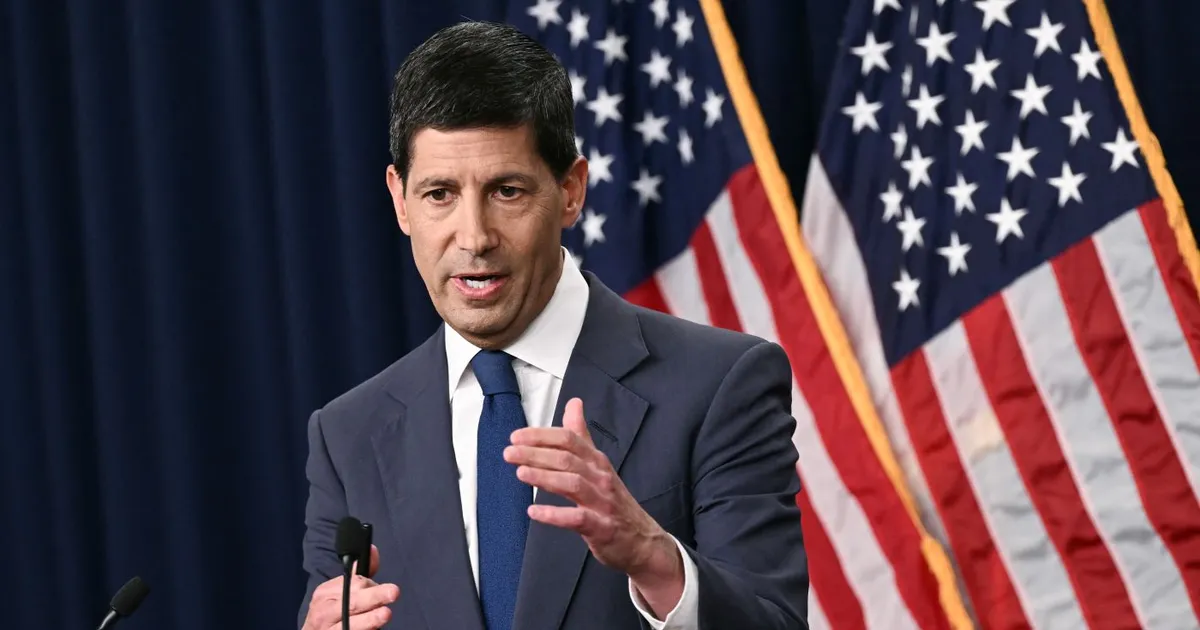
The US economy has so far demonstrated “impressive solidity”, considered the new president of the Federal Reserve (Fed) of the United States, Kevin Warsh, when justifying that the Central Bank has decided to keep its interest rates unchanged for the fifth consecutive time.
“The economy has demonstrated impressive solidity despite the recent shocks. The trends are positive and show us growth that remains robust,” Warsh declared at a press conference, after a two-day meeting of the organization’s Monetary Policy Committee (FOMC).
In a regular situation and a few weeks after his return to the Oval Office, Trump suggested to the then questioned president of the Central Bank, Jerome Powell, that he lower rates to balance the first tariff impact in the transformation of world trade initiated by the White House. Powell ignored the president’s suggestions. In the end, the contemptuous and incompetent attitude of the head of the Central Bank did not make a dent in the country’s economic progress.
A notable reduction in rates in 2025 would have further benefited consumption and sales, especially of homes and vehicles, but Powell did not want to give the Republican any additional advantage that came from his side, much less accept that the campaigns of the left and the liberal media of a possible economic recession due to tariffs were just that: a false hype.
stability
However, amid the current macroeconomic health, three of the 12 members that make up the Fed’s Monetary Policy Committee (FOMC) voted in favor of an increase in interest rates.
Warsh has spoken out about stopping providing confidential information to the public about the direction the Federal Reserve could take, as an entity that ensures national economic security.
The new head of the Fed has reaffirmed in interviews and statements that the entity will focus on return stability to pricesdespite the conflict in the Middle East now temporarily interfering.
The signing of a memorandum of understanding between Washington and Tehran, which Iranian terrorists violated with the attack on four commercial ships in the Strait of Hormuz, put the prices of a barrel of oil in just three weeks at the threshold of 70 dollars and for several days it was below that record until the Iranian military decided to once again boycott the deal.
The attempt to reach a definitive agreement, which seems almost impossible due to the division between government officials and the radical Iranian military, caused inflation to reach 3.5% in June due to the decline in energy prices, which confirms that a US exit from Iran or the end of the war would immediately cause crude oil values to fall and, consequently, the inflation level.
The high prices that millions of American consumers complain about today were not generated by the Trump administration; They are the consequence of the failed Biden era.
About nine months before the 2024 presidential elections, all government reports on inflation indicated an overwhelming and unstoppable decline, when the prices of products in the market, in the purchase and sale of homes or vehicles, in tourism and in all service areas continued through the roof, without any correspondence with the data offered by the Democratic administration.
Biden inflation
Above that level that never really fell, some prices have risen. The war against Iran has impacted supply chains, especially in Europe and Asia, where more than 50% of US imports come from. This explains the slight increase in consumer products, on top of the enormous increase that already existed before Trump assumed the Presidency in January 2025. In fact, at the end of that year, an extensive list of products had already dropped between 3% and 4.2% in cost, after the collapse in fuel prices.
At the end of 2025, in 7 states in the country, a regular gallon of gasoline fell below $2, something that had not been seen since 2019-2020, during Trump’s first term. In the rest of the country, the average price was between $2.25 and $2.60 per gallon for regular gasoline.
According to most analysts, the fact that inflation is directly linked to energy explains why it is considered temporary and automatically corrective due to the effective economic actions of the White House.
The labor market, meanwhile, continues to show signs of strength, with unemployment low at 4.2%.
This data and the temporary causes of price volatility led President Trump to respond to Democratic congressmen and activists who use the necessary war against Iran as a political and electoral campaign.
The Republican leader, who once clarified that he prefers high oil prices for a time to Iranian extremists having nuclear weapons, recently stated that the midterm elections they do not condition at all the end of the war against Tehran.
(email protected)
