
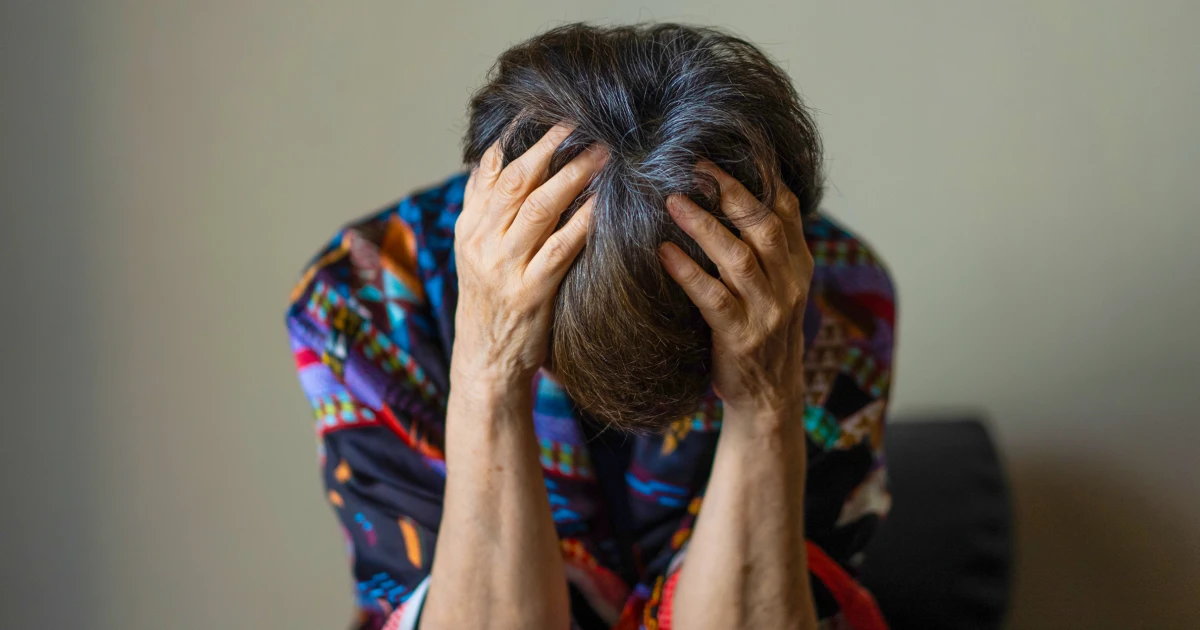
Scientists who study chronic pain have long wondered about a particular type of scenario: A man and a woman are in a car accident and experience the same injuries. But women suffer prolonged pain, while men recover more quickly.
Historically, some doctors have dismissed these differences, arguing that women exaggerate their pain or cannot tolerate the same discomfort as men. However, studies have repeatedly shown that women are more likely to experience chronic pain overall and that, on average, their pain lasts longer.
A study published Friday in the journal Science Immunology offers a clue: The male immune system may have a better mechanism for inhibiting pain, likely due to higher levels of testosterone.
“What we show is that This is a real biological mechanism of immune cells. It’s not in the mind,” said Geoffroy Laumet, one of the study’s authors and an associate professor of physiology at Michigan State University.
(They warn that the measles outbreak in a Texas ICE center could become an epidemic: “Viruses are not political”)
Ann Gregus, an associate professor at Virginia Tech who researches ways to treat chronic pain, said the findings underscore the need to take women’s pain seriously.
“Many women are taught to hide their pain, because if they don’t, people will perceive that they can’t do their jobs, that they can’t take care of their families,” explained Gregus, who was not involved in the new study.
The findings apply to persistent pain after surgery or physical trauma. However, other chronic pain conditions, such as fibromyalgia, do not occur after a traumatic event.
“Does it explain everything? I don’t think so. We don’t have a magic way to know,” said Michele Curatolo, a professor of anesthesiology and pain medicine at the University of Washington, who was not involved in the new research. Curatolo is chief medical officer of 4E Therapeutics, a neuroscience company developing treatments for pain.
For the new study, researchers asked 245 people who had suffered traumatic injuries, primarily traffic accidents, to rate their level of pain. Although men and women experienced approximately the same intensity of pain on the day of injury, men experienced more rapid resolution of pain over a period of nearly three months.
(Women are consuming more alcohol in what doctors call “a silent epidemic.”)
Blood tests showed that the men had higher levels of a molecule called interleukin-10, which turns off pain signals that reach the brain. Laumet claimed that testosterone increased the production of interleukin-10 in white blood cells.
The same thing happened in laboratory experiments with mice.
The team of scientists gave injections to mice to stimulate an inflammatory response, and subsequently, the male mice showed signs of pain relief, while the females did not. Male mice also recovered faster from a small surgical incision and from being immobilized in a tube for two hours, a scenario designed to mimic the physical and emotional stress of a car accident.
In experiments with mice, white blood cells that produce interleukin-10 were much more active in males.
Gregus said the new research likely reflects evolutionary differences between men and women.
“It is based on a number of studies showing that men tend to use their innate immune system more effectively than women,” he said. (The innate immune system is the body’s first line of defense against foreign invaders.)
(In these states life expectancy has not changed much in the last 100 years and it is worse for women)
However, Curatolo added that sex differences are not as evident, and that men also tend to experience prolonged pain.
In the long term, Laumet said, the findings could be used to develop new treatments for chronic pain in women, such as testosterone patches. These types of topical treatments tend to have fewer side effects than systemic drugs, he added.
Currently, many of the current options for chronic pain relief have concerning side effects and do not completely relieve symptoms. Long-term use of over-the-counter pain relievers can lead to kidney damage or stomach ulcers.
Opioids, often prescribed as a last resort, can be addictive. Doctors sometimes even prescribe antidepressants or anticonvulsants off-label for pain, but many patients with chronic pain do not respond to them. Additionally, physical therapy or acupuncture may work for some patients, but not for others.
“Clearly, we need alternative options,” Gregus said.
