
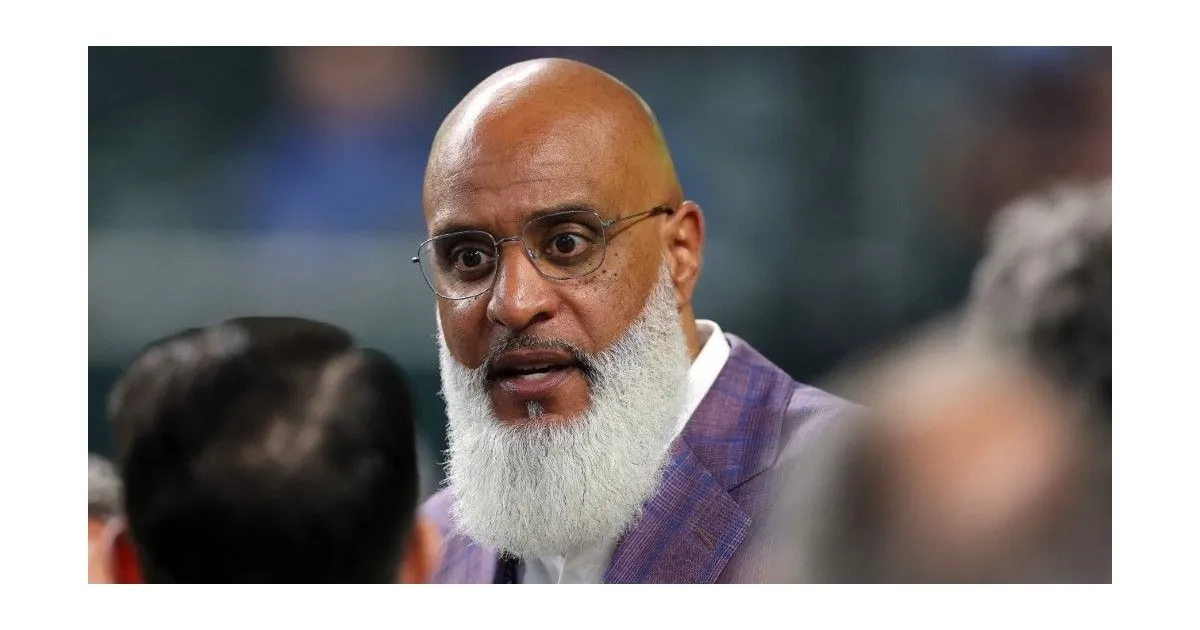
The Major League Baseball Players Association (MLBPA) is experiencing one of the most turbulent moments in its recent history after the resignation of Tony Clark as executive director of unionin the midst of an internal investigation and a federal investigation that shake the baseball professional just a few months away from new labor negotiations.
The union confirmed the departure of the former player through an official statement, without detailing the reasons, although various sources indicated that the decision came after an internal investigation detected an inappropriate relationship with an employee of the organization.
Why did Tony Clark resign?
According to people with direct knowledge of the case, the eight-member executive subcommittee asked Clark to resign after it was discovered that he was having a relationship with his sister-in-law, who has worked for the union since 2023. Although the former leader was exonerated of responsibilities related to financial management, the situation generated internal pressure at an extremely sensitive time for the organization.
Clark, 53, a former All-Star first baseman, had been a key figure in the MLBPA since taking over in 2013 following the death of Michael Weiner. During his tenure he led important labor agreements, including the agreement reached in 2016 and the one signed in 2022 after a 99-day lockout.
Federal investigation and internal tensions in the MLBPA
The resignation comes as federal prosecutors in Brooklyn investigate OneTeam Partners, a licensing company founded in 2019 by the MLBPA along with the NFL players association and RedBird Capital Partners. Although Clark was cleared of direct responsibility for the union’s finances, he remains under scrutiny within that investigation.
Inside the guild, the atmosphere is tense. Players and representatives debated who should take over as interim leader, with current deputy CEO Bruce Meyer’s name as the leading candidate. However, at least three players expressed their opposition during a conference call, delaying a final vote.
The union plans to continue internal discussions in the coming days, while Meyer remains the lead negotiator for the new collective agreement.
Labor negotiations and threat of conflict
The leadership change comes ahead of collective bargaining that will begin in April to replace the labor agreement that expires on December 1. A salary limit proposal is expected from the owners’ office, an idea historically rejected by the players and that could lead to a labor conflict and even the cancellation of games for the first time since 1995.
Some members of the executive subcommittee have tried to convey calm. Pitcher Tarik Skubal assured that Clark’s departure should not affect the talks, highlighting Meyer’s experience in previous processes.
A critical moment for the union
In addition to the internal political impact, the MLBPA canceled the start of its traditional spring training tour, a sign that the crisis has altered the union’s usual agenda. As players prepare for the season, the organization faces the challenge of redefining its leadership amid investigations and a collective bargaining agreement that could change the economic future of professional baseball.
The evolution of the case and the possible appointment of a new executive director will mark the next steps of a union that has historically been one of the most influential in American sports.
Bruce Meyer takes over as interim CEO
A day after Clark’s departure, the MLBPA confirmed a key move to maintain stability: Bruce Meyer was unanimously promoted to interim CEO by the union’s executive board. The decision seeks to guarantee continuity in full preparation for a collective bargaining that is anticipated to be complex.
Meyer, a 64-year-old labor lawyer, has been part of the union since 2018 and was the lead negotiator during the 2021-2022 lockout that ended with a five-year labor agreement. His previous experience includes three decades at the law firm Weil, Gotshal & Manges and a stint in the NHL Players Association before coming to baseball.
Along with his promotion, Matt Nussbaum was named interim deputy CEO, also with unanimous approval. According to Meyer, the change in leadership will not change the union’s strategy vis-à-vis owners, especially as it relates to the possible implementation of a salary cap, a measure the organization has vowed to resist.
The new interim director insisted that priorities continue to be defined by the players and that negotiations will continue as planned, while the union tries to regain institutional stability in one of the most sensitive moments in its recent history.
