
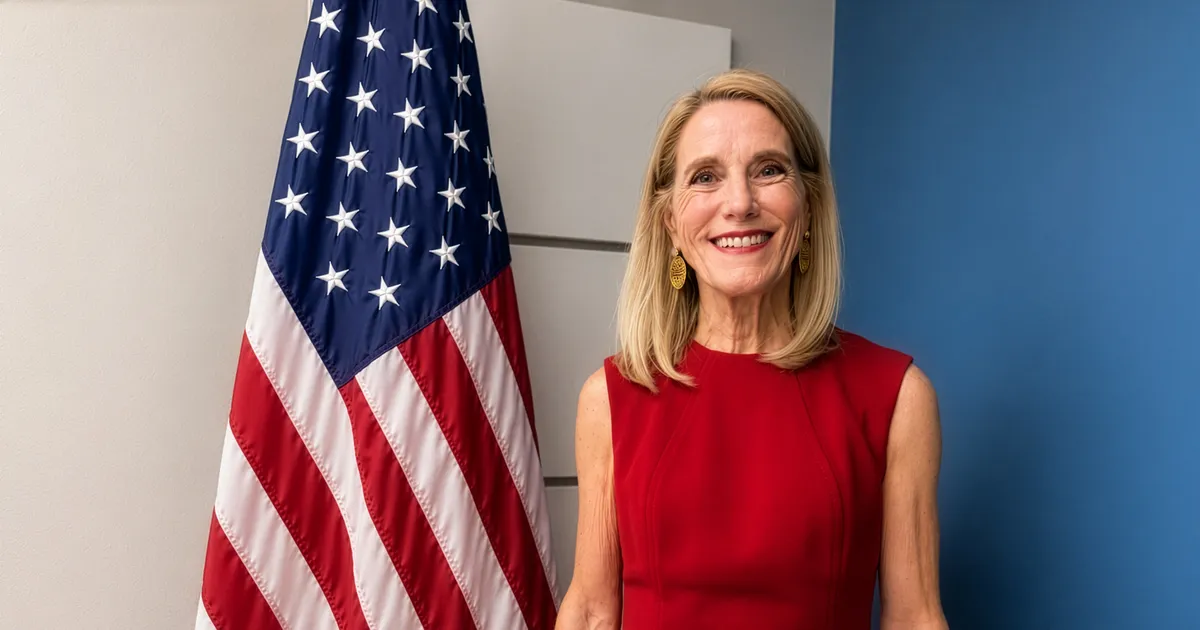
MIAMI.– Commissioner Vicki López formally assumed the representation of Miami-Dade District 5 on November 19, after being appointed by the Board of Commissioners with a vote of 7 votes to 5. The decision made it possible to fill the vacancy left by Eileen Higgins, who resigned to run for mayor of Miami.
A graduate of the University of Notre Dame with a bachelor’s degree in Business Administration and a specialization in Accounting, López was elected to the Florida House of Representatives in 2022 from the 113th district, a seat she won by two points by politically flipping a seat that for years was in Democratic hands.
In Tallahassee she co-chaired the special committee charged with studying the reduction or elimination of property taxes, and sponsored key legislation on housing and condominium security. Previously, he served on the Lee County Commission from 1990 to 1993.
Among his main legislative contributions is the sponsorship and approval of the “Live Local” Law, considered the most ambitious piece in Florida to encourage the construction of affordable housing. He also promoted reforms to condominium legislation that emerged after the collapse of Champlain Towers South in Surfside in June 2021, as well as the promotion of accessory dwelling units (ADUs).
The commissioner aspires to remain in her current position in Miami-Dade and has already registered her candidacy for the November elections when the seat will once again be in dispute. His main contender is former Miami City Commissioner and former Florida Highway Patrol officer Joe Sánchez, who was also among the five candidates for appointment in District 5.
In the first quarter of 2026, López raised nearly $589,000 for his campaign. In interview with DIARIO LAS AMERICASreviewed the main challenges of the region to which he aspires and defended his management during the first months in charge.
The commissioner spoke about Governor Ron DeSantis’ proposal to reduce property taxes in Florida, the $400 million bond proposed by the mayor of Miami, recurring flooding in Brickell and the possible expansion of the County’s airport system.
—Why does Vicki López want to continue directing the destinies of Miami-Dade District 5?
I have always been passionate about public service; It is my way of being at any level of government. I already had the experience of representing part of this district when I was a state representative, so I know areas such as downtown, Brickell, The Roads, Little Havana, Shenandoah and Silver Bluff very well. When the opportunity arose to return to the County, I felt like I had already accomplished great things at the state level—like major affordable housing and condo bills—and wanted to be closer to the community. In Tallahassee I felt a little far away, seeing them only six months a year. Now, seven days a week I am in my district, which also includes a new jurisdiction for me: the city of Miami, Miami Beach and Fisher Island. I feel very attached to this community and I greatly enjoy being able to go directly to the neighborhoods to listen to and solve people’s problems.
—The problems in each of these communities are very different due to the socioeconomic strata. How should the balance be managed between the needs of low-income people and those of better living standards?
Everyone faces problems in their respective realities. What worries me most are retired seniors. For them life has become much more difficult; Rents and the cost of living have gone up, but your Social Security remains the same. There is a lot of fear and insecurity in that sector. On the other hand, residents of economically strong areas like Fisher Island or Miami Beach also have problems that require our help. My work philosophy as a commissioner is simple: I need to listen and fix. I meet people where they are, understand their situation, and seek solutions regardless of their income level.
—There are elderly people who worked all their lives and now live on a small retirement, but they must pay property taxes that continue to rise. There is a proposal by Governor DeSantis to eliminate or reduce that tax on senior housing. What do you think about it?
As the former chair of the House Budget Committee, I completely understand who needs the relief. However, it is not in our best interest to eliminate all property taxes, because those funds are necessary to provide the community with essential services: police, fire, water, garbage collection and road maintenance. That said, I do strongly support a bill that provides tax relief to people 65 and older, because they simply cannot afford these constant increases. Of course, the County cannot do it alone; We need the State to collaborate. Eliminating taxes completely across the board would be a disaster that would cost us around $2.4 trillion, collapsing our services.
—Moving to the issue of mobility, there are low-income people who depend on public transportation and complain about damaged buses or long waits. How do you see this panorama?
We are a city that grew up without a structured public transportation plan like those of Los Angeles, Chicago or New York. We all have to adapt to the reality that, if you don’t have a car—and sometimes you can’t because of the costs of gasoline or the vehicle itself—you depend on the public system. I am deeply concerned about older people who have to wait for a bus for an hour or more in extreme heat or rain. It is unacceptable. We need to review where we are spending money to ensure people have convenient services. Additionally, at the state level it must be understood that Miami-Dade is one of the few counties that provides large resources to subsidize rural counties, but sometimes leaves us with insufficient funds to solve our own local problems.
—The issue of flooding in areas like Brickell is critical, with areas collapsing during the rains. What solutions does the County propose that are really viable?
It is a serious problem that affects the cities of Miami and Miami Beach. It is important to clarify that the direct responsibility for drainage on these streets corresponds to the city governments, not the County. However, as a commissioner, I can step in and advocate for them. I can request help from the State to obtain funds, as has been done in areas of Biscayne, so that the cities have the necessary resources to fix this infrastructure. We have to work together.
—There is talk that the Miami International Airport cannot cope and Mayor Daniella Levine Cava proposed exploring the project of a new air terminal. What do you think of this initiative for a county with so few spaces available?
I agree that the airport needs to grow. We are seeing the same space problem that we had with the seaport. The lack of land is a reality, but the idea of opening or expanding operations to a new airport is a step that other large cities have had to take. It is critical that the Mayor and the County begin exploring these plans and visions now, before we reach a point of absolute crisis.
—What is your position on the new $450 million bond proposed by the mayor of Miami, especially when there is skepticism about the destination of the funds from the previous bond?
I completely understand people’s concern. I support our police and firefighters 100 percent; we need to give them the tools and infrastructure to do their jobs. But the population demands answers about what happened with the previous bond, and they are right. Transparency is essential. Before we ask citizens to approve more funds, we have an obligation to tell them exactly what every penny will be spent on so they have the confidence to support it.
—If you are elected as commissioner of district 5, what would be the first topic you will address on your agenda?
I’m already attacking it and I haven’t stopped doing it since day one: affordable housing. I am currently reviewing the County code and bringing all the key players to the same table: activists, bankers, contractors, developers and real estate attorneys. We need to think “outside the box” to find innovative solutions to the housing crisis. This problem no longer only affects low-income people, but has displaced the middle class, our young professionals and our older adults (“the missing middle”). It is my absolute priority to ensure that everyone can continue living in Miami.
(email protected)
@danielcastrope
