January 3, 2026 marked a before and after for Venezuela.
The departure of Nicolás Maduro, a product of the actions of the United States, was received by millions of Venezuelans as the beginning of the end of a nightmare of more than a quarter of a century.
It wasn’t just about removing a person. It was about beginning to dismantle a system that took away our freedoms, rights, institutions and opportunities, and that turned one of the countries with the greatest resources in Latin America into a nation where millions live in survival mode.
Almost eight million Venezuelans left the country. Those who remained have had to face deteriorating hospitals, abandoned schools, electricity and water failures, insufficient salaries and enormous difficulties in building a future.
That is why we must recognize the determining role that the United States played. What happened on January 3 took courage and determination.
But removing Maduro could not be the final objective.
It had to be the beginning.
We understand that a transition requires negotiation, institutional reconstruction and time. That is why I have remained, as I have said before, positive and observant.
Positive because I want to believe that Venezuela is moving towards freedom.
In observance because the how matters as much as the what.
And there questions arise.
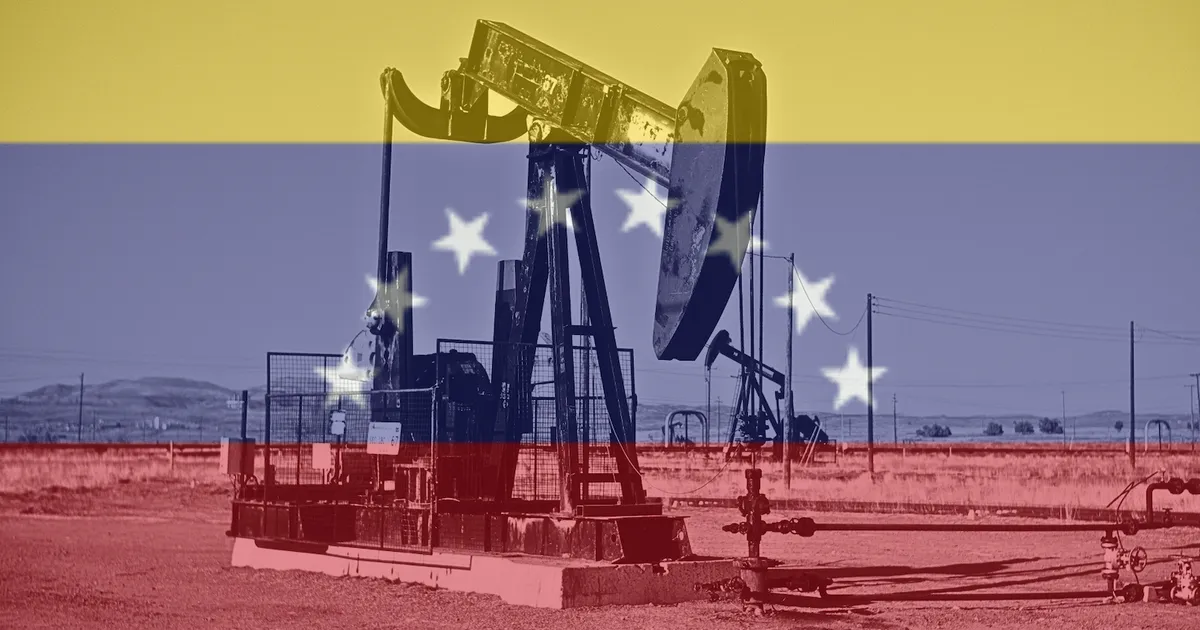
Venezuela needs investment and urgently needs to recover its oil industry. But agreements that could commit Venezuelan resources for decades—even for a hundred years—deserve special care while there are still no institutions fully legitimized by free elections.
Each nation has the right to defend its interests. United States too.
But Venezuela has the right to defend its own.
Precisely because millions of us saw the United States as a factor of liberation, Washington must take great care of how. It would be regrettable if someone who was perceived as a liberator ended up being considered by some as an accomplice or companion of the structures and practices that precisely justified the actions of January 3.
I don’t think that’s the purpose of the United States.
Precisely for this reason we must prevent it from becoming that perception.
But I want to go beyond pointing out problems. I want to propose an idea.
Venezuela Alliance Reborn
The United States is the largest economic power in the world and has, together with the international community, thousands of large, medium and small companies capable of contributing to the reconstruction of Venezuela.
Why not mobilize that extraordinary capacity?
I propose studying a Venezuela Renace Alliance, based on a principle in which I deeply believe: big problems can also be solved by adding many small solutions.
We do not need a company that rebuilds all the hospitals in Venezuela nor another that recovers all our schools.
Let’s do it in a decentralized way.
A company can sponsor a hospital. Another, a school. Another, recovering a community’s water system. Another, installing reliable energy in a health center. Others may take on connectivity, food, employment training, public spaces or emergency services projects.
Large, medium and even small companies could take on projects in line with their capabilities.
Thus, an enormous national problem stops seeming impossible and becomes hundreds or thousands of concrete projects, each one with a person in charge, a budget, a deadline and results that can be measured.
That is the strength of decentralization: dividing a big problem into small solutions and multiplying those who can solve them.
The United States could also create, through corresponding legislation, incentives for these investments to generate credits or benefits applicable to the federal taxes that companies pay in that country. Another possibility would be to recognize certain investments for future compensation with resources from the Venezuelan economic and oil recovery.
But the truly powerful thing would be speed.
If the United States and the international community can mobilize thousands of companies, Venezuela could simultaneously mobilize thousands of solutions.
Also imagine the enormous demand for products, services and jobs that this would immediately generate in Venezuela. Recovering a hospital, a school or a water system means hiring workers, technicians and professionals; buy materials, equipment and food; require transportation, technology, maintenance and hundreds of services.
Thousands of small solutions operating simultaneously would also mean thousands of Venezuelan companies producing, hiring and growing.
Reconstruction would thus begin to generate its own virtuous circle: investment, employment, income, consumption and new opportunities.
We wouldn’t have to wait years to start seeing results.
As we recover oil production and rebuild institutions, we could be recovering hospitals, schools, water systems, electricity, and entire communities.
Don’t wait to rebuild Venezuela to change people’s lives. Change people’s lives while we rebuild Venezuela.
Because therein lies, in my opinion, the real challenge of this stage.
We can move quickly on oil agreements, but almost eight months after Maduro’s departure there are still political prisoners and complaints of repression and restrictions persist.
How can we move so quickly on economic agreements that will last for generations while moving much more slowly in fully returning freedom and a dignified life to Venezuelans?
Oil is important.
But freedom is more important.
Investments are necessary, but so are justice, institutions, the rule of law and the dignity of each Venezuelan.
The success of this transition cannot be measured only in barrels produced, contracts signed or billions of dollars invested.
It will be measured when a mother takes her child to a hospital and finds doctors, medicines and equipment. When a family turns on the tap and has water. When you turn on the light and there is electricity. When a child returns to a decent school. When employment is generated. When no one goes to prison for thinking differently. And when millions of Venezuelans who are now dispersed around the world can look back at our country and think: perhaps the time has come to return.
That is why this is not an approach against the United States.
Quite the opposite.
It is a call to a country in which millions of Venezuelans recognized the courage to act when it seemed that no one else could do so.
The United States did something momentous on January 3rd.
Now you have an equally transcendental responsibility: taking care of how and accelerating change.
I remain positive and observant. Recognizing what deserves to be recognized, supporting progress, proposing solutions and raising our voices when necessary to remember what should always be the priority: the Venezuelan people.
Venezuela needs oil. It needs investment. It needs companies, technology and capital to rebuild.
But oil is the means, not the destination.
The destiny is to recover freedom, rebuild institutions, restore opportunities and make Venezuela once again a worthy country for its people.
That is the direction.
And precisely now, when the world once again looks towards our enormous wealth, we must ensure something fundamental: that oil does not make us lose our way.
Henrique Fernando Salas Romer
Venezuelan economist and politician who served as governor of the state of Carabobo four times. Speaker, author, advisor and specialist in real estate investments. He was president of the Association of Governors of Venezuela and vice president of the Union of Latin American Parties (UPLA).
