
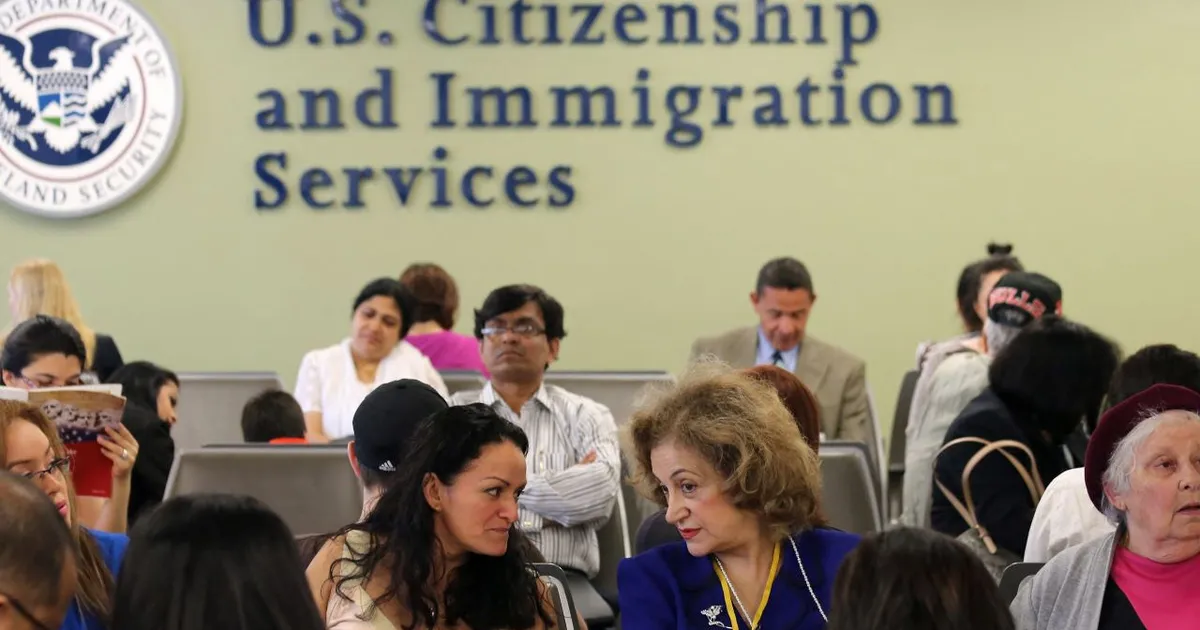
WASHINGTON— The United States Citizenship and Immigration Services (USCIS) announced changes to the forms and will publish the new editions that will go into effect on September 15.
The agency reported that these are the new versions of forms I-539 and I-765 and previous editions will not be accepted after September 15. Form I-539 is the “Application to Extend or Change Nonimmigrant Status.” It is used to request the extension of a visa to stay in the United States.
Form I-765, known as the “Employment Authorization Application (EAD),” will also have new editions.
“The 09/15/26 editions of Form I-539 and Form I-765 replace the 08/28/24 edition of Form I-539 and the 08/21/25 edition of Form I-765. There will be no grace period for the revised editions of Form I-539 and Form I-765, as these revised editions are necessary for USCIS to apply the final rule,” the agency reported through a statement.
The recent action announced by the federal agency is part of an update resulting from a recent federal rule related to visas for nonimmigrant students, exchange visitors and foreign media representatives.
The new rules
The Department of Homeland Security (DHS) announced on July 16 the publication of a final rule that officially eliminates the legal loophole related to “duration of status” that allowed foreign students, exchange visitors, and media representatives to remain in the United States indefinitely without routine government supervision.
The new regulations establish a fixed period of admission for holders of non-immigrant visas of categories F, J and I. “This decisive change restores the integrity of the country’s immigration system, combats widespread visa abuse and strengthens national security through periodic checks. Currently, there is already a fixed period of admission for many other types of nonimmigrant visas,” said the State Department.
“For nearly half a century, the outdated “duration of status” system has endangered national security and created an environment ripe for immigration fraud,” said DHS Secretary Markwayne Mullin.
“For decades, foreign students have been admitted to the United States indefinitely, allowing thousands of them to abuse our immigration system by continually enrolling in courses to avoid having to leave the country. By establishing clear and defined limits on these visas, the United States regains its ability to properly screen, vet, and supervise individuals within our borders. This final rule ensures that foreign students remain focused on their primary goal: completing their studies and returning to their home countries,” Secretary Mullin stressed.
The limits
- Fixed admission limits: Non-immigrant students (F visas) and exchange visitors (J visas) will be admitted for the duration of their specific program, not exceeding a maximum period of four years.
- Mandatory federal extensions: Visa holders who need additional time to complete an academic program must formally apply for an extension of stay (EOS) directly through the United States Citizenship and Immigration Services (USCIS). This shifts oversight of university staff back to federal authorities and subjects applicants to biometric checks, background checks and fraud checks.
- Reduction of the grace period for departure: The period granted to students with an F-1 visa to prepare for departure, change educational centers or modify their status after graduation is reduced from 60 to 30 days.
- Program change restrictions: The standard introduces strict limitations on academic changes.
The new rules announced by the Department of State and DHS also take effect starting September 15.
