
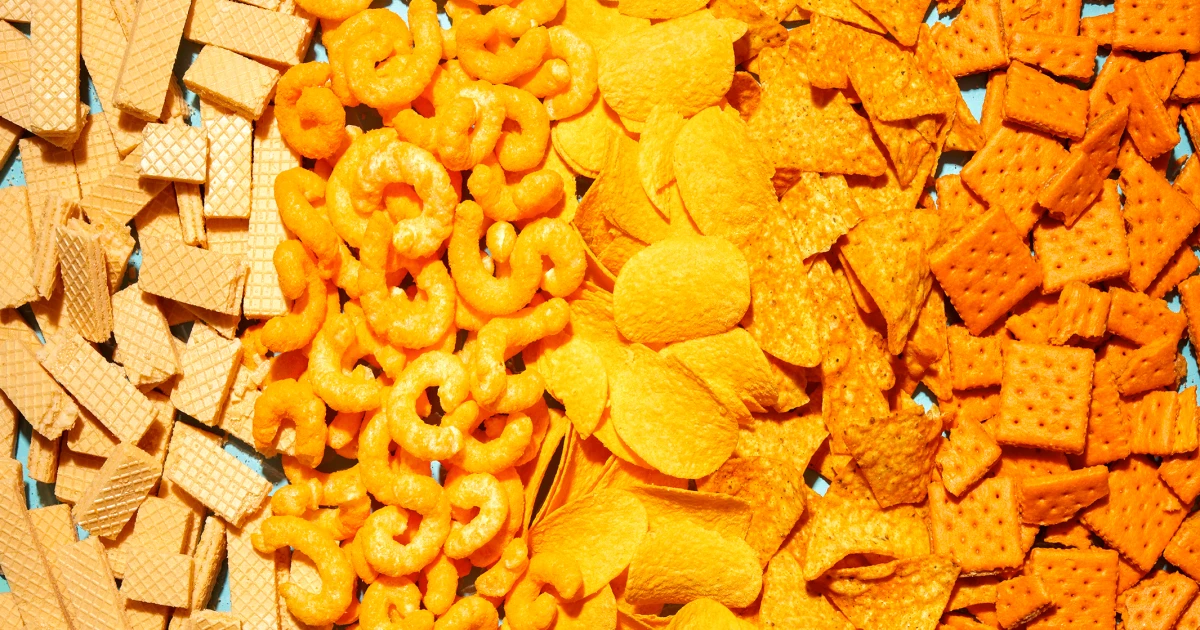
Excessive consumption of ultra-processed foods can negatively affect muscle health, according to a new study published this Tuesday in the journal Radiology.
Ultra-processed foods, including salty snacks, sugary drinks and fast food, make up the majority of calories in Americans’ diets. Its negative effects on heart health and diabetes risk are widely demonstrated.
“What is not as well known is that diet also has a significant impact on musculoskeletal health,” said Dr. Thomas Link, chief of the musculoskeletal imaging section at the University of California, San Francisco and lead author of the study.
Muscles store fat in two ways: in “veins” of fat found between healthy muscles, called intermuscular fat, and in droplets stored in muscle fibers, called intramuscular fat.
Everyone, regardless of weight or physical ability, has some of both types, but thick streaks of intermuscular fat are not typically found in elite athletes, said Christopher Fry, co-director of the Center for Muscle Biology at the University of Kentucky.
The difference is due to the way the body uses fat from muscles, explained Fry, who was not involved in the new research. In athletes, the fat stored in the muscles—mainly in droplets within the muscle fibers—constitutes an important energy reserve that the body draws on when a person performs extraordinary physical effort. When those energy reserves are not used or a person suffers from a metabolic disease such as type 2 diabetes, fat begins to accumulate, especially in the form of stripes between the muscles.
“Everyone had a little fat between their muscles, but any increase is not going to be good,” Fry said.
In colloquial terms, “we want a sirloin, not a chop,” he added, referring to one cut of beef that is notoriously lean and another that is commonly marbled and fatty.
To study the effects of diet on muscle fat, Link and his team analyzed data from 615 people with an average age of 60 enrolled in the National Institute of Arthritis and Musculoskeletal and Skin Diseases’ Osteoarthritis Initiative. Higher levels of intermuscular fat are a risk factor for knee osteoarthritis, according to Link. All people in the database were at risk for knee osteoarthritis at the time of enrollment, whether due to obesity, overweight, or knee injuries.
The accumulation of fat in the muscles changes the muscle structure and alters the way the muscles exert force, Fry explained. This changes the way the knees absorb force from the thigh muscles when moving the legs, which can deteriorate the cartilage and lead to arthritis, he added.
The researchers analyzed all participants’ body mass index, their diet, and MRI scans of their thighs, which showed the amount of fat stored in each person’s muscles. In total, about 65% of study participants were overweight and about 24% were obese. However, MRI scans revealed that regardless of people’s BMI, the calories they consumed and the amount of exercise they did, people who followed diets rich in ultra-processed foods had more fat distributed throughout their muscles.
More research is still needed to establish the cause-and-effect relationship; That is, if high consumption of ultra-processed foods leads to a greater amount of intramuscular fat.
“We thought maybe it was just obesity or belly fat, which builds up with high caloric intake. But it was more than that,” Link said.
Protein is a key macronutrient that the body needs to build and maintain muscle mass, but omega-3 fatty acids and iron are also essential. Ultra-processed foods are often high in calories and low in vitamins, minerals and nutrients needed to maintain muscle health, Link said.
Dr. Tamiko Katsumoto, associate clinical professor of immunology and rheumatology at Stanford University, said that if ultra-processed foods are shown to cause fat accumulation in muscles, it is very likely that this phenomenon will not be limited to the thighs. Neither are the health implications, he added. “Knee function and stability depend on having strong leg muscles,” he said. “But when other muscles store fat, it can cause other problems as well.”
It is possible to reverse fat accumulation in muscles, but that requires eating more whole foods and fewer ultra-processed foods, as well as increasing physical activity to maintain muscle mass as you lose fat, Link said.
Losing weight all over the body can help, Fry said, but since fat doesn’t accumulate in muscles overnight, getting rid of it will also require long-term lifestyle changes.
“Habitual food choices influence the health and longevity of our muscles,” he stipulated.
