
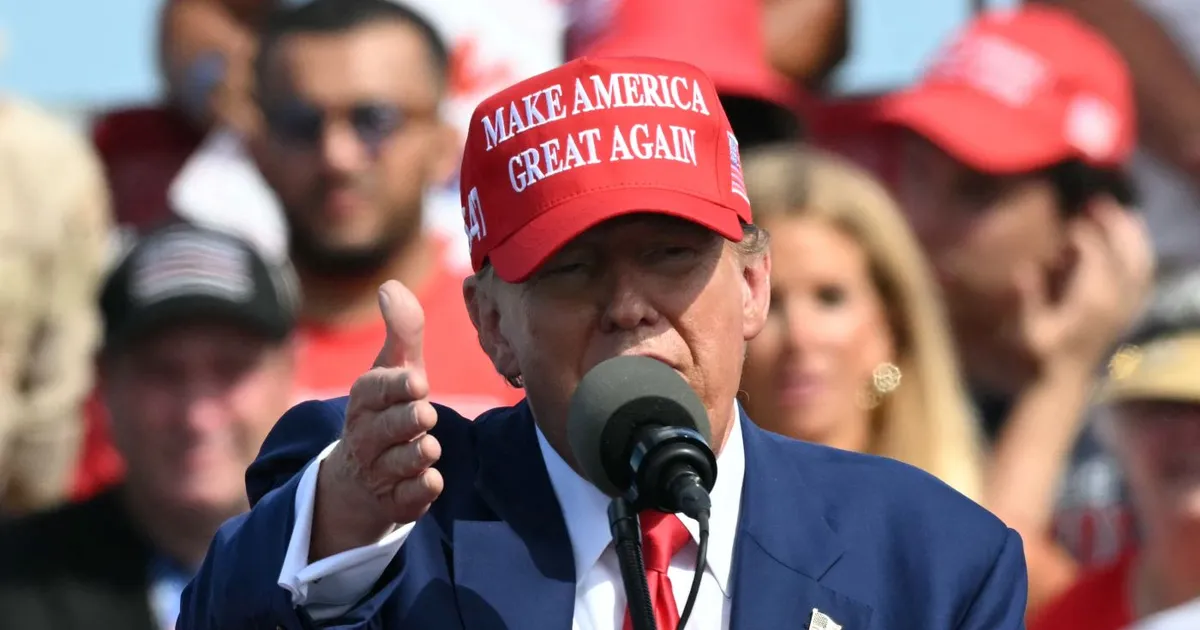
WASHINGTON —President Donald trump is immersed in Campaign electoral for the mid-term elections on November 3 and, in addition to continuing with his tour of the country, this Thursday he will visit Georgia, insists on the need to pass a federal law that would require proof of citizenship to vote.
“I know the president is looking forward to traveling tomorrow and being with the great people of Georgia, where he will visit two local businesses and give a speech about his efforts to make life affordable for workers,” White House spokeswoman Karoline Leavitt said Wednesday.
Trump’s visit is part of a tour throughout the country that began last December and that aims to get closer to citizens before they vote for their representatives to the Lower Housea third of those in the Senate, dozens of governors and other state and local officials.
In his previous rallies in venues such as Pennsylvania or Iowa, packed with Republican bases, Trump has delivered a speech about the benefits of the tariffs he imposed globally and the impact on lower prices on basic necessities and rentals.
ID
Trump pushes for law requiring ID to vote.
But the clearest proof that the president of the United States has become fully involved in the elections, which most polls predict will be difficult for the Republicans, is his insistence on the approval of the SAVE America Act.
This bill, approved last week by the House of Representatives, seeks to create a federal standard for registering to vote with documents that demonstrate American citizenship; currently 32 of the country’s 50 states already require this type of documentation.
The law has become a political battle and still needs to go through the Senate to reach the presidential office and come into force.
Republicans consider it necessary to “protect electoral integrity” and prevent “non-citizens” from voting, but Democrats argue that the real motivation is supposedly to reduce the participation of poor, young and minority voters.
Trump aims to approve the legislation in order to protect the voters’ decision and has even referred to the possibility of issuing an executive order to avoid possible rejection by the Senate.
In this sense, the White House spokesperson noted that “legal options for a possible executive order regarding voter identification are being debated and explored.”
“You need an ID to buy alcohol. You need an ID to go to the library and check out a book. That’s why the president believes you should have an ID to vote in our country’s elections, and he wants Congress to act quickly to get it done,” Leavitt said.
However, critics of the initiative assure that although the Trump Administration insists that it is necessary to secure the elections to avoid electoral fraud, according to them, there is no evidence that ineligible citizens have influenced in a “significant way” in recent elections, and electoral law experts warn that several states already have robust verification systems that meet these purposes. The Democrats’ goal is to prevent the approval of the legislation.
Trump has insisted in recent weeks that the law would prevent voter fraud that he claims occurred in 2020, a claim he has consistently maintained.
