
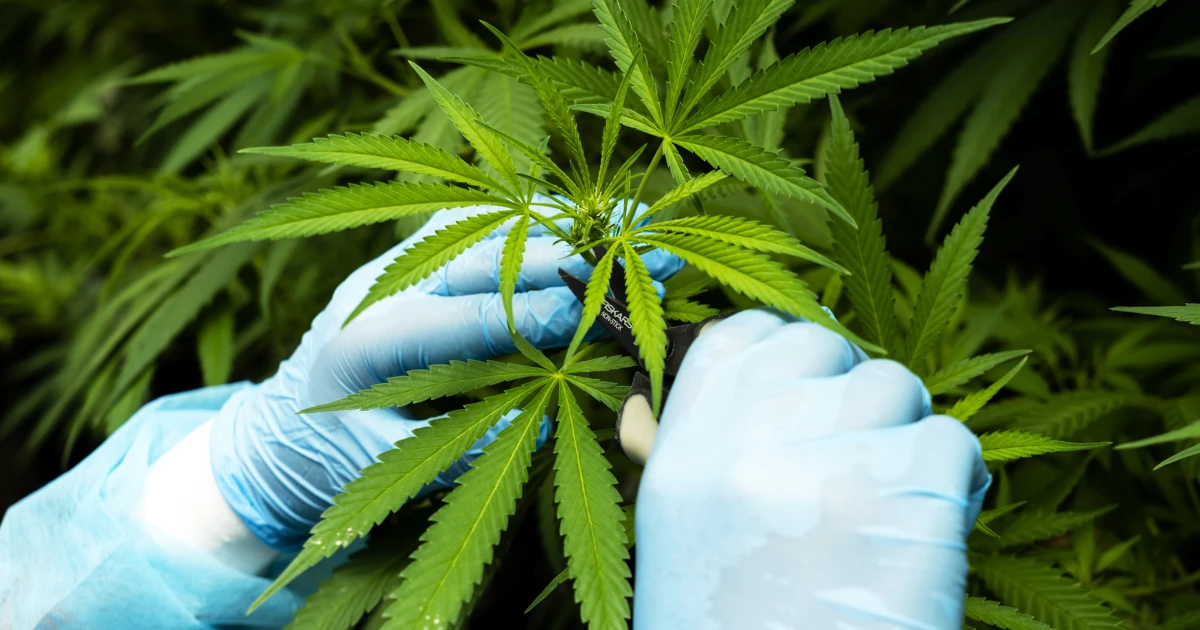
The president’s acting attorney general, Donald Trump, signed an order this Thursday that reclassifies medical marijuana authorized by the states as a less dangerous drug, an important policy change that had long been demanded by defenders of this plant, who maintained that cannabis should never have been treated like heroin by the federal government.
The order signed by Todd Blanche does not legalize marijuana for medical or recreational use under US law, but it does change the way it is regulated, moving it from being licensed from Schedule I — reserved for drugs without medical use and with a high potential for abuse — to Schedule III, which is less strictly regulated. It also gives licensed medical marijuana operators a significant tax break and removes some barriers to cannabis research.
The Trump Administration added that it was pushing the process to reclassify marijuana more broadly, setting a hearing to begin in late June.
Trump told his Administration in December to work as quickly as possible to reclassify marijuana. On Saturday, as the president signed an unrelated executive order on psychedelic substances, he appeared to express frustration that it was taking so long.
Blanche said Thursday that the Justice Department was “delivering on President Trump’s promise” to expand Americans’ access to medical treatment options. “This reclassification measure allows the safety and effectiveness of this substance to be investigated, which will ultimately provide patients with better care and doctors with more reliable information,” he stated in a statement.
Blanche’s measure largely legitimizes medical marijuana programs in the 40 states that have adopted them. Establishes an expedited system for state-licensed medical marijuana producers and distributors to register with the Drug Enforcement Administration (DEA).
It makes clear that cannabis researchers will not be penalized for obtaining state-licensed marijuana or derived products for use in their work, and it gives state-licensed medical marijuana businesses a windfall by allowing them, for the first time, to deduct business expenses on their federal taxes.
Any drug derived from marijuana approved by the Food and Drug Administration (FDA) is also included in Schedule III, it was indicated.
The order represents a major policy shift for the government, which has maintained its long-standing ban on marijuana — dating back to the Marijuana Tax Act of 1937 — even as nearly every state has approved cannabis use in some form. Two dozen states, plus Washington, DC, have authorized recreational marijuana use for adults; 40 have medical marijuana systems, and another eight allow low-THC cannabis or CBD oil for medical use. Only Idaho and Kansas ban marijuana outright.
Medical marijuana regulation has come a long way since California became the first state to adopt it in 1996, Blanche wrote.
“Currently, the vast majority of states maintain comprehensive licensing frameworks that regulate the cultivation, processing, distribution, and dispensing of marijuana for medical purposes,” Blanche wrote. “Taken together, they demonstrate a sustained ability to achieve public interest objectives, including the protection of public health and safety and the prevention of the diversion of controlled substances into illicit channels.”
