
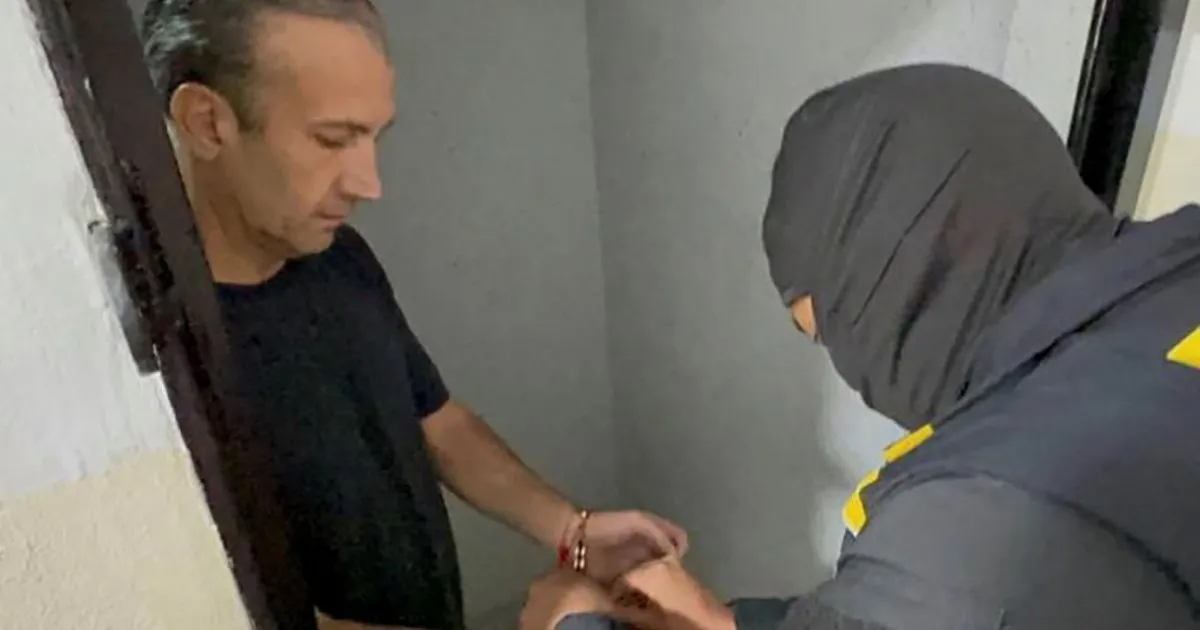
CARACAS.– With a delay of three years, it began in Venezuela to the trial against former Oil Minister Tarek El Aissami and more than 60 defendants for the fraud called PDVSA–Crypto for more than 16.96 billion dollars to the detriment of the Treasury, which is, until now, the only judicial process that involves authorities, reported the NGO Transparencia Venezuela.
The holding of the first hearing on April 20 at night was shrouded in total opacity, according to the NGO, despite the fact that criminal regulations establish the condition that it be public.
The event occurred at a time when Jorge Rodríguez, president of the National Assembly—with a Chavista majority—reported that preparations for a “deep process” of judicial reform which points to the renewal of the Supreme Court.
It was learned that after the hearing was established, the judge postponed the proceedings until this Wednesday, April 22, at 10:00 am
PDVSA-Crypto Fraud
The plot was exposed in March 2023 and involved the National Superintendence of Cryptocurrency and Related Activities (Sunacrip) with the money obtained from the sale of oil, and more than 60 people, including officials and businessmen in the oil sector, in the disappearance of State resources by Nicolás Maduro.
The incident was considered the largest case of corruption to date.
“Our own calculations, in the face of official silence, estimate that the damage caused to the Treasury of the Republic exceeds 16.96 billion dollars, of which 3.6 billion dollars were considered potentially uncollectible and the other 13.36 billion dollars were held in accounts receivable at that time,” the NGO noted in X.
Opaque and delayed judgment
“Little is known about the details,” says Transparency International, which questioned the conditions of opacity and delay in which the 3rd Control Judge with Competence in Cases Linked to Crimes Associated with Terrorism, Alejandra Romero Castillo, began the trial against El Aissami and other defendants.
El Aissami, who held different positions during the Maduro regime, was in charge of the operations at a time when rivalry was growing with Delcy Rodríguez, Maduro’s vice president who later held the Oil office and is now the ruler in charge of the country.
“It is still not clear which detention center the detainees have been in, whether there are 60 or 54 accused, there is not even a clear amount of how much Venezuelan public assets lost with this plot,” said the organization, which indicates that the real damage to public assets would be well above the 5.55 billion that appears in the official accusation.
“Why in a control court and not a trial? Is this the first presentation of the accused before a court? Is Larry Devoe’s Public Ministry going to promote sanctions against those responsible?”, the NGO asked among other questions.
The 50th national prosecutor, Eddy Rodríguez Bencomo, during the hearing described the plot as a “corruption network made up of public officials who carried out parallel oil operations through the assignment of crude oil loads from PDVSA to the National Superintendency of Crypto Assets (Sunacrip) and to individuals, without any type of control,” according to the report.
The foreign currency obtained would have been diverted through crypto assets and businesses carried out by 74 commercial companies.
Towards judicial reform
This Tuesday, Deputy Rodríguez reported that the National Assembly approved the special commission that will later be appointed by the Judicial Nominations Committee that will be in charge of receiving requests to choose the new magistrates.
The judicial reform process is in charge of the Commission for Coexistence and Peace and the Monitoring Commission of the Amnesty Law, both bodies in charge of the process of releasing political prisoners, appointed by Delcy Rodríguez, sister of the parliamentarian.
The president of the Legislature assured that the renewal of magistrates is due to “different circumstances”, such as retirement, resignation or that they begin to occupy other responsibilities, which would leave vacant positions for main and substitute magistrates of the Supreme Court.
This renewal process coincides with the recent changes in the Prosecutor’s Office and the Ombudsman’s Office, both organizations belonging to the Citizen Power.
It is expected that in the coming weeks the process for the renewal of the Supreme Electoral Council will begin, according to information.
