
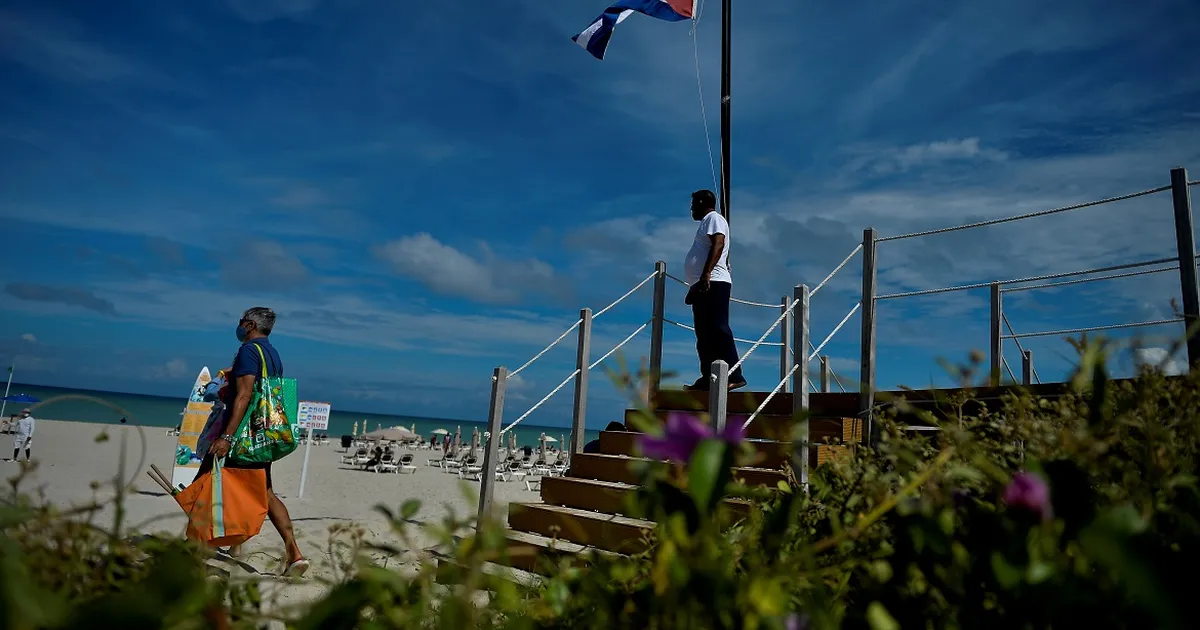
GAESA’s failure to control the industry and its multimillion-dollar investments is a fact. These exaggerated investments to launder capital were a bet that suffocated the economy, dragged the country into a humanitarian crisis and turned it into a place that many fewer tourists want to visit, Diario de Cuba reviews.
The post-pandemic stage has become a lapidary operation for the leisure sector on the Island. The table has been set for the final blow. The extraction of Nicolás Maduro by special forces of the US Army and the oil control established by Washington have precipitated the checkmate.
But it is not the actions of the Trump Administration that have brought down the leisure industry in Cuba. The locomotive of the ruined Cuban economy has been derailed as a result of the mutation of the country’s governance system into a mafia state. GAESA’s plundering action of taking control of the country’s finances and doing with them whatever the oligarchs who control it want, without any type of supervision and control, caused the collapse of the economy. The sectors that support the tourism industry collapsed because they were not properly cared for financially.
The domino effect of this erroneous strategy was inevitable. The strategic sectors collapsed one by one: the energy matrix, the health system, the transportation system, the water supply, agriculture and the production of goods. Another factor that stifled the industry was the increase in crime and insecurity on the streets. The tourism industry was surrounded by problems, which caused it to lose a good number of attractions. And the consequences were not long in coming: dozens of airlines and tour operating companies abandoned the Cuban market.
Poor hygiene in the streets, serious water supply problems and the deep crisis in which the transportation system for garbage collection is mired have uncovered in Cuba an epidemiological crisis as strong as the COVID-19 pandemic itself. Currently, the Cuban population is the target of an epidemic that is raging with more than nine viruses out of control. More than three million people have fallen ill. The death toll is estimated at 8,700 deaths, as described in a recent report by the Cuban Observatory of Citizen Audit (OCAC).
The country looks like a city of zombies. Most hospitals are completely short of equipment, materials and medicines. To this we must add the lack of medical personnel. The workforce has emigrated en masse in the last three years: more than 70,000 have left the country, including doctors and paramedical personnel.
This reality has resulted in the Cuba destination being left out of the portfolio of options of the main world tour operators. The travel alerts issued by the governments of the main tourist markets to Cuba have been another factor that has impacted the decrease in tourist arrivals. Nobody wants to travel to hell and this is what the Cuban tourist market has become: pure hell.
Recently, the Government of Canada—a country that is the main source of tourists to Cuba—issued a travel alert to its citizens warning that the situation on the Island “is unpredictable.” In their alert statement, Canadian authorities urge citizens to “exercise a high degree of caution” due to the deterioration of living conditions on the Island, marked by shortages of electricity, fuel and basic products, a situation that could directly affect tourists.
The first signs of collapse
At the beginning of this year, the island’s largest tour operator, Havanatur, had to close its offices in France after becoming insolvent. The trigger for this decision was the termination of their contractual relationship with the insurer HISCOX, due to lack of payments and not being able to find a replacement insurer. Due to the Cuban company’s decision, trips to the Island marketed for 2026 were cancelled, so the agencies linked to Havanatur were forced to negotiate with their clients whether to refund them or offer them other destinations.
Along these lines, the authorities of the Cuban regime have just announced that they have closed several hotels due to low hotel occupancy rates and lack of fuel. For the moment, the hotels that have closed are located in the northern keys of Cuba. The few tourists who were there have been relocated to other hotels.
The following appear on the list of closed hotels:
-
Cayo Santa María tourist hub:
1. Valentin White Pearl.
2. Sol Cayo Santa María.
3. Meliá Buenavista.
-
Cayo Coco tourist hub:
1. Iberostar Origin Playa Pilar.
2. Grand Muthu Imperial Gaius William.
3. Iberostar Origin Daiquiri.
4. Tryp Cayo Coco.
5. Hotel Mojito
-
Varadero Tourist Pole:
1. Hotel El Patriarca
-
Holguín Tourist Pole:
1. Great Muthu Cove
It is expected that in the coming days, as the internal situation deteriorates even further, other hotels will join the list. Keeping them running without tourists is a waste of resources in the midst of such a critical situation, where the population is suffering severe power outages that translate into marathon blackouts that in the capital already reach 12 hours while the rest of the country is practically turned off.
On the other hand, the Cuban regime has just alerted the airlines that fly to Cuba that starting Monday, February 9, it will run out of fuel for aviation. This news has put airlines from the US, Panama, Spain, Canada and Mexico on alert, which are the ones that still have flight itineraries to the Island. As a consequence, the Canadian market has collapsed in the blink of an eye. The Canadian airline Air Canada has suspended flights to Cuba. (We must remember that Canada is the main source of tourists to Cuba and this airline is the one that transports the most Canadian tourists to Cuba). And to this we must add the flight suspensions announced by Westjet, Air Transat and Sunwing.
Spanish companies are about to withdraw from Cuba
The “desert” effect that the Cuban tourism industry already has is not new, it has been happening since the post-pandemic stage began. Workers in the sector have expressed that the most attractive sun and beach tourist center in the country, the jewel in the island’s tourist crown—Varadero—has long been a ghost town.
Spanish companies are about to withdraw from Cuba. Its continued losses for several years in a row foreshadow this. The Meliá chain had losses of four million euros in 2024 in the Cuban market. In the first quarter of 2025, the company’s losses on the Island reached five million euros. The recent announcement of the lack of fuel to serve airplanes led to the closure of several Meliá hotels. This year has already started with million-dollar losses for the company.
The domino effect of the abrupt drop in Canadian tourism due to the suspension of flights by its four main airlines will cause the occupancy rate of Meliá and the other Spanish hotel chains on the Island to plummet. Therefore, it is highly probable that in the short term more hotels will close under their administration and there is even the possibility that they will completely close their operations due to the insolvency of the business if this situation is not resolved in the coming weeks.
Under these conditions it is impossible to attract tourists to Cuba. The collapse of the Cuban tourism industry is an irreversible fact. This is corroborated by the abrupt closure of dozens of hotels due to lack of fuel and lack of tourists. The country has lost its attractiveness as a tourist market. The economic crisis, the collapse of the energy matrix and the health system have turned the country into a true hell.
The bet of investing billions of dollars in an industry that was in decline is taking its toll on the Cuban regime. Low hotel occupancy is the living sign of failure. The closure of tourist offices abroad and several hotels on the Island mark the beginning of the tourist paralysis.
This is, without a doubt, a hard blow for the Cuban regime in its final hour. Tourism, one of the few remaining financial bastions, is rapidly disappearing. Everything is collapsing. The breakup of the regime could occur at any time, it already seems inevitable.
SOURCE: With information from Diario de Cuba
