

Thirty-seven thousand two hundred thirty-two (37,232): That’s the number of products claiming to be high in protein that can be found on U.S. supermarket shelves right now, according to a recent study by NIQ, a global consumer and market research firm with more than a century of experience.
And unlike in the past, high protein is no longer only offered in foods such as cereals, dairy products or protein bars — which, by the way, usually contain more carbohydrates than protein.
Now you can find candies, cookies, chips, water (yes, H2O), pasta, sauces for those pasta, and even vodka with protein. The offer of protein foods and drinks today seems endless and has emerged in areas where it was not common before. Like this vodka that is advertised as “the one that won’t ruin your training.”
Doctors warn that far from making these foods or drinks healthier, they can confuse and affect the health of those who consume them.
More protein is not synonymous with healthier
Proteins are a building block for the body, building and maintaining everything from our muscles to the hormones and vitamins we need. For this to happen, nine essential amino acids are required that are only obtained by consuming foods—animal or vegetable proteins—that contain them.
“Eating chips that are fortified with protein does not necessarily make them healthier,” Dr. Adriana Dejman, a nephrologist at the University of Miami, told Noticias Telemundo. “On the contrary, we know that chips are ultra-processed foods that have a large amount of added salt and sugar.”
Dejman explains that consuming products like Doritos or Pop-Tarts thinking that they are healthier just because the label says they are high in protein “can lead to adverse health consequences, (such as an) increase in blood pressure, diabetes, etc. So, having more protein does not make it healthier.”
Nutritionist Theodoro Pérez said in a separate interview with Noticias Telemundo the same phrase as his colleague: “Just because a food contains protein does not make it healthier.”
“There are things that are much more important,” explains Pérez, who is a doctor in Colombia, “such as that (the product) does not have trans fats, that it is high in fiber, that it has micronutrients, that it is fortified, it is much more important than a net protein consumption.”
“The protein paradox”
Thus, like a paradox, Chris Costagli defines what is behind the flood of products that claim to contain proteins and that invade American shelves. He is vice president of NIQ and is the author of the recent study on this phenomenon.
Noticias Telemundo spoke with Costagli to understand what this paradox is about and, as he told us, it is an issue where our desire as consumers intersects with the share of ignorance that we all have.
“About 71% of consumers in the United States agree that protein is very important in their daily diet. However, about 39% are not sure if they consume enough protein each day and only about 35% feel able to identify protein-rich products in a store.”
And when seven out of 10 buyers want something very much, the market reacts: “In reality, it is the industry trying to respond to consumers’ constant desire to include more protein in their diets,” Costagli pointed out.
Doctors emphasize that protein does not make an alcoholic beverage less harmful and, according to this marketing expert, these products cause confusion. “They make people unsure if they are really consuming and getting enough protein each day since it appears in unexpected places,” Costagli said.
Where should we get the right protein and how much do we need?
According to a recent study from the US Department of Agriculture (USDA), almost 90% of Americans already consume enough protein. Even so, specialists warn that needs may vary depending on age and physical activity. However, NIQ research found that 60% of consumers make an intentional effort to eat more daily.
But is the call really necessary? protein-maxxingthe social media-fueled trend of maximizing protein consumption whenever possible? The doctors think not.
“A natural or healthy diet is sufficient to meet these protein requirements,” said Dejman, explaining that only about 6% of the population does not meet the required protein intake. The nephrologist details that it is not necessary to look for proteins in ultra-processed foods, she says that it is better to consume them from traditional sources, such as those of animal or vegetable origin.
Theodoro Pérez, nutritionist, agrees and says that the focus on our protein consumption should be on another aspect: “The alert that we have to see is not only the presence of protein (in a product), but really whether it is of quality for my body or whether it is much more worth it to consume real foods that allow me to get amino acids that they are essential for my body. That is something that calls for a lot of reflection.”
Protein requirements vary greatly depending on age, sex, weight, height and level of physical activity. This USDA calculator helps determine how much protein you need to consume. Doctors point to a question very important: If a person suffers from medical conditions such as diabetes or liver disease, to name a few, they should consult a doctor. to know the amount you need.
How to deal with the ‘protein invasion’
Costagli, from NIQ, has spent years studying consumer behavior regarding the food and beverage industry’s tactics to sell more.
“Read the front and read the back,” says Costagli, emphasizing that you should not consume a product based solely on what the front label says. That way, he adds, you can make “an informed decision about what you are going to buy, having all the information available about the product.”
Dr. Pérez explains that this simple action in the supermarket is important “because many times something says that it contains protein and when you see the ingredients, the main ingredient is not the source of protein, but, for example, they can be starches, which are high in carbohydrates, or sugars, which have a high glycemic index.”
An old tactic
The food and beverage industry has leveraged itself for decades on the endless dietary trends that have existed… and will exist.
A good example are Doritos, the famous packaged corn tortilla chips that FritoLay began marketing in 1964. Their origin is linked to a Mexican restaurant at Disneyland, in California, where the snack had become popular among visitors. A brand executive promoted its large-scale production.
When it was launched nationwide in 1966, its packaging only noted that it was a tortilla. By the late 1970s it was touting that it was made “without preservatives!”
In the 80s it was sold as “cholesterol-free” and with “a third less oil.”
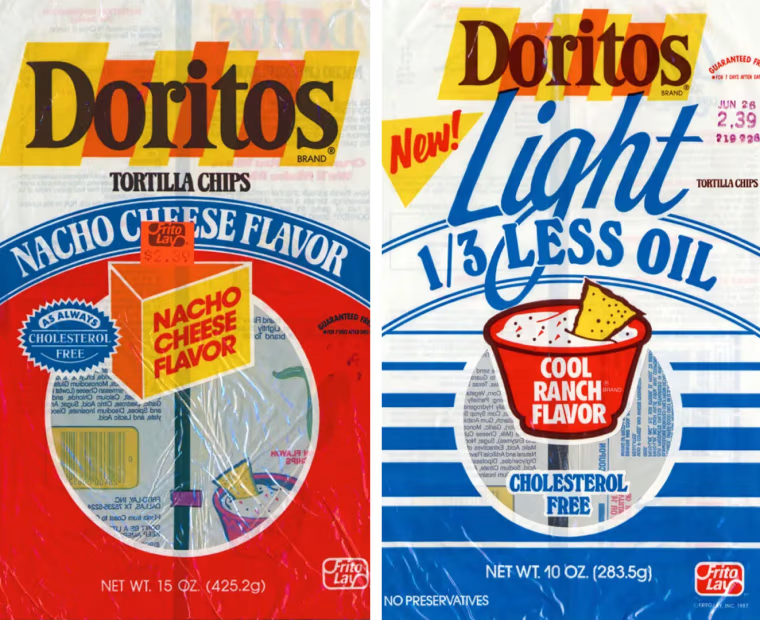
In the 90s and early 2000s, Doritos packaging claimed that it had “one-third fewer calories” or that it was low in carbohydrates.
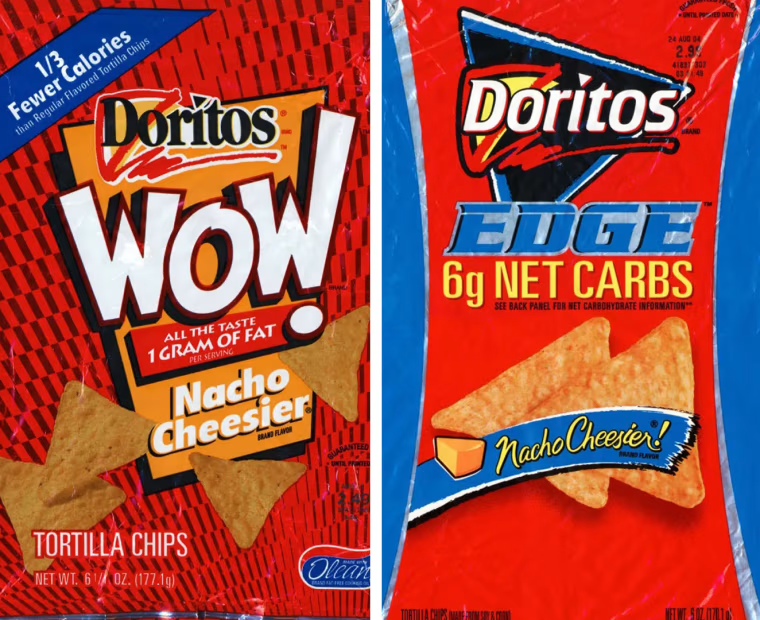
Since then, the Doritos packaging has claimed to be a “light” product with “1/3 fewer calories than a regular tortilla” or that it is “free of dyes.”
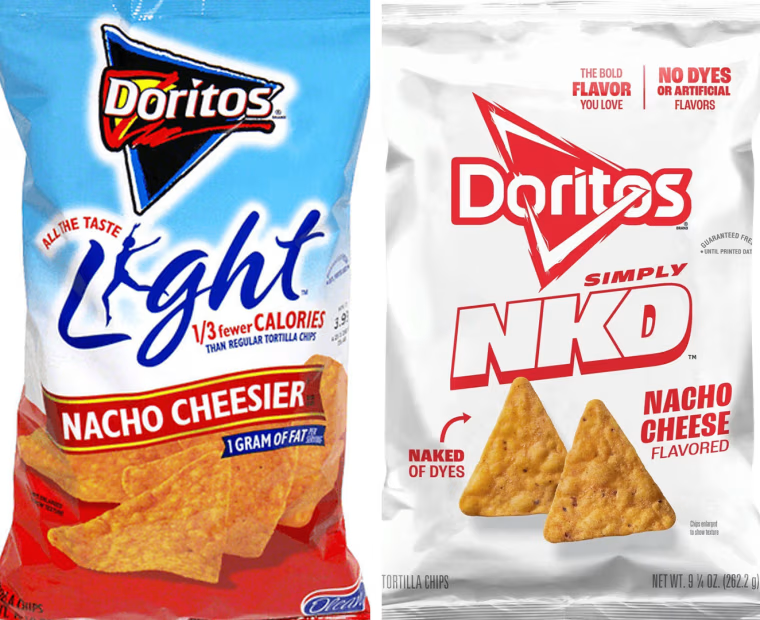
And now that there is so much interest in protein, there are Doritos with protein.
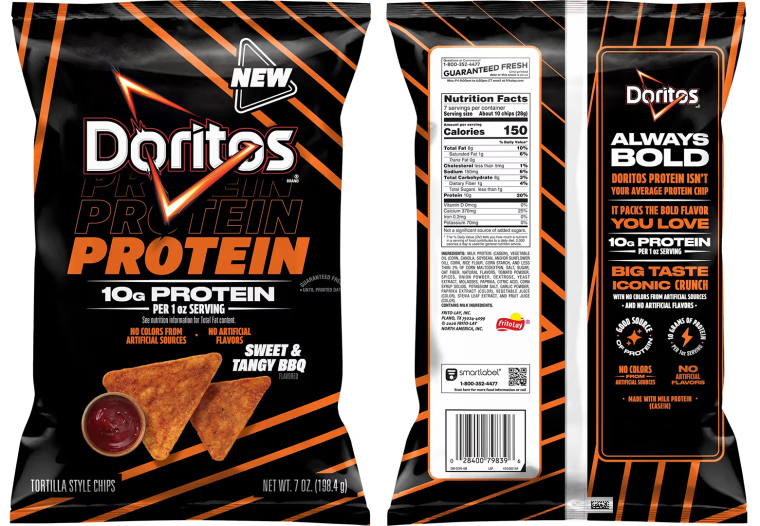
Noticias Telemundo asked FritoLay what led the company to launch this new line of Doritos and we have not received an answer.
