
The United States is no longer a measles-free nation, reversing a health achievement in the country achieved 30 years ago.
The nation was removed this Friday from the list of countries that have eradicated this disease by experts from the Pan American Health Organization (PAHO), according to people involved in the decision told The Wall Street Journal. PAHO would plan to make the announcement publicly next week, according to officials from that organization, which is part of the WHO and is based in Washington, DC.
The decision It was seen coming a few months agobecause the current measles outbreak is the worst the United States has had in decades: more than a dozen people have died (including several babies) and there are thousands of cases of infection in several states.
This has come as authorities in several states have allowed more young people to waive the vaccination requirement to attend schools, and as officials such as Health Secretary Robert F. Kennedy Jr. have spread misinformation about immunization.
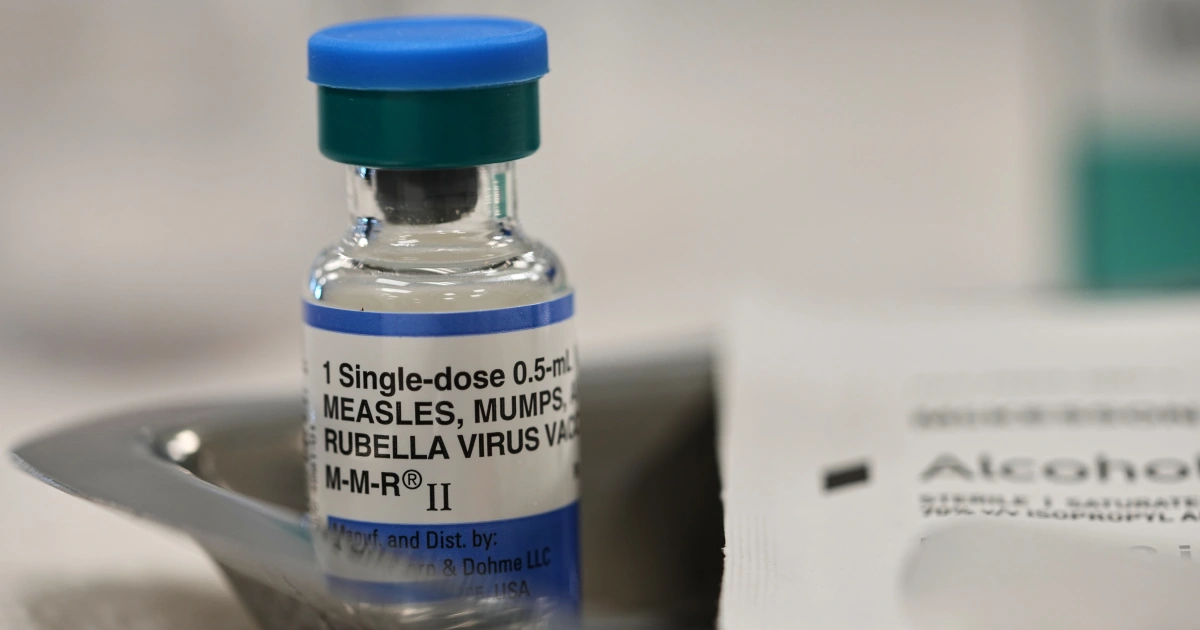
Measles is highly contagious, and is preventable with a vaccine that has existed for many years worldwide and that It has been proven safe in several studies. But officials like Kennedy and the president himself, Donald Trump, have questioned the medical evidence that has existed for decades on the matter.
Previously, the vaccination rate against measles among children was around 97% in the United States, when at least 95% is needed so that an outbreak does not arise if there is a case of contagion: the more people are vaccinated, the less likely it is that the disease will be transmitted.
However, the vaccination rate has fallen considerably and last year it was only around 92% among children nationwide, according to data from the American Pediatric Association.
The loss of eradicated disease status “is a big step backwards,” David Margolius, director of the health department in Cleveland, Ohio, who also heads a coalition of the health departments of several large American cities, told .
The determination is due to the fact that the number of cases, which specialists attribute to an immense drop in vaccination rates, especially among minors, are mostly attributable to a single virus, so it can no longer be considered that the disease is controlled.
PAHO had also removed Canada last year from the list of countries that have eradicated measles, a status that nation had since 1998.
And there is a danger that Mexico will also end up without the recognition of this achievement against the contagious disease: although there are busy public vaccination days in that country, there have been several cases especially concentrated in Mennonite communities.
Although the United States has thus lost an achievement in terms of public health, the head of the Centers for Disease Control and Prevention (CDC) had said days before that this will not change its approach to measles.
“What protects Americans is not the designation of being a measles-free country. What protects Americans is vaccination,” Erica Schwartz said this week.
“We know where transmissions are occurring and we are working with state and local health departments to reach those communities. Losing the designation does not mean we are going to abandon the approach to vaccinating, which is based on medical evidence,” he added.
However, there are doubts among specialists about how much the CDC and local or state health departments can do when at the federal level the Trump Administration seems to maintain an anti-vaccine approach.
Symptoms of measles include a severe fever and a rash that begins in the neck and face area and spreads to the back. There are people who recover, although in some cases with sequelae such as brain inflammation and blindness. Measles can also be fatal, especially among children and older adults who have a less strengthened immune system.
