
After the announcement of the ceasefire in the Iran war, everyone is looking forward to the upcoming peace talks. Israel initially continued to take military action against the Iranian-backed Hezbollah in Lebanon before unexpectedly announcing on Thursday evening that it would begin direct negotiations with the hostile neighboring country. Iran wants to continue enriching uranium, which runs counter to the interests of Israel and the United States. There is still controversy surrounding the opening of the Strait of Hormuz to shipping traffic.
These points of conflict cast a shadow over peace talks between the United States and Iran, which are scheduled to begin on Friday in the Pakistani capital Islamabad. Initially, preliminary discussions at expert level are planned, according to Pakistani security circles. A meeting of the negotiators is planned for Saturday morning. The talks could last until Sunday if necessary.
After a long period of radio silence, the federal government is now seeking direct talks with Tehran again, as Chancellor Friedrich Merz announced. “Our goal is to make our own contribution to the success of the upcoming negotiations,” he said, referring to the peace talks.
Mutual threats despite a ceasefire
After Israel’s devastating air strikes in Lebanon, Iran threatened to abandon the ceasefire. The USA would have to decide – “either a ceasefire or a continuation of the war via Israel. You cannot have both,” wrote Foreign Minister Abbas Araghchi on Platform X. US President Donald Trump also threatened Iran with a new military escalation.
On his Truth Social platform, he said on Thursday night (US local time) that the US military’s ships, planes and soldiers would remain stationed around Iran until the “REAL AGREEMENT reached is fully adhered to.” Everything is being prepared that is necessary for the “lethal pursuit and destruction” of an already weakened enemy.
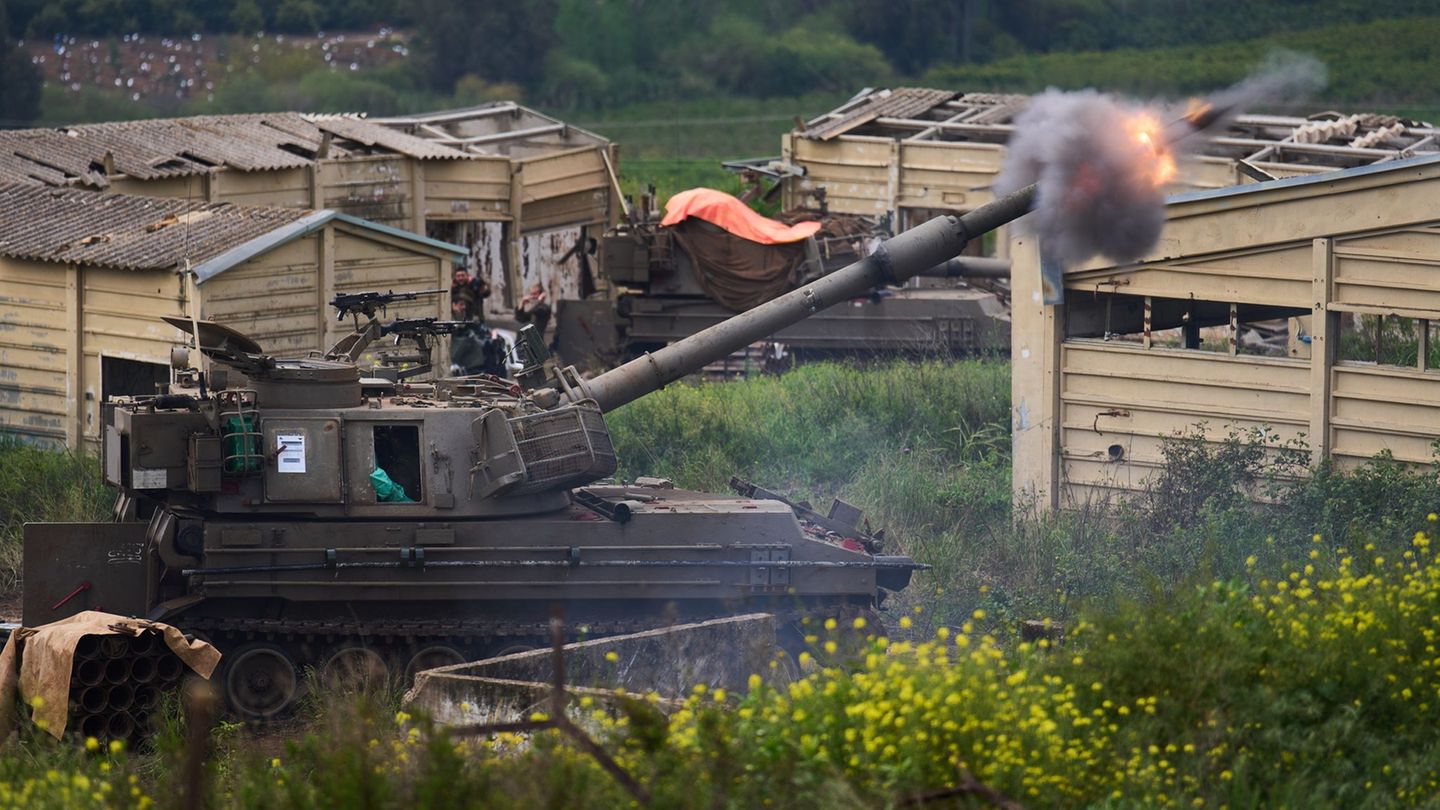
Israel bombed numerous targets in Lebanon, including the capital Beirut, in a surprise major attack on Wednesday. According to Lebanese figures, more than 200 people were killed, including many civilians. In response, the Hezbollah militia, which is allied with Tehran, said it fired on a kibbutz in northern Israel that night.
Netanyahu announces direct negotiations with Lebanon
Israeli Prime Minister Benjamin Netanyahu’s office said on Thursday evening that Netanyahu had instructed the cabinet on Wednesday to begin talks with Lebanon “as soon as possible.” They should focus on disarming Hezbollah and establishing peaceful relations between Israel and Lebanon. Lebanon’s President Joseph Aoun has repeatedly signaled his willingness to negotiate with Israel in the past.
Iran does not want to give up uranium enrichment
According to its nuclear chief, Iran continues to insist on the right to enrich uranium in peace talks with the USA. Nuclear chief Mohammed Eslami rejected calls for a waiver, the Iranian news agency Isna reported. “These are their wishes, and these wishes will be buried,” he said, referring to the USA.
US President Trump wants to prevent Iran from building a nuclear bomb. Tehran denies pursuing such plans. Over the years, the Islamic Republic has built a national nuclear program and also enriches uranium itself.
Europeans demand free navigation through Strait of Hormuz
European governments are increasingly demanding that Iran open the Strait of Hormuz. They firmly reject the fees for passage proposed by Tehran. “This is unacceptable,” said French Foreign Minister Jean-Noël Barrot.
After a conversation with NATO Secretary General Mark Rutte, US President Trump expects concrete commitments from allies to help secure the Strait of Hormuz, according to his spokeswoman. Nato spokeswoman Allison Hart told the German Press Agency that Rutte was exchanging ideas with his partners about his talks in Washington.
Massive criticism of Israel over the attacks in Lebanon
Israel is heavily criticized for its major air strike against Lebanon. The EU Commission condemns the attack “in the strongest possible terms,” a spokesman said. The UN High Commissioner for Human Rights, Volker Türk, called the scale of the killings and destruction in Lebanon “simply horrific.”
Tight security in Islamabad
Meanwhile, preparations for peace talks between the USA and Iran are in full swing in Islamabad. Security precautions have been increased in the Pakistani capital. The government district, hotels and the diplomatic zone are cordoned off. Around 5,000 soldiers and security forces were stationed.
Iran doubts whether negotiations with Washington make sense
The Iranian parliament speaker Mohammed-Bagher Ghalibaf questioned the usefulness of the negotiations. He accused Washington of breaking its promises – again pointing to Lebanon. However, according to US Vice President JD Vance, Lebanon is not included in the agreed ceasefire.
But even according to Pakistan’s mediator, the ceasefire explicitly includes Lebanon. French head of state Emmanuel Macron also demanded on Platform X that the ceasefire must also be observed in Lebanon.
Confusion about the basis for negotiations
According to the White House, Trump is sending a delegation led by Vance, special envoy Steve Witkoff and Jared Kushner to Islamabad. The basis should be a ten-point plan presented by Tehran. However, there is confusion about its contents.
