
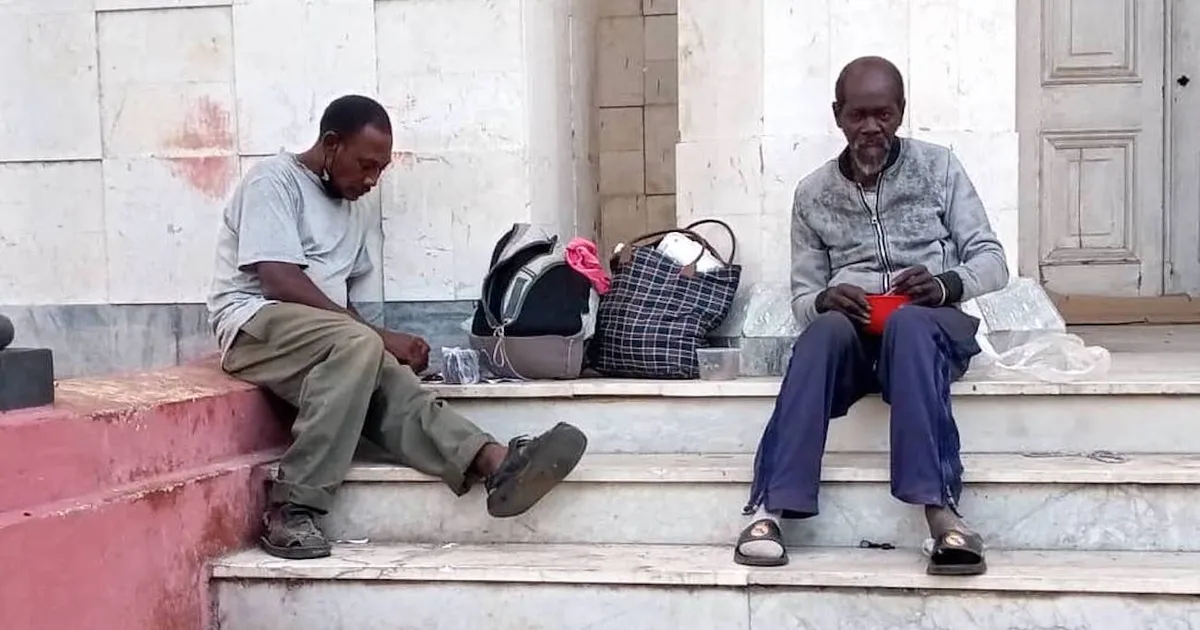
HAVANA.- The inability of the Cuban regime to guarantee minimum conditions of decent living continues to deepen the social deterioration on the island, while Havana increasingly resorts to international donations as a survival mechanism in the face of the collapse of its basic systems.
In this context, the regime received a shipment of medicines from Russia this Friday, in an event held at the Moscow embassy in the Cuban capital. The Russian ambassador, Víctor Koronelli, delivered the aid to the regime’s Minister of Public Health, José Ángel Portal Miranda, without specifying the volume or type of supplies included.
Both parties limited themselves to pointing out that it is “a humanitarian shipment prepared by the Government of Saint Petersburg”, in the midst of a health crisis marked by the shortage of medicines, hospital supplies and the deterioration of medical infrastructure.
“Propaganda”
During the event, used for propaganda purposes, Koronelli stated that the donation reflects “the deep and historical ties of friendship” between both countries, at a time when the Cuban regime increasingly depends on the support of allies such as Russia to alleviate its internal crisis.
In parallel, the regime also received a donation of sports equipment from China, intended for a sports system equally affected by the lack of resources. According to the official JIT media, the shipment includes equipment and clothing for disciplines such as boxing, table tennis, kayaking, rowing, swimming and gymnastics, already distributed in high performance centers.
The Chinese ambassador to the island, Hua Xin, assured that the aid seeks to contribute to the preparation of Cuban athletes for upcoming international competitions, in particular the Central American and Caribbean Games Santo Domingo 2026.
Precariousness
These donations occur in the midst of a scenario of increasing precariousness. This same Friday, the regime also received a new international “solidarity” convoy, the second in less than a month, made up of activists from Italy, France, Switzerland, Mexico and the United States, with food, medical supplies and educational materials.
The regime’s Vice Minister of Health, Julio Guerra Izquierdo, acknowledged that these shipments represent “an important relief” for the health system, although he admitted that they are insufficient given the magnitude of the crisis.
Analysts and critical voices have warned that this scheme of external dependence does not resolve the structural causes of the Cuban economic collapse. In this sense, it is insisted that the international community must focus its efforts on demanding political and economic changes that allow citizens to recover their productive capacity, instead of supporting a model that, after decades of state control, keeps the population in conditions of scarcity and vulnerability.
