
The resounding victory of Democrats, who gained control of the US House of Representatives and Senate in Tuesday’s elections, will change the course of federal health policy.
The result opens the door to legislative initiatives to reverse cuts to the Affordable Care Act (ACA) and Medicaid, and measures to reduce costs such as health insurance premiums and drug prices.
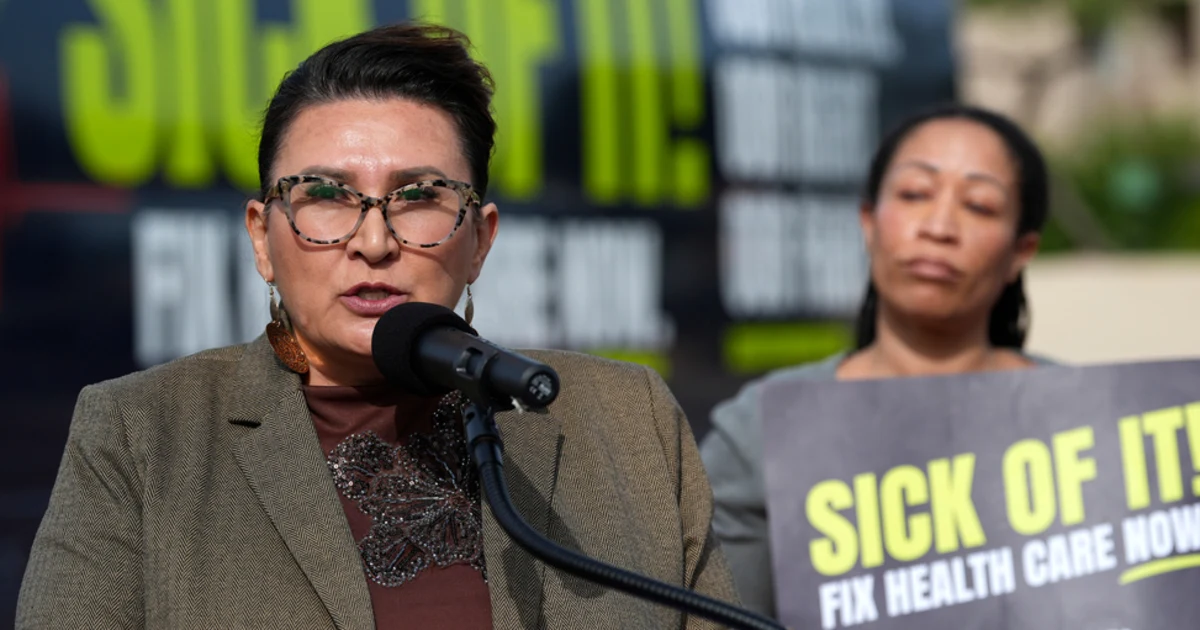
This series of decisive victories will allow Democrats to argue that voters — who have said in polls that the cost of health care was a top concern — have given them a clear mandate to reverse the historic cuts that President Donald Trump and Republicans made to public health programs.
The magnitude of the victory, which includes the victory of Abdul El-Sayed, senator-elect from Michigan, and other progressives, will likely encourage some Democrats to push ambitious proposals, such as expanding Medicare, the federal health program for people 65 and older, to cover all Americans.
Its goal is to position itself as the party that prioritizes reducing health costs ahead of the 2028 presidential election. However, party leaders will need Trump’s support to advance any health agenda.
Although the president has veto power, he may be interested in negotiating legislative deals as he seeks to cement his legacy and divert attention from investigations into his handling of the war against Iran, mass deportations, scandals involving government contracts and other controversies.
As of Thursday afternoon, NBC News projected that Democrats would win at least 259 of the 435 seats in the House of Representatives and at least 54 seats in the Senate, according to . Several major races remained undecided, including Senate races in Alaska and Mississippi.
Trump said in a phone interview with Politico that he had spoken with Democratic Party leaders and that voters had sent the message that he needed to work with them “to make sure things go right for our country.”
“I don’t want to spend two years just vetoing everything,” Trump said. “They also want things done.”
But it remains to be seen how Trump’s new conciliatory stance will translate into whether he can reverse changes pushed by Republicans, such as new work requirements for many adults enrolled in Medicaid, the joint federal and state program that provides health coverage to low-income people and people with disabilities.
During the midterm elections, Republicans presented Medicaid reform and other changes to health programs introduced by their law One Big Beautiful Bill Act as some of his main achievements.
However, Democrats will have to find a delicate balance between their public policy initiatives and their intention to investigate numerous issues related to the nation’s top health official, Robert F. Kennedy Jr., who has dismantled the United States’ vaccination recommendations, drastically reduced the staff of federal health agencies and cut funding for public health.
“Democrats will present a broad health agenda, including reversing cuts to Medicaid and the ACA, but it will be impossible to accomplish all of that while President Trump is still in the White House,” said Larry Levitt, executive vice president of KFF, a health information nonprofit that includes .
New year, new Congress, new majority
One of Democrats’ first priorities in 2027 will likely be pushing legislation to reset the expanded subsidies that reduced the cost of Obamacare health plans for millions of people.
These more generous subsidies were created during the COVID-19 pandemic, as part of economic relief programs, but expired last year after Trump and the then-Republican-controlled Congress decided not to renew them.
Rep. Hakeem Jeffries of New York, the current House Democratic leader who is widely expected to become its speaker, told CNN on Wednesday that the party should reinstate subsidies to help families struggling financially.
“My guess is that this would feed into a broader budget negotiation or legislative package that may or may not include other health priorities, like reversing cuts to Medicaid or other issues important to Democrats,” said Sabrina Corlette, co-director of the Center on Health Insurance Reforms at Georgetown University.
Leslie Dach, president of Protect Our Care, a Democratic-aligned advocacy group, said that if they act decisively, they could both renew expired ACA subsidies and extend the enrollment period for 2027 coverage, which ends in most states on Jan. 15, shortly after the new Congress is scheduled to take office.
To achieve this, they would have to act within days of taking control, Dach explained.
“Congress will take office during open enrollment, at a time when people will have to make difficult and terrible decisions about their health care due to new premium increases brought about by Republicans,” he said.
Premiums for flagship Affordable Care Act plans are projected to rise an average of 13% in 2027, according to KFF researchers.
With Congress likely to pass another short-term government funding bill in December, lawmakers taking office will also have a chance to fight over cuts to Medicaid spending this spring, said Rodney Whitlock, a health policy consultant who previously worked for Republican lawmakers in Congress.
Democrats, many of whom made the cost of health care a central issue of their election campaigns, are now well positioned to put that issue at the center of negotiations with Trump over federal spending.
“If they have the opportunity to do battle in March over fiscal year funding, and Democrats can choose what they want to focus on in that first confrontation with the president, having control of both houses of Congress, by God, isn’t it crystal clear that it will be about health?” Whitlock said. “Isn’t it very clear that it will be to repeal or postpone all cuts to Medicaid?”
Allison Orris, a partner at the Manatt firm, had advised her clients before the election not to count on any changes, even if Democrats managed to control Congress.
“Ultimately, the White House will have to sign any legislation, and HR 1 was one of the administration’s signature achievements. Reversing or even simply delaying the changes passed in 2025 will cost money,” he said, referring to the One Big Beautiful Bill Act.
What else could happen?
Trump is likely to continue to rely heavily on executive actions to shape health policy from the White House. Democrats, meanwhile, will use their control of Congress to oversee the Trump administration and the Department of Health and Human Services.
Jeffries, the House Democratic leader, has promised that his party will “hold the corrupt accountable” through rigorous oversight of the Trump administration.
In June, Democrats on the House Oversight and Government Reform Committee released a report outlining some of the investigations they could launch.
In particular, Democrats want to examine opaque drug pricing deals that Trump has negotiated with pharmaceutical companies in exchange for exemptions from certain tariffs.
By assuming control of congressional committees, Democrats will gain the power to issue mandatory subpoenas to demand documents or testimony, an important tool for investigations.
However, it is not clear whether they will be able to obtain documents from the government or companies, because the Justice Department, under Trump, has much of the responsibility for enforcing those subpoenas.
Still, subpoenas are likely to be issued related to investigations into tariffs Trump has imposed, or threatened to impose, on prescription drugs.
Democratic congressional leaders will also be able to file lawsuits against the Trump administration to challenge the White House’s actions.
Democrats have also advanced plans to investigate scientific decisions related to controversial issues, such as allowing greater sales of flavored electronic cigarettes and the White House’s promotion of the herbicide glyphosate, as well as any links these decisions could have to political contributions from companies.
A broader debate also looms over universal health coverage, which would include partial measures such as expanding traditional Medicare benefits to include dental and hearing care and lowering the age of eligibility for Medicare to 60 or younger.
Expanding the program to cover all Americans faces enormous obstacles, even if Trump were willing to consider it.
Much of the country’s healthcare industry — including doctors, hospitals and insurers — would almost certainly oppose any such legislative initiative. Furthermore, Democrats have never seriously addressed the enormous implications such a proposal would have for the federal budget, taxes, health care, and society at large.
Come January, Washington will have to find a way to work together to make health care more affordable, or risk angering voters, who in recent elections have consistently identified this issue as one of their top concerns, said Matt Hogan, a partner at Impact Research, a polling firm linked to the Democratic Party.
Hogan noted that, taken together, health care costs and prescription drug prices are the top economic concern for voters 50 and older.
Controlling prescription drug prices could be an area of bipartisan consensus, even with Trump, who before the midterm elections claimed that lowering the prices of some drugs had been one of his administration’s biggest achievements.
“This is the third election in a row that has really been about the cost of living,” Hogan said. “If members of Congress haven’t gotten the message yet, I hope they do now.”
is a national newsroom that produces in-depth journalism on health issues, and one of the main news programs KFF: The independent source of health policy research.
