
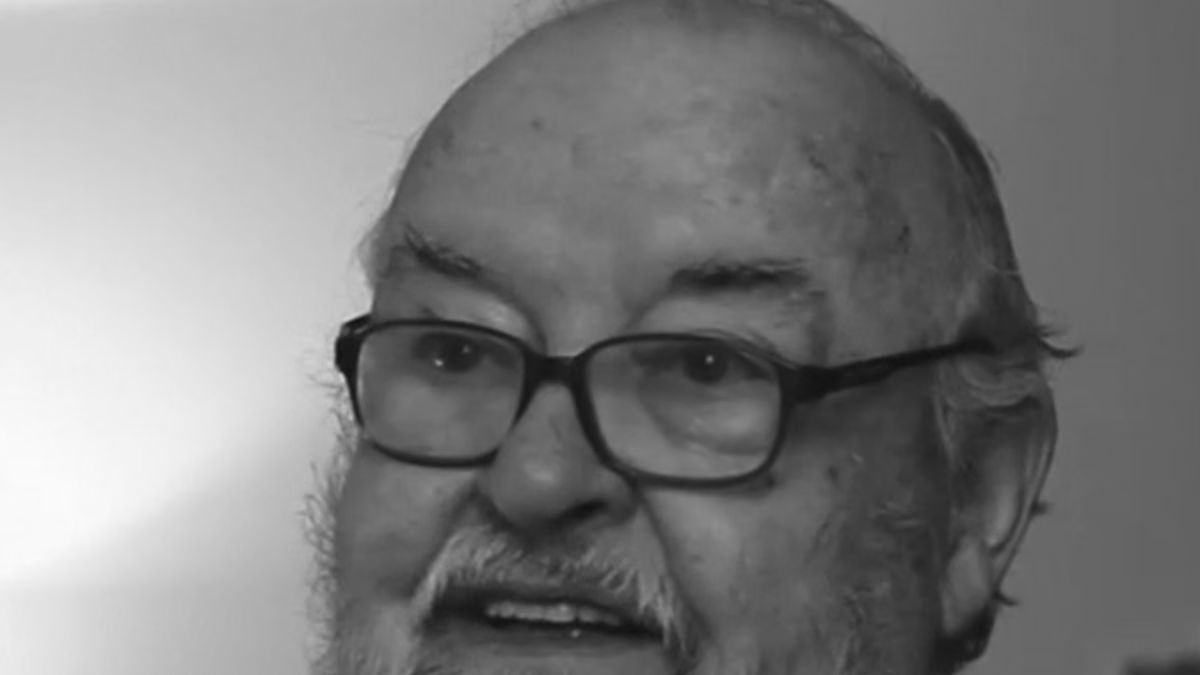
MADRID.- The Spanish director, screenwriter and producer José Luis García Sánchez, winner of the Golden Bear at the Berlinale for his film The troutdied at the age of 85 in Madrid, the Film Academy reported this Sunday.
García Sánchez also won two Goyas for the scripts of ‘Belle Époque’, winner of the Oscar for best foreign language film, and ‘Tirano Banderas’, as well as the Silver Shell (from the San Sebastián Festival) for Best Director for ‘La corte del pharaón’.
The Spanish filmmaker, the Academy stressed, spent almost 60 years “developing projects, watching films, becoming interested in cinematographic heritage, winning awards and, above all, making friends.”
Born in the city of Salamanca (west) on September 22, 1941, he had a degree in Law and studies in Sociology. He began his career in theater with the independent group ‘Los Goliardos’. Later, he entered the Official School of Cinematography.
Already in 1966 he worked as an assistant director on the film ‘The Hunt’, by Spanish director Carlos Saura.
Reference of Spanish cinema
He debuted as a feature film director with ‘El lovefero’ (1975), which was followed by ‘Colorín colorado’ (1976) and ‘Las trouts’ (1978), his third feature film with which he won the Golden Bear at the Berlin Festival in 1979.
In 1981 he directed, together with Andrés Linares, ‘Dolores’, a documentary dedicated to the communist leader Dolores Ibárruri, known as “la Pasionaria”.
Later, he directed ‘La corte de Faraón’ (1985), a musical comedy set in post-war Spain and winner of the Silver Shell at the San Sebastián Festival; and two years later ‘Divine words’ (1987), adaptation of the work by Ramón María del Valle-Inclán.
These were followed by ‘The Longest Night’ (1991) and ‘Tirano Banderas’ (1993), an adaptation of Valle-Inclán’s novel for which he won the Goya Award for Best Adapted Screenplay, along with Rafael Azcona.
He was also the screenwriter of ‘Belle Époque’ (1992), directed by Fernando Trueba. The film won nine Goya awards, including best original screenplay.
Considered one of the references of Spanish cinema of the time, with a career marked by comedy, satire and social criticism, the titles ‘Suspiros de España (y Portugal)’ (1995) and ‘Tram to Malvarrosa’ (1996) were added to his list.
Already in the 21st century, he continued his activity with ‘Lázaro de Tormes’ (2000), ‘The Green March’ (2001), ‘By the Grace of Luis’ (2009) and ‘The Dead Are Not Touched, Nene’ (2011), among other titles.
His career was recognized with the Spike of Honor from the Valladolid International Film Week (Seminci) in 2017 and the appointment as an honorary member of the Cine Club Duero in 2002.
