
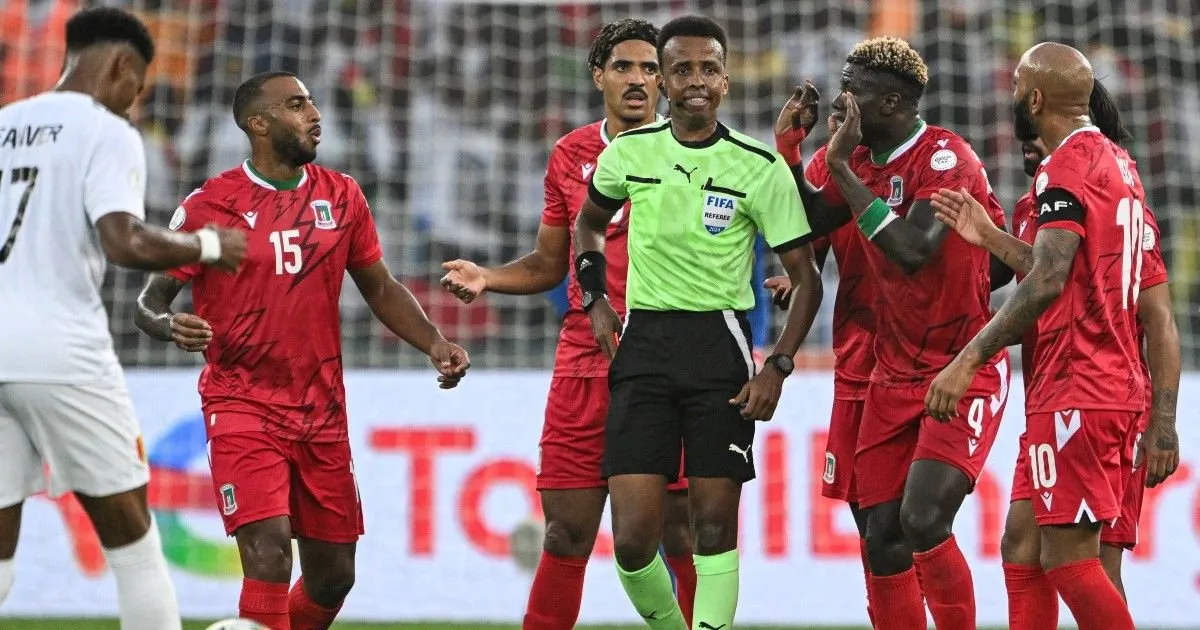
SALZBURG.- Deprived of his dream of refereeing in the World Cup 2026 after having been refused entry into USA In June, the Somali referee Omar Artan was invited by the UEFA to direct the final of the European Super Cup between the Paris SG and the Aston Villa.
Before the start World Cupthe 34-year-old referee found himself in the media spotlight after being turned away upon arrival at the international airport of Miamidespite being part of the group of referees selected by the FIFA for the tournament.
“It has been a very difficult time,” Artan acknowledged in an interview published on the UEFA website.
“Many people show me their sympathy, because when you have worked for many years to carry out a project and in the end you can’t do it, it is very hard,” he added.
State Department rejection
He State Department American justified this rejection by explaining that the arbitrator was “linked to people suspected of belonging to terrorist organizations”, which “made the traveler ineligible to enter” its territory.
Accusations that the referee rejects and that caused outrage in Somaliawhere Artan was welcomed as a hero upon his return.
“What happened to him is unfortunate, but we do not control everything,” the FIFA president simply declared. Gianni Infantino.
In response, UEFA, the body that governs European football, announced that Artan would referee the European Super Cup, which pits the winner of the Champions LeaguePSG, with that of the Europa LeagueAston Villa.
“I was lucky, but I worked very hard to get here and I am really proud,” Artan told UEFA.
Political gesture in the middle of the battle
First Somali to referee in a African Cup of Nationsin 2024, Artan will referee his first match in Europe.
“Living adventures, creating memories and learning new things is always wonderful,” celebrated the referee, who has some advice: “Never stop dreaming.”
To justify the decision to appoint Artan as referee for the Super Cup, UEFA highlighted its protocol signed at the end of April with the African Football Confederation (CAF) to promote cooperation between both confederations.
But above all it is a political gesture by UEFA, usually critical of FIFA, which takes on an even stronger meaning with the conflict that the European body has been facing for two weeks with Infantino, in relation to the failed plan to open the world body to private investors.
A failure due, in large part, to the rebellion led by UEFA, which announced a boycott of FIFA tournaments, including the World Cups, to try to force Infantino’s departure.
