
For decades, talking about sports in USA was to talk about NFL, NBA, MLB either NHL. Soccer lived in the background, seen as a sport for children or for immigrant communities.
However, that perception has changed rapidly and today it is impossible to ignore that soccer has become an important piece within the American sports landscape.
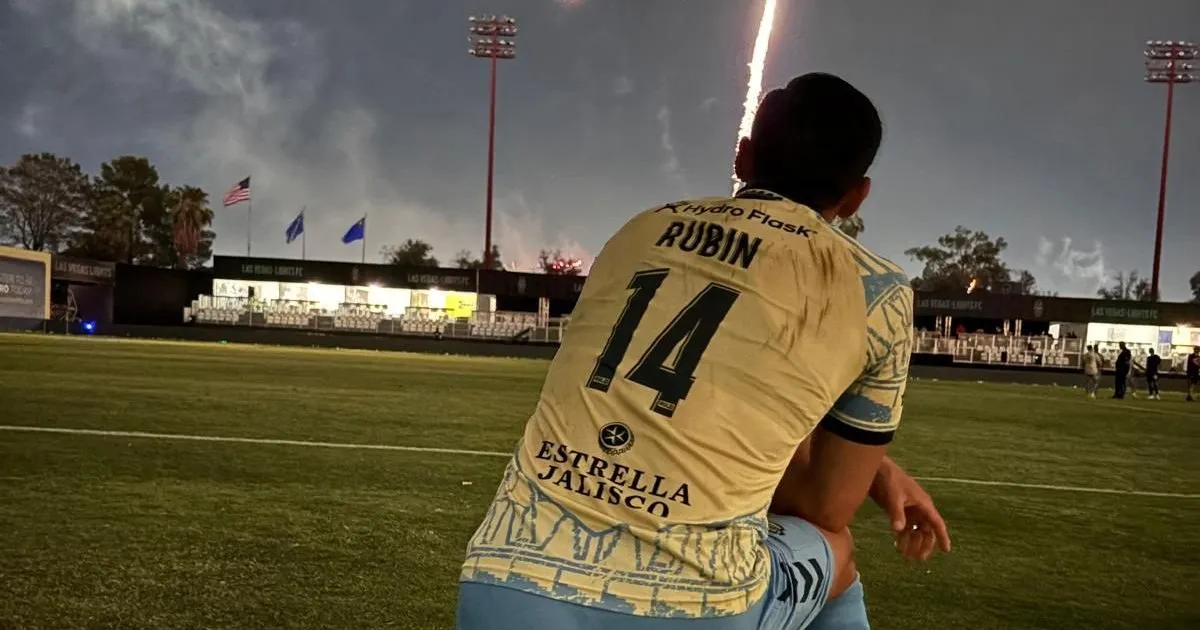
The best example occurred last July 4, the day of Independence of the United States. While most of the major professional leagues were out of activity, one franchise was in charge of representing professional sports in Las Vegas: Las Vegas Lights FC, USL Championship team.
It wasn’t the NFL. Neither does the NHL with the Golden Knightsnor the MLB with the Athleticsnor the WNBA with the Aces.
It was a soccer league club that opened the doors of its stadium to welcome thousands of fans on one of the most emblematic dates on the American calendar.
Beyond the sporting result, the message was powerful. Football is no longer a niche spectacle. Today it is part of the sporting identity of cities that just a few years ago did not even have a professional team.
vegas He represents this transformation better than anyone. In less than a decade it went from being considered an unviable city for professional sports to becoming one of the most important markets in the country.
In the midst of this evolution, Las Vegas Lights has kept the presence of soccer alive, building a community of fans even before the city was chosen as one of the headquarters of the FIFA World Cup 2026.
But the growth of soccer in the United States goes far beyond Las Vegas. The Major League Soccer It has experienced constant expansion, with modern stadiums, better academies, million-dollar investments and owners who understand that ‘soccer’ is no longer a bet for the future, but a reality of the present.
Clubs like InterMiami, Los Angeles FC, FC Cincinnati either St.Louis City They have shown that there is a solid fan base, willing to fill stadiums week after week.
The arrival of international figures also accelerated this process. David Beckham opened a door that they then crossed Zlatan Ibrahimovic, Wayne Rooney, Thierry Henry, Kaka, Gareth Bale and of course Lionel Messi.
The presence of the world champion not only raised the quality of the championship; It also transformed the international perception of MLS and multiplied media attention.
However, reducing the growth of football solely to the stars would be a mistake.
The real change is in the bases
Every year millions of American children play soccer as their first sport. The academies are producing more and more national talent and the men’s team is beginning to compete with a generation much more prepared than the previous ones.
The women’s team, for its part, continues to be a world power and has served as an inspiration for thousands of young people for decades.
Added to this is the growth of the USL Championship and other professional leagues that have allowed medium-sized cities to find an element of local identity in soccer.
Equipment like Las Vegas Lights, Louisville City, Sacramento Republic either New Mexico United They have shown that it is not necessary to belong to the highest category to generate passion, fill stadiums and become a symbol of the community.
The closeness between players and fans, affordable costs and family experiences have made soccer an attractive alternative to other leagues with increasingly expensive tickets.
USA He has also fervently lived the greatest possible showcase. The FIFA World Cup 2026organized together with Mexico and Canada, It is the most important sporting event in the history of the continent.
Millions of people will be introduced to stadiums, cities and clubs that will continue to benefit long after the tournament ends.
The legacy will not only be economic. It will be cultural.
It is increasingly common to find bars full to watch football matches. Premier League wave Spanish league from early in the morning.
Broadcasts are seeing record audiences, European club jerseys are part of the everyday landscape, and soccer is taking up more and more space in the American sports conversation.
Perhaps the best symbol of this transformation occurred precisely on the 4th of July in Las Vegas.
While many thought the sport was resting for Independence Day, a soccer team continued playing.
Twenty years ago that scene would have seemed unthinkable. Today is simply an example that soccer stopped asking for permission to be part of the American sport.
The question is no longer whether soccer will grow in the United States. The question is how far it will go.
