
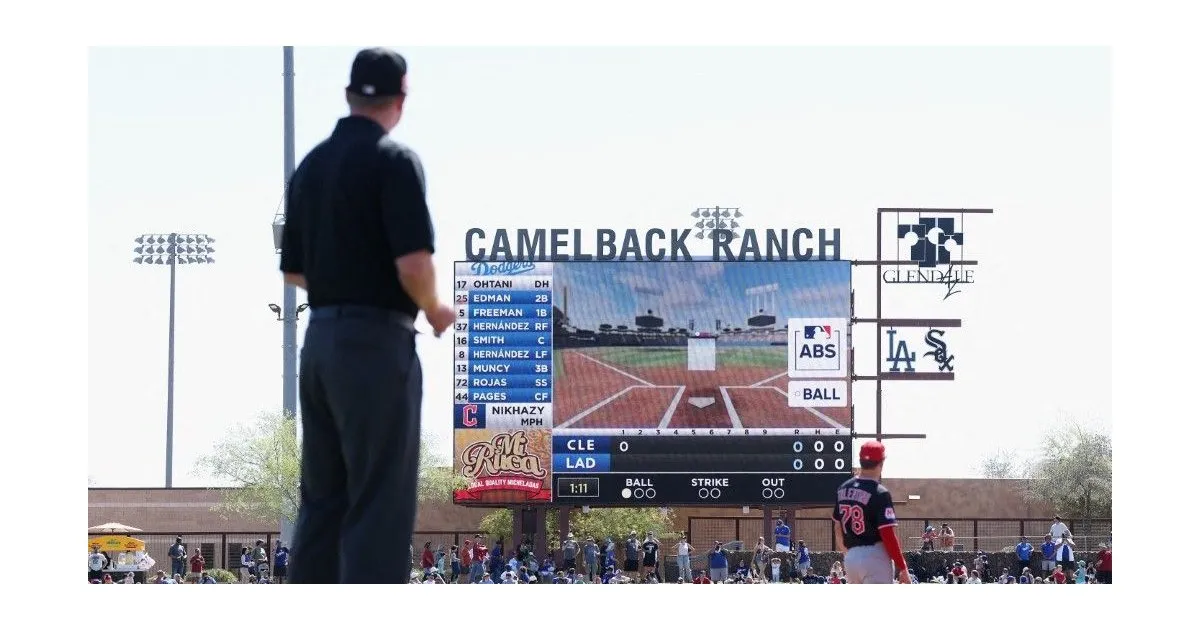
The arrival of ABS system (Automatic Balls and Strikes) will mark a before and after in the viewing experience baseball. Major League Baseball (MLB) will implement visible adjustments both in television broadcasts and on the screens inside the stadiums, with the aim of avoiding competitive advantages while the game adapts to the new technology.
Changes in TV and streaming: fewer visual clues for the viewer
One of the most striking adjustments will be in the official transmissions. Fans watching games from home will continue to see classic elements such as the strike zone box, pitch velocity and pitch type.
However, the immediate visual confirmation that indicated whether the delivery was a ball or a strike within the graph will disappear. The decision seeks to align the television experience with the use of ABS, preventing the technology from conditioning the perception of the launch before the review system is activated.
This change represents an important evolution in the visual narrative of the broadcasts, since for years the “little square” was a constant reference for fans.
The stadium changes even more: goodbye to the “little square” on internal screens
The most radical modification will come for those who attend the games. Inside the stadium – and in its immediate vicinity – the famous strike zone graphic will no longer be displayed during replays or internal broadcasts.
The reason is clear: to prevent players, coaches or any member of the team from using that information to decide when to request ABS. With this measure, the league intends for appeals to be based solely on what happens on the field of play and on the direct perception of the protagonists.
One more step towards the baseball of the future
These adjustments represent small visual changes, but are part of a larger transformation in the sport. The implementation of ABS seeks to reduce refereeing controversies and increase precision in counting balls and strikes, while MLB tries to balance technology and tradition.
Although for many fans the “square” was already part of baseball’s television identity, the 2026 season will mark the beginning of a new stage in the way of watching and analyzing each pitch.
