
After the recent military confrontations, the USA and Iran appear to be putting their money on the diplomatic map again. The government in Washington is waiting for Tehran’s response to a US proposal to end the Iran war. According to the Wall Street Journal, talks between the conflicting parties mediated by Pakistan could take place again in Islamabad next week. Recently, plans for further rounds of talks in the Pakistani capital failed several times.
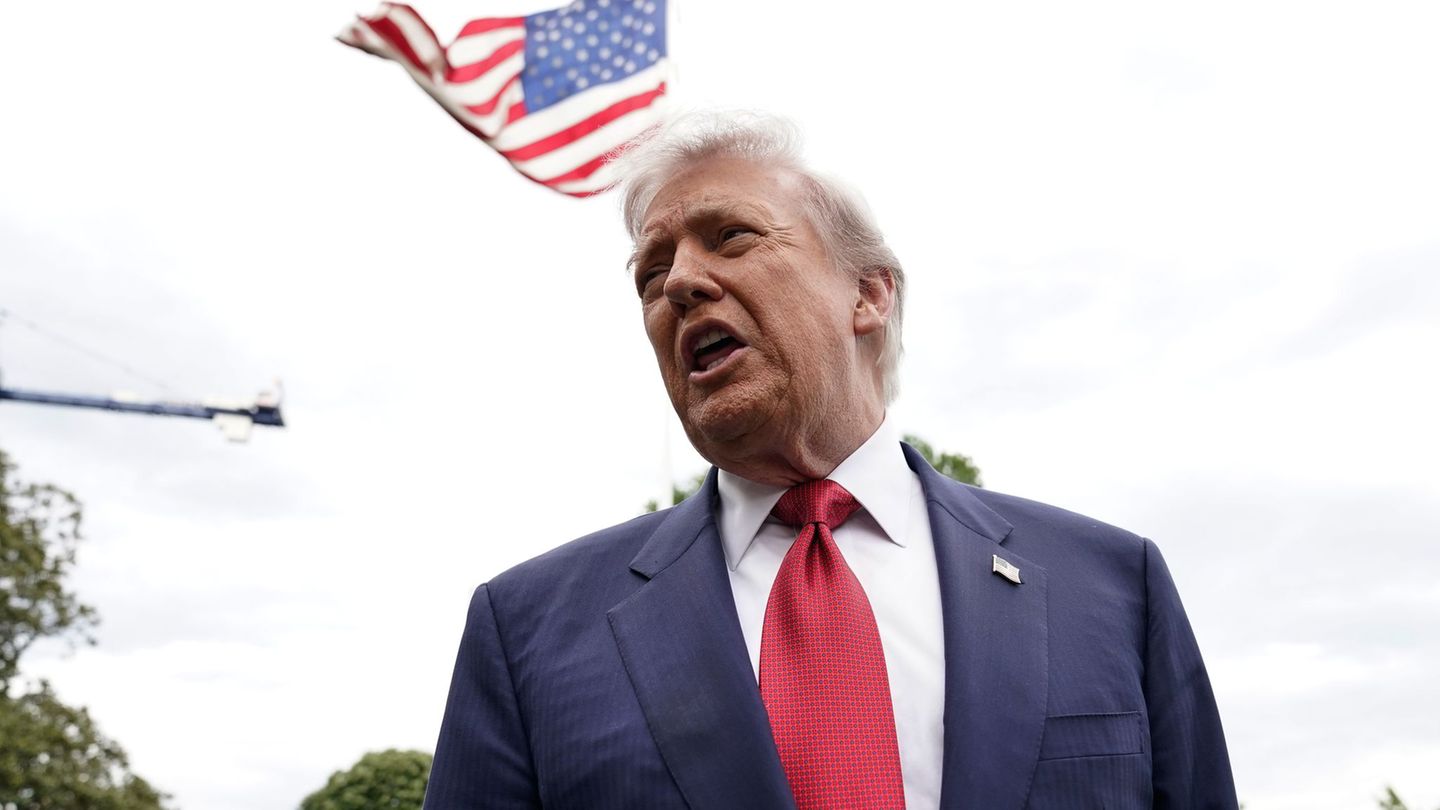
US President Donald Trump said on Friday evening (local time) in Washington that his government expected a response from Iran that same evening. Asked whether the Iranians were delaying negotiations, Trump replied: “We’ll find out soon.” US Secretary of State Marco Rubio had previously said that he expected the Iranian response and hoped that it would be a serious offer. A few days ago, Iran’s government announced that it was examining a proposal from the USA.
On Thursday, Iran and the USA attacked each other again despite a ceasefire: Iran attacked US military ships in the Strait of Hormuz with missiles and speedboats, and the USA attacked targets on the Iranian mainland. Trump threatened Tehran to sign a peace agreement “quickly.” The ceasefire continues to apply despite the attacks. The Iranian military declared the fighting over on Friday evening. “After a period of mutual shelling, fighting has currently stopped and the situation is calm,” Iran’s Tasnim news agency quoted an unnamed military source as saying.
Declaration is intended to create a framework for 30-day negotiations
The White House is currently waiting for Iran’s response to the proposal for a 14-point memorandum of understanding. Their goal is, among other things, to create a framework for negotiations that will initially last 30 days in order to end the war. According to media reports, an easing of US sanctions and agreements on the future of the Strait of Hormuz are also being discussed. In addition, a basis for negotiations on Iran’s controversial nuclear program should be created.
According to the Wall Street Journal, Iran is said to have opened up about its nuclear program for the first time. The newspaper also reported, citing people familiar with the matter, that the statement also called for Iran to loosen its control over the strategic Strait of Hormuz. In return, the US would reduce its blockade of Iranian ports during the 30-day talks. Should these negotiations progress, the one-month period could be extended by mutual agreement.
Qatar warns warring parties: negotiations as an opportunity for peace
Meanwhile, Qatar called on all warring parties to engage in mediation efforts. Prime Minister Mohammed bin Abdulrahman Al Thani emphasized this at a meeting with US Vice President JD Vance in Washington, as the Qatari Foreign Ministry announced on Platform X. The negotiations could lead to a comprehensive agreement for lasting peace in the region, it said.
Pakistan is officially mediating in the Iran war, Qatar is acting more in the background. Qatari representatives are an important unofficial channel between the USA and Iran, reported the US news portal Axios. The Qataris also use their contacts with high-ranking generals in the Islamic Revolutionary Guards, Iran’s elite armed forces.
New US attacks on ships
On Friday, the regional command (Centcom) of the US Armed Forces responsible for the Middle East announced on Platform X that the military had again attacked unloaded oil tankers flying the Iranian flag and put them out of action. Two such ships attempted to call at an Iranian port on the Gulf of Oman. Shots were fired from a US fighter jet to prevent the ships from breaking the US naval blockade, it said.
The US military is currently preventing more than 70 tankers from entering or leaving Iranian ports, it said. These merchant ships would have the capacity to transport Iranian oil estimated to be worth more than $13 billion (more than €11 billion). In addition, more than 50 ships were diverted to maintain the blockade.
There has been a ceasefire in the Iran war for over a month. However, military tensions remain high.
