
Michael Ford was not in perfect health, but his type 2 diabetes was controllable. His son, Davonte Ford, cared for him full-time: bathing him, giving him his medications and closely monitoring changes in his blood sugar levels.
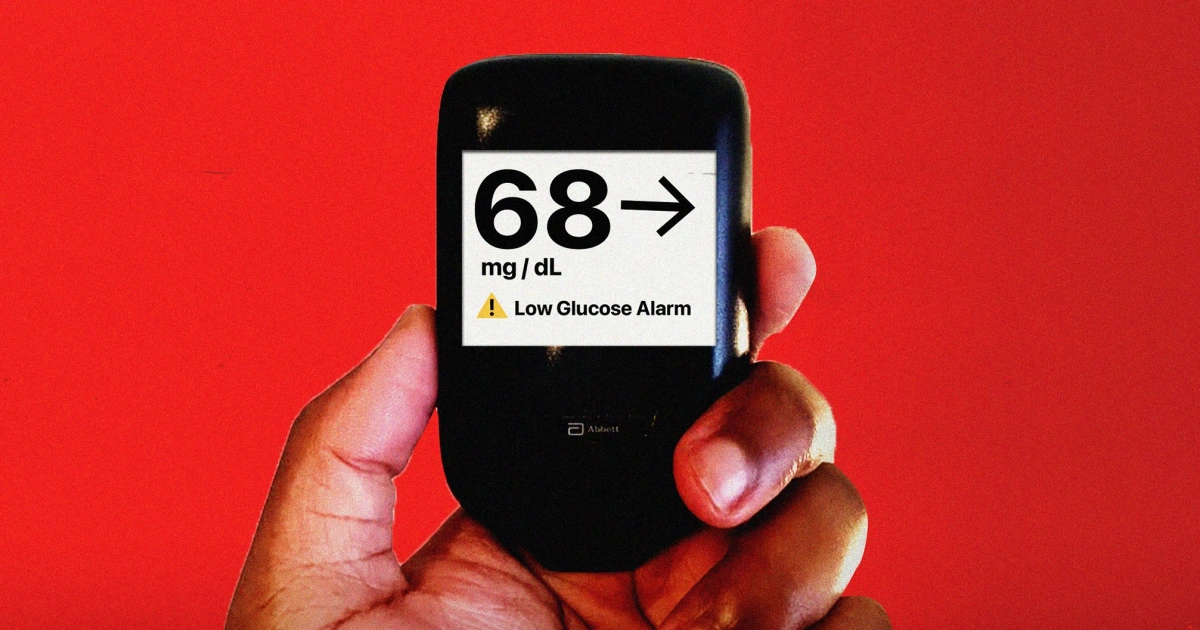
When they both woke up one November morning in their home in Oakland, California, to a low blood sugar alert from the sensor FreeStyle Libre 3 Plus ―a device to monitor Michael’s glucose from the manufacturer Abbott―, Davonte did not doubt the reading. That’s why he did what the doctors had told him: he gave his dad fast-acting carbohydrates.
Davonte had no way of knowing that eight days later, Abbott would issue an urgent warning informing consumers in the United States that some 3 million FreeStyle Libre 3 and Libre 3 Plus sensors were at risk of falsely low readings, and that the company had received reports of seven deaths and more than 730 serious injuries worldwide.
He also had no idea that the number that kept showing up that morning on Michael’s device was “catastrophically inaccurate,” according to a lawsuit Davonte, 25, filed last month.
So when a cup of coffee with two tablespoons of sugar barely raised Michael’s blood sugar, Davonte brought him another. The number on Michael’s monitor went up slightly, but then went back down.
The normal glucose range is between 70 and 180 milligrams per deciliter, and levels are usually lower on an empty stomach. Puzzled that Michael’s level remained around 68 mg/dL, Davonte gave him a cup of sugary tea and a cookie, hoping the number would go up.
Instead, Michael began to speak more slowly. His eyelids became heavy. Panicking, Davonte called an ambulance. When the paramedics arrived, Davonte was stunned to see Michael’s blood sugar reading on his machine: 551 mg/dL, more than triple what it should have been.
“My heart stopped,” Davonte said. “Obviously, there is a problem here.”
The discovery that Michael’s blood sugar was not as low as his glucose meter indicated came too late, according to the lawsuit. The next day, in the intensive care unit of a hospital, Michael, 68, died after suffering several cardiac arrests.
Diabetes, a disease in which the body does not produce enough insulin or cannot use this hormone properly, requires patients to closely monitor their blood sugar level. The disease affects about 40.1 million people in the United States. If left uncontrolled, it can cause serious complications, ranging from blindness to heart and kidney damage.
The recall of some Abbott meters has highlighted the increasing dependence of diabetes patients on technology intended to help them and the threat it can pose to their physical and psychological health when such technology is defective.
It has also given rise to at least three class-action lawsuits in the United States, in addition to the one filed by Davonte’s family, alleging wrongful death. Three other people in California, Washington and North Carolina plan to file legal complaints for damages they say they suffered from incorrect readings, their attorneys told NBC News.
Patients and lawyers have also raised questions about whether the recall has been thorough enough and whether the actual number of injuries could be higher than the 860 Abbott cited in its latest count. Michael’s death has not been taken into account in Abbott’s count, because although his sensor came from one of the recalled batches, the company did not include its specific serial number in the notice.
Lindsy Delco, a spokesperson for Abbott, told NBC News that the company was “deeply saddened” by Michael’s death and said it takes all reports of adverse events very seriously, documenting and investigating them.

Delco said not all sensors in each batch were affected by the issue and that not all adverse events are related to the recent recall, adding that anyone experiencing problems should contact Abbott customer service.
It stated that the faulty readings that led to the recall were due to a production line issue that was quickly fixed. The company has not yet responded in court to Davonte’s lawsuit.
When continuous glucose monitors came out more than two decades ago, they were a “game changer” for patients with diabetes, according to Dr. Amy Warriner, an endocrinologist and professor at the University of Alabama at Birmingham School of Medicine.
As an alternative to reliable but tedious finger pricks, in which diabetics draw small amounts of blood throughout the day to check their sugar levels, continuous glucose monitors automatically detect blood sugar levels in the liquid just below the surface of the skin using tiny filaments on sensors placed on patients’ arms.
Abbott’s sensors, which measure about the size of two pennies, typically cost up to $20 a month for patients whose commercial insurance covers the system, and offer 24/7 data that doctors say is reliable.
“But we’re talking about technology,” Warriner said, “and unfortunately, technology can fail. And when it does, life or death situations occur.”
There have been minor recalls related to continuous glucose monitors. In 2024, Abbott recalled several lots of Libre 3 sensors due to inaccurate and elevated readings. Another major manufacturer, Dexcom, recalled hundreds of thousands of receivers connected to its monitors in 2016 and again in 2025, following dozens of injuries caused by audio problems that could cause alerts to go unnoticed. A Dexcom spokesperson stated this week in an email that the issues had been resolved.
Some diabetes patients using Abbott sensors reported that Learning about the flaws in a device they depend on to stay alive was terrifying. Before receiving a recall notice from her pharmacy, Angela Ivery, 71, of Spruce Pine, North Carolina, said she went to the emergency room several times after receiving alerts from her Libre 3 device that her blood sugar was low. At the hospital, a finger prick revealed that his glucose levels were normal, he said.
He began having nightmares in which deceased relatives warned him about his health and feared he would die in his sleep. He now uses fingerstick readings, but said he still feels anxious.
“I don’t go out and socialize like before,” he said. “When I go out, I get paranoid. I think my sugar is going to go down.”

Late last year, Cathy Bennett, 67, of Statham, Georgia, started receiving alerts from her Abbott glucose monitor telling her that her blood sugar level was at 60. However, when she checked it with a finger prick, it was at 170 or 180. The serial numbers for her sensors were not listed on Abbott’s recall website, but she believes they should have been. She has found other people on social media who say the same thing.
“It’s very disappointing,” he said. And he added that he loved the device and plans to try it again. “It helped motivate me to make better food choices.”
The recall has also highlighted the potential for dangerous confusion to occur after a product has been taken off the market, even at large hospitals. An endocrinologist who works at a regional trauma center on the Atlantic coast said in an interview with NBC News that he had just discharged a patient from the hospital with an Abbott device. He later called back to share a surprising discovery: He checked the serial number of the sensor I had given him and realized it was part of the recall. He called him immediately to replace it and told the hospital to throw away the box of affected sensors.
Although continuous glucose monitors are generally considered reliable, the American Diabetes Association said in an email that test strips should be kept on hand as a backup, especially if symptoms do not match the monitor reading.
In Miramar, Florida, Philip Myers, a Navy veteran, relied solely on his FreeStyle Libre monitor until one night in June when the readings ranged from 50 to more than 200. Then he stopped using it.
Six months later, he received a letter from the Department of Veterans Affairs informing him that his sensor had been recalled. The letter did not mention deaths related to the withdrawal, and when he and his wife heard about it from a journalist, they were shocked.
“When I was in the military, I was in control and I made the decisions,” Myers, 80, said. Trying to control her diabetes, especially with a device that turned out to be inaccurate, “is a very discouraging thing, to be honest, because you have no control,” she said.
Abbott spokeswoman Delco did not respond to questions about specific cases, saying in an email that the manufacturer cares “deeply about the safety and quality of our products and the people who use them.”
“That is why we continually check its operation and, if we identify any problems, we take measures to solve them,” he added.
Davonte and Michael Ford had complete faith in Michael’s glucose monitor, not knowing, due to Abbott’s “woefully insufficient” warnings, that the sensor could malfunction, according to the lawsuit against the company.
Davonte tries to remember his father as he was, a selfless man who loved to play the piano, rather than his painful final moments, which he believes have traumatized him and left him feeling empty. He added that he is also tormented by the feeling of guilt.
“I felt like it was my fault,” he said of his father’s death. “Everything was fine until it wasn’t.”
