
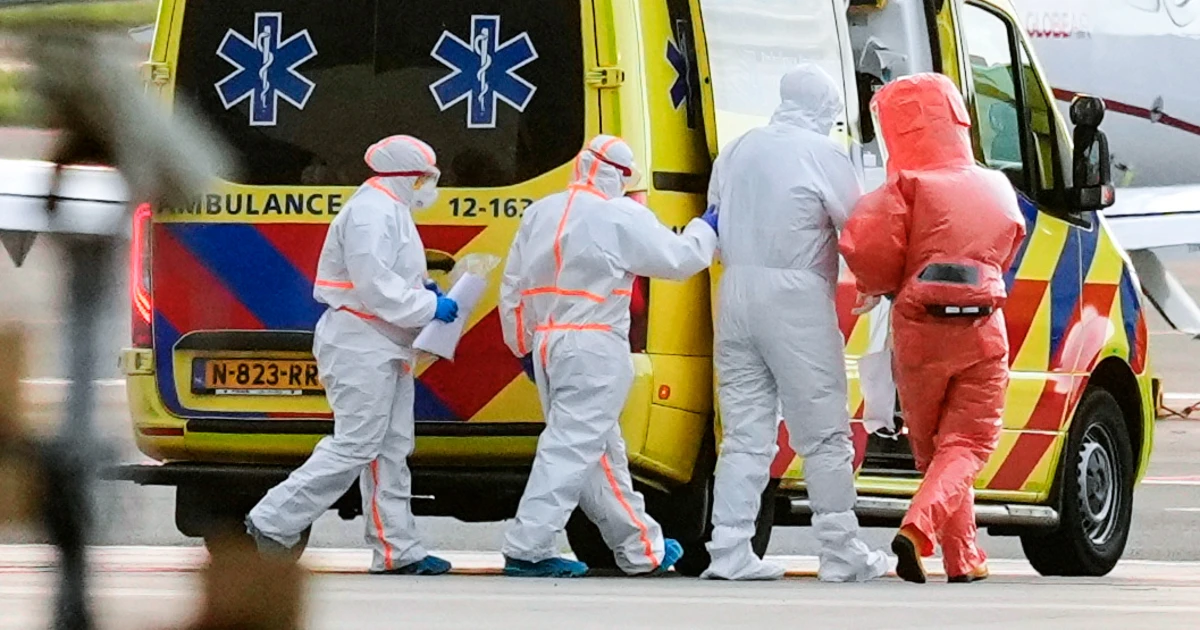
The hantavirus outbreak on the MV Hondius cruise ship has highlighted years-long attempts to develop a vaccine that could prevent the worst effects of the virus in humans.
Experts say that attempts to have a vaccine against this disease have long been stuck because outbreaks are usually sporadic and usually affect developing countries where pharmaceutical companies have less commercial incentive to invest in developing inoculations.
“The agencies that fund this research don’t put a lot of money into it because it’s not likely to be what causes the next big pandemic or epidemic,” said Sabra Klein, a microbiologist and immunologist who is a professor at the Johns Hopkins School of Public Health. “Although since they are hemorrhagic viruses, when they do occur they are very scary and generate panic.”
(Climate change worsens mosquito disease transmission. Experts give advice on how to protect yourself)
For 15 years the British biotechnology company EnsiliTech has been seeking to develop a vaccine.
“We looked at how hantavirus was almost completely neglected,” said Matt Slade, the company’s co-founder. “No one in the sector was really working on the issue.”
The vaccine under development at EnsiliTech makes use of messenger RNA (mRNA) technology, the same technology that was used for the most advanced COVID vaccines whose development was accelerated during the pandemic.
That possible immunization focuses on a strain of hantavirus called Hantaan, which occurs primarily in East Asia and can cause internal bleeding and kidney damage, a combination that leads to its presentation as the disease hemorrhagic fever with renal syndrome. (Although EnsiliTech has focused on the Hantaa strain, Slade said they do not rule out also working on a possible vaccine for the Andean strain, which is behind the infections and deaths on the cruise ship.)
(Trump Administration withdraws billions of dollars in funding to combat COVID nationwide)
Slade, the biotech company’s co-founder, said the reason the development process for vaccines like this one has taken so long is that a way needs to be found in which the vaccine can be transported at room temperature without losing effectiveness. The Moderna and Pfizer coronavirus vaccines that used mRNA needed to be stored and moved at freezing temperatures, something that is not easy to do in many parts of the planet.
For this, EnsiliTech has devised a mechanism so that the mRNA remains inside a protective box made of silicon.
Slade indicated that the vaccine has not yet entered human testing phases, and that it could still take three to four years to begin clinical studies that pave the way for regulatory approval. The company has already carried out tests on rodents, which are the source of hantavirus transmission.
Slade highlighted that it is very difficult to advance faster in these tasks because support is needed for research, such as that provided with the so-called Operation Warp Speed, an unprecedented public-private partnership that helped accelerate the development of coronavirus vaccines during the pandemic.
“Timelines could be significantly shortened, as was the case with COVID, if there was that access to emergency funding and faster regulatory approvals,” Slade said. “But if it continues to be treated like the development of a typical vaccine, it is expected to take” at least five more years to reach advanced phases of clinical studies, he added.
(Polycystic Ovary Syndrome: why it is so difficult to detect and treat almost a century later)
He indicated that, even with the current global interest in the outbreak on the cruise ship, “there needs to be much more commercial support for these vaccines.”
“And unfortunately hantavirus tends to be endemic in parts of the planet that don’t normally get a lot of funding, so there’s a lack of interest,” Slade said.
The director of the vaccine program at Boston Children’s Hospital, Ofer Levy, said there are already some hantavirus inoculations in China and South Korea in more advanced stages, but they have shown mixed results in terms of effectiveness and are not available for any other country.
The first time anyone in the United States is known to have been exposed to hantavirus was during World War II, according to Levy. At the time, soldiers deployed in parts of Central Europe were affected, and Levy said that because of that history there would be some interest on the part of the armed forces in a vaccine being developed.
However, “there has been nothing Warp Speed so far” for this virus, Levy noted.
