
Three counties on Florida’s Gulf Coast declared states of emergency amid an unprecedented rise in locally acquired dengue cases. According to experts, it was only a matter of time before the Tampa Bay area saw an outbreak of this magnitude.
Since July, Hillsborough County, where Tampa is located, has reported 169 locally acquired casesmeaning the disease was transmitted by local mosquitoes and was not travel-related. In comparison, only nine cases had been recorded during the last 15 years.
“This is the highest number of locally acquired cases we’ve seen since they started keeping records in 2009,” said Kristi Miley, who researches mosquito-borne infections at the University of South Florida.
One person died from the disease, the Florida Department of Health reported this month, a rare occurrence in the United States. The Tampa Bay Times reported that the patient died on her 80th birthday. but the Department of Health declined to confirm those details to NBC News.
The outbreak is the largest recorded in Florida, with a total of 190 locally acquired cases.
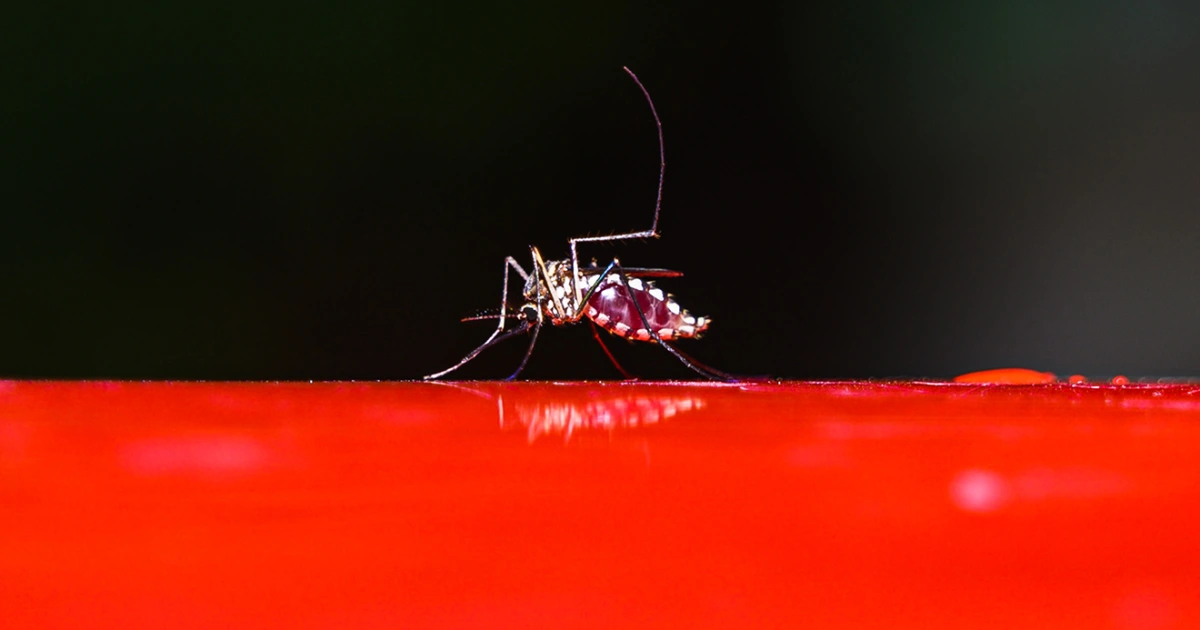
The dengue virus is transmitted by mosquitoes Aedes aegyptiwhich is present throughout the year in Florida.
Most cases are asymptomatic or mild, with symptoms including fever, nausea, body aches, pain behind the eyes, or skin rashes that may appear as spots or look like a sunburn. However, around 1 in 20 people with dengue develop serious illnesswhich can cause internal bleeding and even death.
Vulnerable groups include young children and older adults, as well as people with certain pre-existing conditions, such as asthma, diabetes, and sickle cell anemia.
Local health experts are still investigating why cases hit record highs this year, but they have some hypotheses. Florida’s warm, humid climate offers ideal conditions for mosquito breeding, and the combination of rising temperatures due to climate change and increased urban development has expanded the habitat of the Aedes aegypti.
This mosquito breeds in urban areas and prefers man-made environments such as flower pots, old tires, and gutters. A female can lay hundreds of eggs during her four weeks of life, and these can carry dengue if the mother was infected. The eggs can remain inactive for up to eight months and then hatch on rainy days after coming into contact with water.
Can hurricanes explain the dengue outbreak?
Experts are also studying the possibility that the two hurricanes that hit the Tampa Bay area in 2024, Milton and Helene, contributed to the increase in the mosquito population.
Miley said that The combination of rain and debris could have generated more breeding sites, although researchers still don’t know for sure.
Another possible factor is that some Tampa Bay residents may have had previous dengue infections. A second infection is usually more serious than the first.
The virus has four serotypes, or subclasses. Rather than providing cross-protection, antibodies against one of them may make it easier for other serotypes to enter cells and replicate.
“Maybe that’s why we’re seeing more cases reported through hospitals: because we’ve had dengue in our area for at least the last 16 years and maybe some people are just now getting a second serotype,” Miley said.
The first infections could also have occurred during international travel. Dengue is common in Brazil, Argentina, Mexico and the Caribbean, as well as parts of Africa and Southeast Asia.
“We have a lot of people in Tampa with close family ties to the Caribbean and who travel there frequently,” said Hillsborough County spokesman Chris Wilkerson.
Dr. Kartik Cherabuddi, chief of hospital epidemiology at Tampa General Hospital, said his hospital is seeing about six or seven dengue patients a day.
No treatment for dengue
There is no specific treatment against dengue, so doctors manage cases by administering fluids or, in critical cases, performing platelet transfusions. Patients may worsen around the seventh day, when the fever disappears, Cherabuddi explained.
Fortunately, he added, Tampa General implemented a tropical fever test this year that can identify the virus during critical periods.
“The fact that we already had a test available whose results could be obtained in a matter of hours, instead of days, helped us identify cases early,” he said.
Locally acquired dengue cases also occasionally appear in California and Texas. Arizona, New York, North Carolina and West Virginia have also reported isolated cases over the years.
Often It takes the arrival of a cold front to kill off the mosquitoes, something rare in sunny Florida.
“We need no rain for a month and the temperature to drop to around 40 degrees Fahrenheit for three days. Either of those two things would reduce the reproduction rate” of mosquitoes, Wilkerson said.
“Hypothetically, if everyone in the county turned over all the containers in their yards, this would be over by Friday. But that’s not realistic,” he added.
Instead, the county is spraying insecticide from helicopters and trucks in areas where dengue cases have been identified. It has also requested help from neighboring counties to apply liquid larvicide from helicopters.
Wilkerson said tire shops are being fumigated individually, since “a used tire with a little water on it is a breeding ground for mosquitoes.”
Miley said the outbreak serves as a reminder that health authorities should preemptively test mosquito populations for dengue. instead of waiting until the virus is already spreading.
“Unless you have a way to regularly test the mosquito population, we end up with a problem that spreads too far,” he said. “Right now we’re trying to go back and figure out what population of mosquitoes it came from.”
